
Quiz
Organic Chemistry Unit 3: Energy
Questions in this quiz (24)
1Standard conditions are 100 kPa, which is 1 atmospheres and 298K, which is 25°C although in liquids it is a concentration of 1 mol dm-3
- ATrue
- BFalse
2What is the correct definition of exothermic?
- AA reaction in which the enthalpy of the products is smaller than the enthalpy of the reactants, resulting in heat loss to the surroundings.
- BA reaction in which the enthalpy of the products is greater than the enthalpy of the reactants, resulting in heat being taken in from the surroundings.
3What is the ΔH of an endothermic reaction?
- ANegative
- BPositive
4What kind of reaction is exothermic?
- ACombustion
- BPhotosynthesis
5Select all the examples of endothermic reactions
- AThermal Decomposition
- BCombustion
- CRespiration
- DPhotosynthesis
6The equation for the complete combustion of methane is CH4(g) + 1.5O2(g) -->CO(g) + 2H2O(l)
- ATrue
- BFalse
7The energy from photosynthesis comes from the light of the sun
- ATrue
- BFalse
8Is the enthalpy profile diagram exothermic or endothermic?

- AExothermic
- BEndothermic
9Is this enthalpy profile diagram exothermic or endothermic?
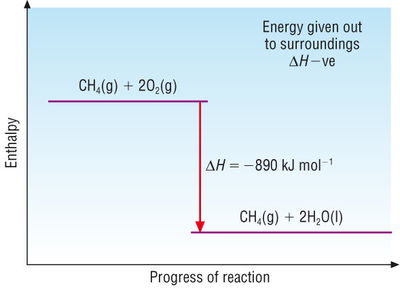
- AExothermic
- BEndothermic
10Activation energy is the minimum energy required to start a reaction by the breaking of bonds.
- ATrue
- BFalse
11When a liquid the standard conditions are a concentration of 2.0 mol dm-3
- ATrue
- BFalse
12What is the correct definition of activation energy?
- AThe minimum energy required to start a reaction by the breaking of bonds
- BThe maximum energy required to start a reaction by the formation of bonds
13Which is the correct equation for working out the heat exchange during a reaction?
- AQ=mcΔT
- Bn=c*V/1000
14In Q=mcΔT, c is the specific heat capacity of the surroundings
- ATrue
- BFalse
15Select all the products formed in the complete combustion for CH4
- ACO2
- BH20
- C2H20
- DCO
16The ΔH of a combustion of C3H7OH is -1881 kJ mol-1, what type of reaction is it?
- AEndothermic
- BExothermic
17Bond enthalpy is the enthalpy change that takes place when breaking by homolytic fission 1 mol of a given bond in the molecules of a gaseous species
- ATrue
- BFalse
18Which of the following is the correct explanation for breaking and making bonds?
- ABreaking bonds requires energy and is endothermic, making bonds releases energy and is exothermic
- BBreaking bonds releases energy and is endothermic, making bonds requires energy and is exothermic
19Hess's law states that if a reaction can take place by more than one route and the initial and final conditions are the same, the total enthalpy change is the same for each route
- ATrue
- BFalse
20An enthalpy cycle shows what?
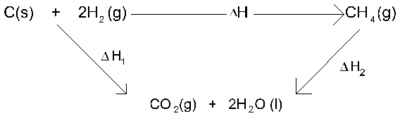
- AOnly one route between the reactants and products so does not allow the indirect determination of an enthalpy change
- BThe alternative routes between reactants and products which allows the indirect determination of an enthalpy change from other known enthalpy changes using Hess' Law
21Which of these are factors that affect the rate of reaction?
- ATemperature
- BPressure, when the reactants are gases
- CConcentration
- DSurface Area
- EThe addition of a catalyst
22When is the rate of reaction at its highest?
- AAt the start
- BDuring the reaction
- CWhen one of the reactants has been used up
23When one of the reactants has been used up the reaction continues
- ATrue
- BFalse
24A catalyst slows down a reaction and is used up in the process
- ATrue
- BFalse
Information
- Description
- Quiz on Organic Chemistry Unit 3: Energy, created by gina.mccombe on 28/01/2015.
- Author
- gina.mccombe
- Language
- English
- Views
- 60
- Rating
- 5.0 out of 5 · 1 rating Rate this quiz