
Quiz
Neuroscience-Mood Disorders
This quiz has question types that open in the usual player.
Questions in this quiz (40)
1As the provider, you are looking at genetic testing for your patient who you have diagnosed with depression. You know that the most noteworthy genes in MDD are (select all that apply):
- AMTHFR
- BSLC6A4
- CBDNF
- DANK3
- ECYP2D6
2Label the 5 major regions of dysfunction in depressed brains.
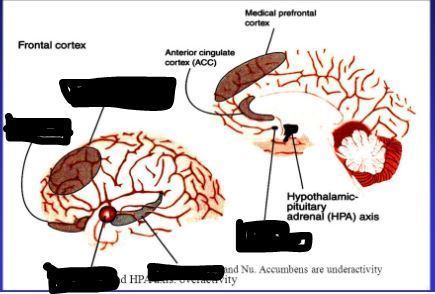
- ADorsolateral prefrontal cortex (DLPFC)
- BOrbital frontal cortex
- CAmygdala
- DHippocampus
- ENucleus Accumbens
3The [blank_start]insula[blank_end] is a structure that sits on top of the caudate-putamen and interacts with amygdala, and plays a major role in the perception of pain.
- Ainsula
4What functional processes in the brain, exacerbate PAIN in persons with MDD?
- AWhite matter abnormalities
- BDecreased volume in the hippocampus and PFC
- CAltered regional blood flow
- Demotion-related brain activation is shifted to the dorsal anterior insula
5T or F. The most current Monoamine Hypothesis posits that there are depleted monoamine levels (5HT, NE, DA) and these deficiencies can be measured in the plasma, CSF and brain tissue.
- ATrue
- BFalse
6The NT Receptor hypothesis posits that abnormalities in the receptors for monoamine NT's leads to [blank_start]depression[blank_end]. Further, deficient activity of monoanime NT's causes [blank_start]upregulation[blank_end] of postsynaptic NT receptors.
- Adepression
- Bupregulation
7Which important signal conduction cascades are triggered by neurotransmitters?
- ANeurotrophin and Hormone linked systems
- BBDNF and MTHFR
- CG-Protein and Ion Channel Linked Systems (most psychotropic drugs target these systems)
8In the Second Messenger Malfunction Theory, problems in the [blank_start]2nd[blank_end] messenger system can [blank_start]impair[blank_end] neurotransmitter function [blank_start]without[blank_end] changes in monoamine levels or receptor numbers. This results in a [blank_start]downstream[blank_end] impact on gene expression.
- A2nd
- B1st
- Cimpair
- Dincrease
- Ewithout
- Fwith
- Gdownstream
- Hupstream
9Serotonin is a monoamine, specifically an [blank_start]indoleamine[blank_end].
- Aindoleamine
105HT is produced in the [blank_start]raphe[blank_end] nuclei.
- Araphe
11Disruption to the normal connection of serotonergic nuclei to this system, is thought to contribute to depression?
- ARAAS
- BLimbic System
- CAmygdala Pathway
- DSecond Messenger Monaminergic System
12Match the monoamine circuit to its function(s):
5HT:
[blank_start]Affect[blank_end]
[blank_start]Anxiety[blank_end]
[blank_start]Distress[blank_end]
[blank_start]Behavioral Inhibition[blank_end]
NE
[blank_start]Arousal[blank_end]
[blank_start]Responsiveness[blank_end]
[blank_start]Alerting Signals[blank_end]
DA
[blank_start]Reward[blank_end]
[blank_start]Interest[blank_end][blank_start]Motivation[blank_end]- AAffect
- BAnxiety
- CDistress
- DBehavioral Inhibition
- EArousal
- FResponsiveness
- GAlerting Signals
- HReward
- IInterest
- JMotivation
13The PMHNP is explaining to her patient the role of 5HT in depression, specifically the "Behavioral Inhibition" system. What is the best explanation of this system below?
- AIt is linked to pleasure and reward, and this becomes overactive in depression, decreasing inhibition.
- BIt is linked to the stimulus of the PFC, and subsequently behavioral arousal
- CIt is tuned to responding to fear or anxiety producing stimuli
14NE is a monoamine, specifically a [blank_start]catecholamine[blank_end].
- Acatecholamine
15NE in the CNS is produced in the [blank_start]nucleus[blank_end] [blank_start]locus[blank_end] [blank_start]ceruleus[blank_end].
- Anucleus
- Blocus
- Cceruleus
16Put the correct statement below:
- ANE stimulates the NA, then the PFC and then the VTA
- BNE stiumulates the PFC, then the VTA and then the NA
- CNE stimulates the VTA, then the PFC and then the NA
- DNE stimulates the PFC, then the amygdala and the the NA
17NE is modulated by which part of the brain?
- APFC
- BNucleus Accumbens
- CLocus Coeruleus
- DAmygdala
18Dopamine is a monoamine, specifically a [blank_start]cathecolamine[blank_end].
- Acatecholamine
19The [blank_start]mesolimbic[blank_end] pathway is involved in pleasure and reward; stimulation of this pathway results in a sense of pleasure.
- Amesolimbic
- Bmesocortical
20The [blank_start]mesocortical[blank_end] pathway is involved in motivational behavior, and is tied to pleasure and reward.
- Amesocortical
- Bmesolimbic
21Monoamine Hypothesis Made Simple for Patient Education-Label the functions with the correct neurotrasmitter.
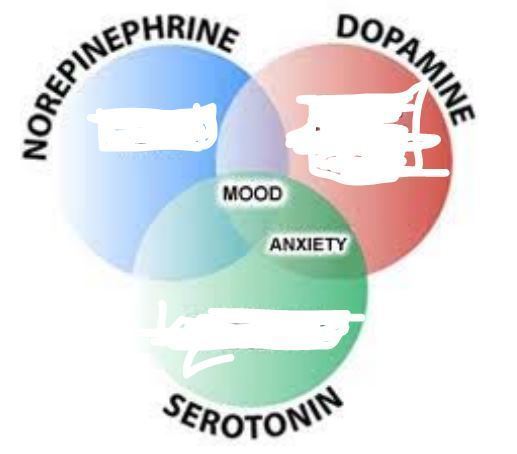
- AAlertness, Energy
- BAttention, Motivation, Pleasure, Reward
- CObsessions and Compulsions
22The most used neurotransmitter in the nervous system is [blank_start]glutamate[blank_end].
- Aglutamate
23What is the MOA of ketamine, and the reason why it may be useful in the treatment of depression?
- AIt activates glutamate in the limbic system, mitigating the resulting dysfunction in the balance of glutamate receptor activation
- BIt blocks the excitatory post synaptic response of glutamate.
- CNMDA is one of the main receptors for glutamate, and ketamine is an NMDA receptor blocker.
24Label the HPA Axis diagram sequentially with the correct parts of the brain:
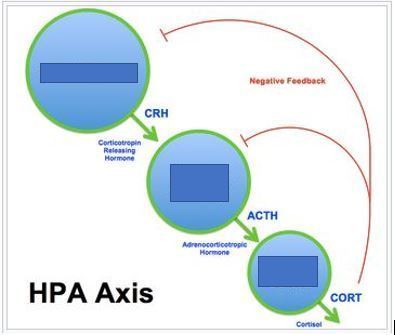
- AHypothalamus
- BAnterior Pituitary
- CAdrenal Cortex
25Chronic exposure to stress & high levels of [blank_start]glucocorticoids[blank_end] leads to neuronal atrophy and death.
- Aglucocorticoids
- Bcytokeines
26T of F. One of the effects of chronic stress is decreased neurogenesis and hippocampal atrophy.
- ATrue
- BFalse
27Cytokines can (select all that apply):
- AInduce changes in mood and CNS function
- Bimpact neurotrasmitter metabolism
- Ccan cross the blood-brain barrier to have neurotoxic effects causing neuronal death
- DCause psyhcosis
- EPlay a not yet fully understood role in OCD
28Two the likely risk genes in Bipolar are the [blank_start]CACNA1C[blank_end] and [blank_start]ANK3.[blank_end]
- ACACNA1C
- BSLC6A4
- CANK3.
- DBDNF
29T or F. Genes = Probabilism not determinism.
- ATrue
- BFalse
30In bipolar disorder, there is thought to be decreased size and activity in the [blank_start]PFC[blank_end] (use the abbreviation) and [blank_start]limbic[blank_end] hyperactivity.
- APFC
- Blimbic
31In bipolar disorder, hippocampus volume is [blank_start]decreased[blank_end].
- Adecreased
- Bincreased
32In mania frontal activity is most [blank_start]decreased[blank_end] and limbic activity is most [blank_start]increased.[blank_end]
- Adecreased
- Bincreased.
33In bipolar mania, which neurotransmitter have greater activity (select all that apply)?
- ANE
- B5HT
- CDA
- DGABA
34What is the Kindling Theory of Bipolar?
- AYour brain is like a slow, burning pile of smoldering sticks
- BEasily combustible small sticks or twigs used for starting a fire.
- CA process by which a brain event is both initiated and its recurrence made more likely. Essentially more vulnerable to future episodes.
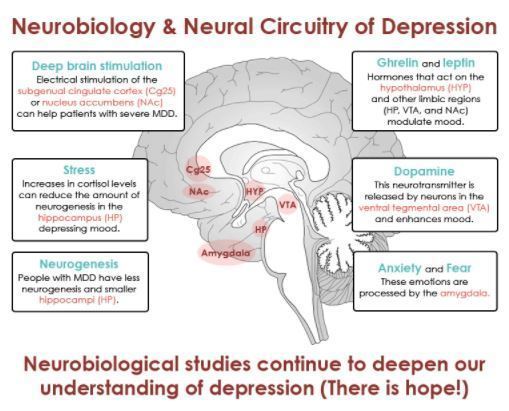
35This is a nice graphic for neurocircuitry of depression
- ATrue
- BFalse
36Nice graphic for Bipolar.
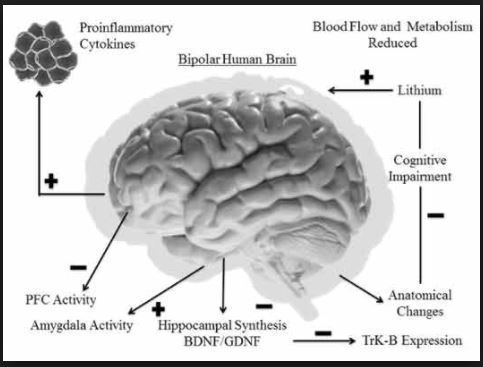
- ATrue
- BFalse
37Additional helpful graphic
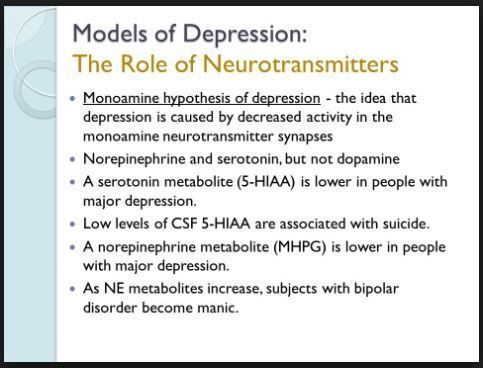
- ATrue
- BFalse
38Simple Neurotransmitter Explanation
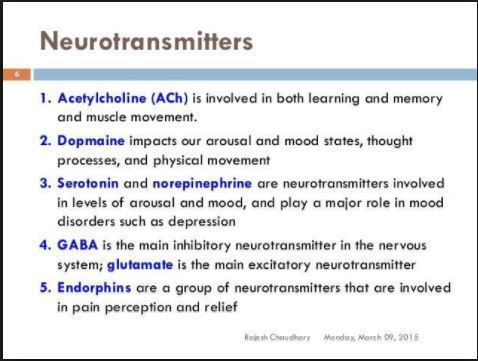
- ATrue
- BFalse
39Neurotransmitter Imbalance Chart
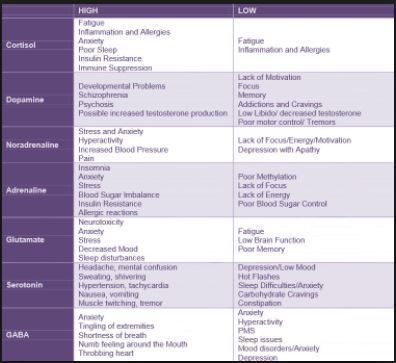
- ATrue
- BFalse
40Last one...there were just so many helpful charts out there!
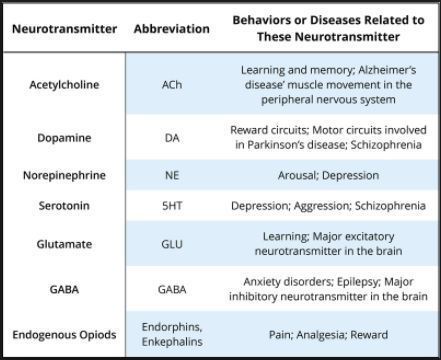
- ATrue
- BFalse
Information
- Description
- Quiz on Neuroscience-Mood Disorders, created by Maggie Throckmorton on 27/03/2018.
- Author
- Maggie Throckmorton
- Language
- English
- Views
- 37
- Rating
- No ratings yet Rate this quiz