
Quiz
Early Christian Art; Byzantine; Hiberno Saxon
This quiz has question types that open in the usual player.
Questions in this quiz (21)
1In Christian teaching, Christ is often seen as the "second Adam."
- ATrue
- BFalse
2The [blank_start]Edict of Milan[blank_end] was instituted by Constantine and legalized Christianity.
- AEdict of Milan
3The mosaics at the Mausoleum of Galla Placidia show decorative forms that are similar to ______ decorative floral and acanthus leaf forms, such as those at the ______ .
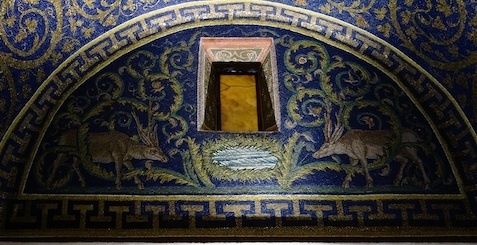
- AAncient Greek; Pantheon
- BAncient Roman; Column of Trajan
- CAncient Roman; Villa of Mysteries
- DAncient Roman; Ara Pacis
4This is the...
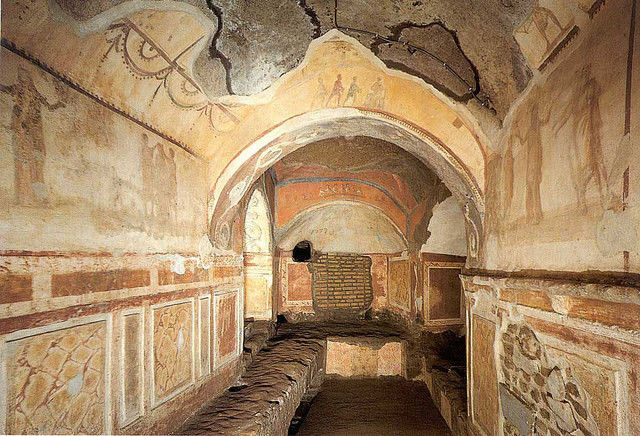
- ACatacomb of Priscilla
- BThe Catacomb of Pilla Rome
- CAntique European Catacombs
- DEarly Christian Prisas
5The Basilica of Santa Sabina was based on the architectural design of...
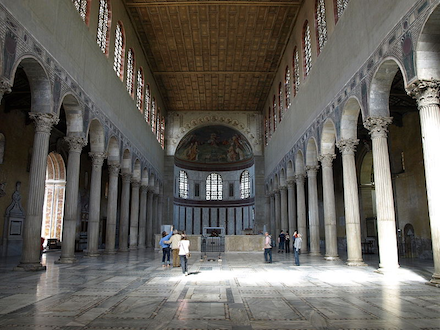
- Athe pendentives of the Hagia Sophia in Turkey
- Bthe octagonal central plan of the church of San Vitale in Ravenna
- CRoman civic buildings such as Trier in Germany
- Dthe cruciform plan of the Cathedral of Chartres
6This is the plan for [blank_start]Santa Sabina[blank_end]. It represents a [blank_start]basilica[blank_end], an important style for buildings within Christianity.
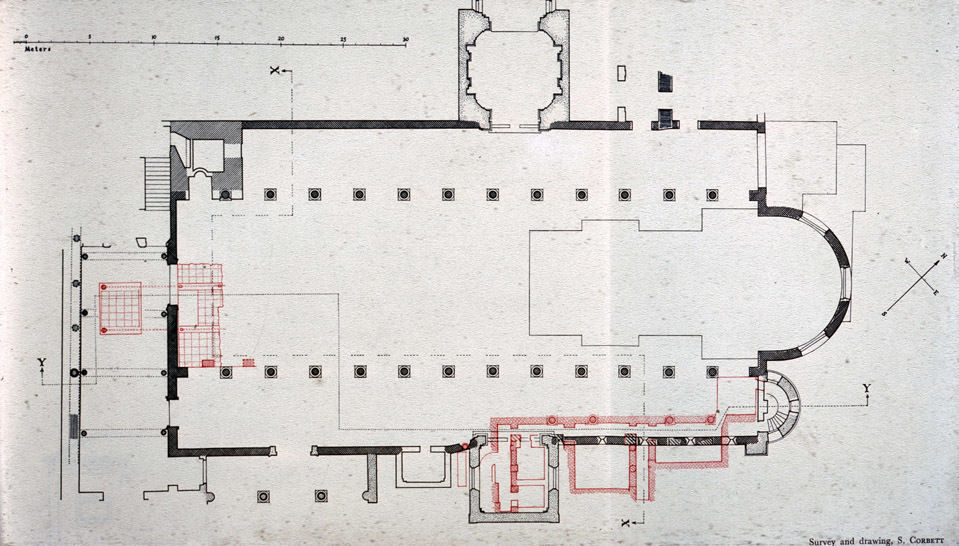
- ASanta Sabina
- Bbasilica
7(I48;P59) This is the [blank_start]Catacomb of Priscilla[blank_end] found in [blank_start]Rome[blank_end], [blank_start]Italy[blank_end] during [blank_start]Late Antique Europe[blank_end] in [blank_start]200[blank_end] to [blank_start]400[blank_end] CE out of [blank_start]excacated tufa and fresco[blank_end].
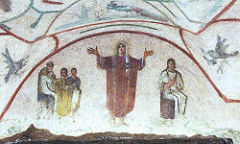
- ACatacomb of Priscilla
- BRome
- CItaly
- DLate Antique Europe
- E200
- F400
- Gexcacated tufa and fresco
8(I49;P61) The [blank_start]Santa Sabrina[blank_end], found in [blank_start]Rome[blank_end], [blank_start]Italy[blank_end] during [blank_start]Late Antique Europe[blank_end] in [blank_start]422[blank_end] to [blank_start]432[blank_end] CE out of [blank_start]brick[blank_end] and [blank_start]stone[blank_end] (alphabetical).
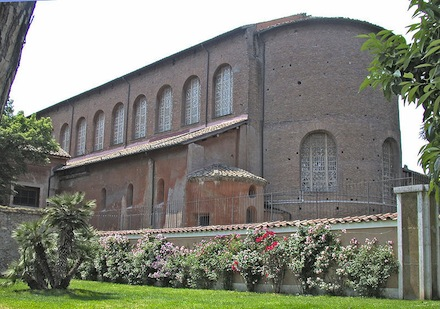
- ASanta Sabrina
- BRome
- CItaly
- DLate Antique Europe
- E432
- F422
- Gstone
- Hbrick
9What is iconoclasm?
- Athe belief in the importance of destroying icons or other images for religious or political purposes
- Bthe application of thick layers of oil paint
- Ca literary or artistic style that seeks to capture a feeling or experience rather than to achieve accurate depiction
- Da synonym for hierarchial style
10Due to the loss of territory, many Byzantine artists fled to the west. However, due to stark differences in culture, they did not carry any impact on local cultures.
- ATrue
- BFalse
11(I50;P63) The [blank_start]Rebecca and Eliezer at the Well[blank_end] and [blank_start]Jacob Wrestling the Angel[blank_end] from the [blank_start]Vienna Genesis[blank_end] was found in [blank_start]Early Byzantine Europe[blank_end] during the [blank_start]early 6th[blank_end] century and is an [blank_start]illustrated manuscript[blank_end] made out of [blank_start]pigment on vellum[blank_end]. Look at each photo on each page.
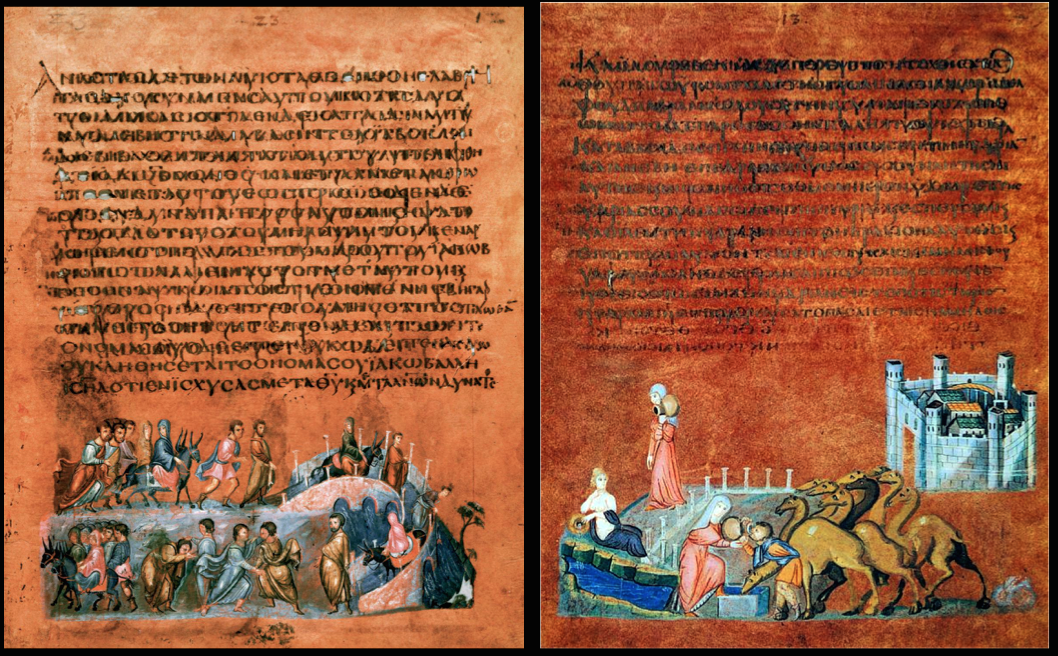
- ARebecca and Eliezer at the Well
- BJacob Wrestling the Angel
- CVienna Genesis
- DEarly Byzantine Europe
- Eearly 6th
- Fillustrated manuscript
- Gpigment on vellum
12The San Vitale features a basilica layout.
- ATrue
- BFalse
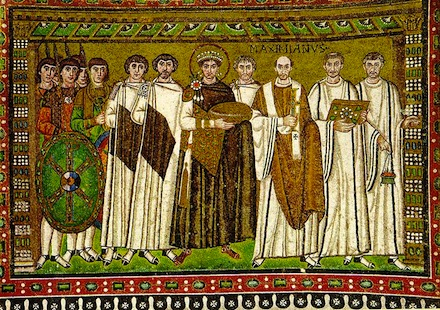
13An important purpose of the San Vitale is to...
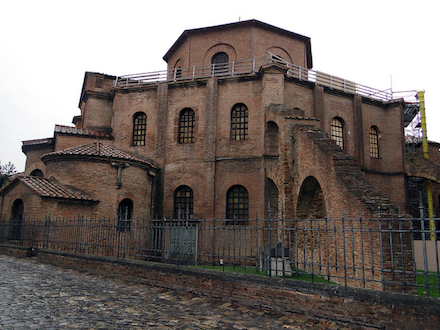
- Ahonor unorthodox christian beliefs.
- Bundermine the power of Emperor Justinian.
- Cgive Emperor Justinian the appearance of a divinely ordained ruler.
- Dgive Constantine the appearance of a divinely ordained ruler.
- Edemonstrate the importance of iconoclasm within the Christian faith.
14(I51;P63) The [blank_start]San Vitale[blank_end] is located in [blank_start]Ravenna[blank_end], [blank_start]Italy[blank_end] and was built during [blank_start]Early Byzantine Europe[blank_end] circa [blank_start]526[blank_end] - [blank_start]547[blank_end] CE out of [blank_start]brick[blank_end], [blank_start]marble[blank_end]; [blank_start]mosaic[blank_end].
- ASan Vitale
- BRavenna
- CItaly
- DEarly Byzantine Europe
- E526
- F547
- Gbrick
- Hmarble
- Imosaic
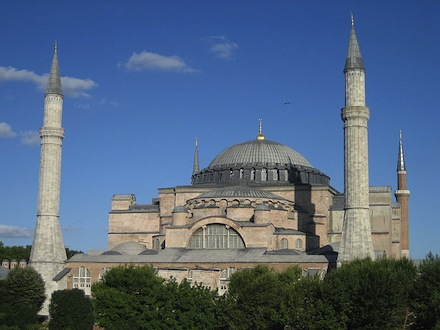
15The Hagia Sophia burned down. Twice.
- ATrue
- BFalse
16The Hagia Sophia incorportated Roman techniques by...
- Abuilding a rectangular nave covered by a dome.
- Bfeaturing an open structure.
- Cdirectly referencing and depicting roman gods.
- Davoiding using religion as a way to demonstrate a rulers inate power.
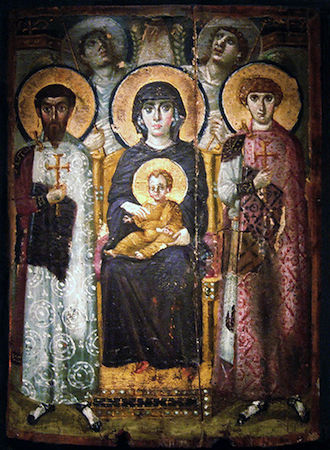
17(I54;P65) The [blank_start]Virgin and Child[blank_end] between [blank_start]Saints Theodor and George[blank_end] was created in [blank_start]Early Byzantine Europe[blank_end] during the [blank_start]sixth century[blank_end] out of [blank_start]encaustic on wood[blank_end].
- AVirgin and Child
- BSaints Theodor and George
- CEarly Byzantine Europe
- Dsixth century
- Eencaustic on wood
18The Virgin's name is [blank_start]Theotokos[blank_end].
- ATheotokos
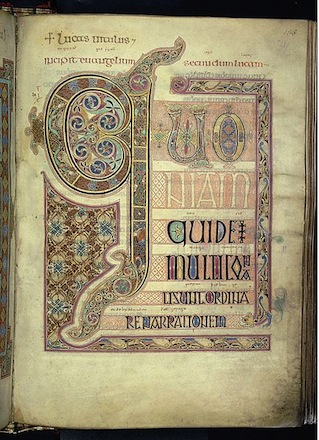
19The [blank_start]Lindisfarne Gospels[blank_end] are a part of the [blank_start]Hiberno-Saxon[blank_end] era and were created in [blank_start]Early Medieval Europe[blank_end] in [blank_start]700[blank_end] CE and are illustrates [blank_start]manuscripts[blank_end] made on [blank_start]vellum.[blank_end]
- ALindisfarne Gospels
- BHiberno-Saxon
- CEarly Medieval Europe
- D700
- Emanuscripts
- Fvellum
20[blank_start]Eadfrith[blank_end], a monk, created the Lindisfarne Gospels.
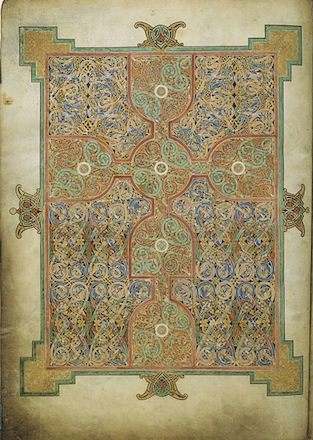
- AEadfrith
21Which of the following apply to the Lindisfarne Gospels?
- AThe style was typical of the early medieval period, favoring religious symbolism over realism.
- BThe decorative corners reflect the interlace patterns of the native tribal style.
- CThe gospel was elaborated decorated using interlace and spiral patterns, reminiscent of Anglo-Saxon metalwork and cloisonne.
- DThe intense lettering was reflective of the influence Arabic calligraphy.
Information
- Description
- Ap Art History. Questions taken from Khan Academy, Shmoop, Crash Course, etc.
- Author
- Hayle Short
- Language
- English
- Views
- 107
- History
- Created on 25 Apr 2018 · updated on 26 Apr 2018
- Tags
- Rating
- No ratings yet Rate this quiz