
Quiz
ZOOL 461 Midterm Review
This quiz has question types that open in the usual player.
Questions in this quiz (136)
1Glia cells have to categories: Microglia and Macroglia
One type pf microglia are [blank_start]Macrophages[blank_end] that are responsible for cleaning up dead tisse
The three types of [blank_start]Macroglia[blank_end] are Asctocytes, Oligodendrocytes, and Schwann Cells- AMacrophages
- BAstrocytes
- COligodendrocytes
- DSchwann Cells
- EMacroglia
- FMacrophages
- GMicroglia
- HMasterglia
2What type of Glial cell provides physical support, chemical support, and creates the blood brain barrier?
- AAstrocytes
- BOligodendrocytes
- CSchwann Cells
3What type of glial cell creates a myelin sheath, assists in conduction, and is confined to the CNS?
- AAstrocytes
- BSchwann Cells
- COligodendrocytes
4What type of glial cell are single cells that wrap around axons, create the myelin sheath, assist in conduction, and are confined to the PNS?
- AOligodendrocytes
- BAstrocytes
- CSchwann Cells
5Typically there is more...
- ANa+ inside the cell than outside
- BNa+ outside the cell than inside
- CMore K+ outside the cell
6What equation describes the relation between concentration differences of a permeating ion (free flow) across a membrane and the membrane potential at equilibrium?
- AThe Goldman Equation
- BV=IR
- CThe Nernst Equation
- Dv=m/s
7In the Nernst equation the shortcut numbers from valence 1 (Na+, K+) and 18 degrees to 37 degrees and from valence 2 (Ca2+) and 18 to 37 degrees are...
- A58,29,30.5,61
- B58,61,29,30.5
- C57,61,28,30.5
- D29,30.5,58,61
8When using the Nernst equation for ions with a negative valence (Cl-) you must switch the concentration protion of the equation to Cin/Cout rather than Cout/Cin
- ATrue
- BFalse
9With ion free flow..
K+ should produce a [blank_start]-[blank_end]'ve environment inside the cell
Na+ should produce a [blank_start]+[blank_end]'ve environment inside the cell
Cl- should produce a [blank_start]-[blank_end]'ve environment inside the cell- A-
- B+
- C-
10What equation takes into account permeability and assumes infinite permeability with regard to ion movement?
- AThe Nernst Equation
- BThe Goldman Equation
- CThe Ion Equation
- DNone of the above
11The resting voltage potential of...
K+ is [blank_start]-75[blank_end]mV
Na+ is [blank_start]+54[blank_end]mV
Cl- is [blank_start]-56[blank_end]mV- A-75
- B+54
- C-56
12When a membrane moved from -65mV -> a more negative value it is known as
- ADepolarization
- BHyperpolarization
- CNeutral polarization
- DAdditive polarization
13The time constant (t) represents how quickly membrane potential changes with charge and...
- ARepresents the duration of time a membrane takes to reach 53% of its max V
- BRepresents the duration of time a membrane takes to reach 67% of its max V
- CRepresents the duration of time a membrane takes to reach 63% of its max V
14The statement below correstond to:
- anything physical preventing movement of charge down an axon
- the ability of charge to leak from the axon- ARi and Rm
- BRm and Ri
- CRf and Ri
- DRt and Rm
15The length constant lambda measures how far along an axon you have to travel before there is a significant change in membrane potential (27% of initial V)
- ATrue
- BFalse
16What are the passive electrical properties?
- Atime delayed change in membrane potential
- Btemporal summation and subtraction
- Cdistance degradation
17An excitatory response usually refers to the movement of [blank_start]Na+[blank_end] ions, and an inhibitory response is often refering to the movement of [blank_start]Cl-[blank_end] ions.
- ANa+
- BCl-
18What are the characteristics of an Axon Hillock?
- AIts the origin of the action potential
- BIt is known as the integration center
- CIt is dense in voltage gates Na+ Channels
- DIt is dense in GAP Junctions
- EIt is the origin of the axon form the cell body
19Ion Channels have...
- A4 domains
- B6 domains
- C4 membrane spanning segments
- D6 membrane spanning segments
- Ean "l-loop" to create a pore for ions to travel through
- Fa "p-loop" to create a pore for ions to travel through
20[blank_start]A Ligand Gated Channel[blank_end]: depends on ligand presence
[blank_start]Phosphorylation Gated Channel[blank_end]: if an intracellular component is phosphorylated the channel will open
[blank_start]Stretch or Pressure Gated Channel[blank_end]: Cytoskeletal proteins adhere channel to membrane, any disruption of membrane causes cytoskeleton proteins to tighten-> channel opens- AA Ligand Gated Channel
- BPhosphorylation Gated Channel
- CStretch or Pressure Gated Channel
21K+ Voltage gated channels...
- AHave 4 repeats of a smaller protein subunit
- B4 individual subunits
- CHave 3 repeats of a smaller protein subunit
- D3 individual subunits
22What is the most important mode of ion channel selectivity?
- AChemoreception
- BHydration Shells
- CPhysical size
- DShape
23What are the characteristics of an Action Potential?
- AAll or none response
- BThe signal degrades
- CThe signal does not degrade
- DMoves unidirectionally
- EMoves multidirectionally
- FDepends on membrane potential change
- GDepends on ligands
24The action potential:
[blank_start]Resting Phase[blank_end]: key components of AP are K+ channels and voltage gated Na+ and K+ channels
[blank_start]Depolarization[blank_end]: Charge already in axon moves from a different site, build up of positive charge
[blank_start]Rising phase[blank_end]: activation threshold passed, Na+ channels open, rapid depolarization
[blank_start]Overshoot[blank_end]: AP approaches Nernst potential for Na+
[blank_start]Falling Phase[blank_end]: Na+ channels become inactive, some K+ channels open
[blank_start]Undershoot[blank_end]: occurs because K+ channels cant close quickly, permeability to K+ greater than at rest
[blank_start]Repolarization[blank_end]: more K+ channels close, Na+/K+ pump returns the membrane to resting potential- AResting Phase
- BDepolarization
- CRising phase
- DOvershoot
- EFalling Phase
- FUndershoot
- GRepolarization
25The unidirectionality of the Action Potential is due to the fact that Na+ channels inactivate
- ATrue
- BFalse
26What are the periods of time after an AP where it is impossible and difficult to generate another AP?
- ARelative and Absolute Refractory Period
- BNegative and Positive Refractory Period
- CUp and Down Refractory Period
- DAbsolute and Relative Refractory Period
27What makes it hard to trigger a second AP in close proximity to an initial AP?
- AIncreased K+ permeability
- BThe temperature of the membrane
- CThe inactivation of Na+ channels
- DThe unidirectionality
- EThe decreased membrane resistance
28What factors influence the conduction velocity of an axon?
- ALength
- BDiameter
- CTemperature
- DShape
- EMyelination
- FNone of the above
29Increased diameter increases internal resistance
- ATrue
- BFalse
30Decreased Ri leads to an increased lamda (length constant)
- ATrue
- BFalse
31Myelination effects Ri
- ATrue
- BFalse
32A 2 degree temperature change increases conduction my 2x
- ATrue
- BFalse
33increased diameter= decreased Ri= increased S.A= increased Rm
- ATrue
- BFalse
34What characterizes Gap Junctions?
- AChemical synapses
- BElectrical synapses
- CNon-chemical communication
- DSlow response
- ETwo hemi channels
- FBlocking connection between two cells
- GIons and proteins can pass through
- HRapid communication
- ISynchrony between cells
- JBidirectional movement
35You usually find Gap Junctions in cardiomycetes, in the retina, various aquatic animals (escape response, electrical), in glial cells, and in neurons
- ATrue
- BFalse
36What is the entire purpose of an Action Potential?
- ATo activate Cl- channels
- BTo maintain homeostasis
- CTo activate Ca2+ channels
- DTo maintain the CNS
37What is the most common excitatory neurotransmitter?
- AGABA
- BGlutamate
- CGlucose
- DDopamine
38What is the most common inhibitory neurotransmitter?
- AGABA
- BGlutamate
- CInhibin
- DSerotonin
39An Axon Collateral is when an axon splits into a bunch of different arms (with the same AP) and activates a larger area of muscle tissue
- ATrue
- BFalse
40The Nicotinic ACh Receptor has
- A4 domains
- B5 domains
- C4 membrane spanning segments
- D5 membrane spanning segments
- ENeeds 1 site bound with ACh for activation
- FOnce open allows Na+ and K+ to pass through
- GOnce open has a net hyper-polarizing effect
41[blank_start]7[blank_end]. Degradation of the neurotransmitter by acetylcholinesterase
[blank_start]2[blank_end]. Voltage gated Ca2+ channels activate
[blank_start]4[blank_end]. ACh binding to ACh receptors
[blank_start]3[blank_end]. Exocytosis
[blank_start]8[blank_end]. Reuptake of broken down neurotransmitter
[blank_start]6[blank_end]. Na+ channel activation
[blank_start]5[blank_end]. Depolarization of the post synaptic cell
[blank_start]1[blank_end]. Depolarization, charge arrives at the terminal- A7
- B2
- C4
- D3
- E8
- F6
- G5
- H1
42What are the correct steps within neurotransmitter release?
[blank_start]4[blank_end]. Priming
[blank_start]1[blank_end]. Reserve Pool
[blank_start]6[blank_end]. Endocytosis
[blank_start]2[blank_end]. Targeting
[blank_start]5[blank_end]. Exocytosis
[blank_start]3[blank_end]. Docking- A4
- B1
- C6
- D2
- E5
- F3
43What are two types of v-snares?
- ASynaptolagmin
- BSnap25
- CSyntaxin
- DSynaptobrevin
44What are two t-snares with regard to vesicle binding?
- ASynaptolagmin
- BSyntaxin
- CSnap25
- DSyntaptobrevin
45In vesicle binding...
[blank_start]Targeting[blank_end]= vesicle moves close to membrane
[blank_start]Docking[blank_end]= snare complex
[blank_start]Priming[blank_end]= Ca2+ interacts with synaptolagmin
[blank_start]Fusion[blank_end]= opens up vesicle- ATargeting
- BDocking
- CPriming
- DFusion
46[blank_start]Neuroendocrine[blank_end]= released by nerve cells into circulation-> target cell
[blank_start]Paracrine[blank_end]= released and diffuses to the target tissue through the extracellular fluid
[blank_start]Autocrine[blank_end]= target cell is the same cell releasing the hormone (must bind a receptor on membrane to activate pathway)
[blank_start]Neurocrine[blank_end]= neuron secretes in the immediate vicinity of target cell
[blank_start]Pheromone[blank_end]= released into the environment-> biological response- ANeuroendocrine
- BParacrine
- CAutocrine
- DNeurocrine
- EPheromone
47What type of hormone is the most common in the body, and has an a.a backbone?
- ASteroids
- BPeptides&Proteins
- CAmino Acids and amino acid derivatives
- DEicosanoids
48What hormone has a cholesterol backbone and includes androgens, estrogen, progesterone, and corticosteroids?
- ASteroids
- BPeptides&Proteins
- CAmino acids and amino acid derivatives
- DEicosanoids
49What hormone is produced by membranes?
- ASteroids
- BPeptides and Proteins
- CAmino acids and amino acid derivatives
- DEicosanoids
50With signal transduction from receptors what is the term for a hormone stimulating biological activity, blocking biological activity and for binding without stimulating biological activity?
- ACompetitive antagonists, antagonists and agonists
- BAntagonists, agonists, and competitive antagonists
- Cagonists, antagonists, and competitive antagonists
- Dagonists, competitive antagonists, and antagonists
51K+1/K-1= Ka
This equation represents what of a hormone/receptor interaction?- AAffinity- how tightly the hormone was bound
- BEquilibrium Dissociation Constant
- CEquilibrium Association Constant
- DHow such hormone is required for high affinity
- Eunits= M-1sec-1
- Funits= sec-1
521/Ka=Kd
This equation represents what of a hormone/receptor interaction?- AEquilibrium Dissociation Constant
- BEquilibrium Association Constant
- CAffinity- how tightly a hormone will bind
- DHow much of a hormone is required for high affinity
- Eunits= sec-1
- Funits= M-1sec-1
53A hormone that is more specific to the receptor requires a [blank_start]smaller[blank_end] concentration to reach Kd
- Asmaller
- Blarger
- Cspecific
54ED50 is....?
- Aeffective dose of a hormone giving half of the maximal response
- Ba measure of potency
- Cis a function of receptor affinity
- Dis a set value for all receptors
- Ea measure for receptor saturation
55upregulation refers to the increased production of receptors and downregulation refers to the decreased production of receptors
- ATrue
- BFalse
56Receptor capacity change effects [blank_start]max response[blank_end]
Receptor affinity effects [blank_start]ED50[blank_end]- Amax response
- BED50
57What characteristics relate to intracellular receptors?
- AThey are in the cytoplasm or nucleus
- BThey are in the membrane
- CSteroids and iodothyronines
- Dreceptor transitions into a transcription factor after its bound
- EUltimately leads to the synthesis of new proteins
- FUltimately leads to the synthesis of lipids
- GAssociated with accesory proteins
58What are the two types of membrane receptors?
- Areceptor=effector
- Breceptor=intracellular
- Creceptor and effector decoupled
- DTyrosine Kinase
- EG- coupled proteins
- Ftransition to be transcription factors
59Which statement about Receptor Tyrosine Kinases is TRUE?
- AThe alpha subunit is the extracellular and transmembrane segment
- BThe beta subunit contains hormone binding side
- CDimerization occurs after hormone binding
- DLeads to the dephosphorylation of proteins
60Which of the following statements is TRUE regarding ion channel receptors?
- AThe channel is a receptor but not an effector
- BThe channel doesn't require hormone binding for activation
- CA conformational change occurs once the ligand binds
- DThe channel is known as an intracellular receptor
61Which of the following are types of G-proteins?
- AGi
- BGp
- CGa
- DGs
- EGq/11
62Within a G-protein coupled receptor and the alpha, beta, and gamma subunits, the subunit [blank_start]alpha[blank_end] acts as the effector enzyme
- Aalpha
- Bbeta
- Cgamma
63G-protein receptors Gs an Gi function to stimulate and inhibit...
- AProtein Lipase C
- BTyrosine Kinases
- CAdenylate Cyclase
- DEstrogen and progesterone
64Within the G-protein coupling pathway regarding adenylyl cyclase, what are the steps to biological response?
[blank_start]3[blank_end]. Phosphorylation of Adenylyl Cyclase
[blank_start]1[blank_end]. Substrate binds receptor
[blank_start]4[blank_end]. Activation of cAMP
[blank_start]6[blank_end]. Biological response
[blank_start]2[blank_end]. Dissociation of G-protein subunits
[blank_start]5[blank_end]. Phosphorylation of serine and threonine residues on target proteins- A3
- B1
- C4
- D6
- E2
- F5
65What enzyme reverses the action of cAMP?
- AGlucanase
- BCholesterase
- CPhosphodiesterase
- DLipase
66What characterizes Phosphodiesterase?
- Ainactivates cAMP by hydrolyzing the ring to 3' AMP
- Binactivates cAMP by hydrolyzing the ring to 5' AMP
- Cinhibited by a family of methylxanthines (ex. caffeine)
- Dinhibited by neurotransmitters
- EHas only 2 different forms
67What characterizes Gq/11 G-proteins?
- AMost known as Cl- mobilizing hormones
- BMost known as Ca2+ mobilizing hormones
- CActivates Phospholipase-C (PLC)
- DActivates Phosphodiesterases
- EActivates phosphatidyl inositol turnover
- FPLC converts phosphatidyl inositol to IP3 and DAG
(inositol triphosphate and diacylglycerol)
68The pathway sequence with regard to Gq G-proteins goes...
[blank_start]1[blank_end]. Binding of ligand to receptor
[blank_start]6[blank_end]. Increase in intracellular Ca2+
[blank_start]3[blank_end]. Dissociation of Galphaq subunit
[blank_start]7[blank_end]. Activation of Protein Kinase C (PKC)
[blank_start]4[blank_end]. Activation of phosphatidyl inositol and phospholipase C
[blank_start]9[blank_end]. Biological response
[blank_start]5[blank_end]. PLC converts PI into two messangers (IP3 and DAG)
[blank_start]2[blank_end]. Phosphorylation of Galphaq subunit
[blank_start]8[blank_end]. Phosphorylation of a.a residues on target proteins- A1
- B6
- C3
- D7
- E4
- F9
- G5
- H2
- I8
69The anterior pituitary is derived from dorsal outgrowth of [blank_start]buccal cavity[blank_end] ([blank_start]roof of mouth[blank_end])
The posterior pituitary [blank_start]embryologically[blank_end] derived from the [blank_start]brain[blank_end]- Abuccal cavity
- Bthe brain
- Croof of mouth
- Dthe hypothalamus
- Eembryologically
- Fzygotically
- Gphysiologically
- Hbrain
- Iroof of the mouth
70Pituitary function is regulated by the production of neurohormones in the hypothalamus
- ATrue
- BFalse
71The entire pituitary gland is also known as the....
- ANeurohypophysis
- BAdenohypophysis
- CHypophysis
- DNuclei cluster
72What characterizes Neurohypophysis?
- APars Nervosa
- BPars Distalis
- CPars Intermedia
- DOxytocin
- EVasopressin (ADH)
- FSynthesis of hormones in the Pituitary
- GSynthesis of hormones in the Hypothalamus
- HRelease into the blood stream
73What characterizes Adenohypophysis?
- APars Distalis
- BPars Intermedia
- CPars Nervosa
- DHormones released from hypothalamus to act on pituitary
- EHormones released from pituitary to act on hypothalamus
- FReleasing hormones
74The sections of the pituitary...
Anterior lobe= Pars [blank_start]Distalis[blank_end]
Intermediate lobe= [blank_start]Pars Intermedia[blank_end]
[blank_start]Neural[blank_end] lobe/Posterior lobe= [blank_start]Pars Nervosa[blank_end]- ADistalis
- BPars Intermedia
- CPars Nervosa
- DNeural
75Antidiuretic hormone (also known as AVP) acts through two types of receptors...
V1= mediate vascular [blank_start]smooth muscle contraction[blank_end] (ex. [blank_start]vasoconstriction[blank_end] leads to increase blood pressure)
V2= produces [blank_start]renal action[blank_end] of AVP (ex. [blank_start]conserves water[blank_end] to increase blood pressure)- Asmooth muscle contraction
- Brenal conservation
- Cpumping
- Dreabsorption
- Evasoconstriction
- Fvasodilation
- Gspreading
- Hrenal action
- Ivesicular aciton
- Jpulmonary action
- Kmuscular action
- Lconserves water
- Madds salts
- Nmakes blood
- Ogets rid of water
76AVP secretion effect on blood pressure:
[blank_start]Increased[blank_end] BP->[blank_start]activation[blank_end] of baroreceptors->[blank_start]increased[blank_end] AVP secretion->increased [blank_start]H2O[blank_end] uptake (V2 receptor) and [blank_start]constriction[blank_end] of arterioles (V1 receptor)->increase BP- AIncreased
- BDecreased
- CHigh
- DLow
- Eactivation
- Finhibition
- Glipid binding
- Hincreased
- Idecreased
- Jmoderate
- Kunnecessary
- LH2O
- MSalt
- NSugar
- ONutrient
- PConstriction
- QDilation
- RLooping
77AVP effect on plasma osmolality:
Increased blood osmolality->[blank_start]activate[blank_end] osmoreceptors in CNS->[blank_start]increased[blank_end] AVP secretion->increased H2O [blank_start]retention[blank_end] (V2) and increased Na+ secretion (V2)->increased urine [blank_start]concentration[blank_end] and decreased urine [blank_start]volume[blank_end]- Aactivate
- Bdeactivate
- Cinactivate
- Dincreased
- Edecreased
- Fmaintained
- Gretention
- Hsecretion
- Imediation
- Jstorage
- Kconcentration
- Lfluidity
- Mtemperature
- Ndilution
- Ovolume
- Pflow
- Qproduction rate
78Oxytocin effects...
- AMilk release after parturition
- BBlocks milk release
- CStimulates uterine contraction
- DInhibits uterine contraction
- EStimulates contraction of myometrium
- FInhibits contraction of myometrium
- Gundergoes positive feedback
- Hundergoes negative feedback
- ISecretion induced from stretching of birth canal in birth
79[blank_start]Negative[blank_end] feedback loops are responsible for maintaining homeostasis
- ANegative
- BPositive
80What is Family 1 of peptide hormones involved in adenohypophysis?
- AGlycoprotein hormones
- BGrowth Hormones and Prolactin
- CHormones derived from Pro-opiomelanocortin (POMC)
81What s Family 2 of peptide hormones of adenohypophysis?
- AGrowth Hormones and Prolactin
- BHormones derived from pro-opiomelanocortin
- CGlycoprotein Hormones
82What belongs to Family 3 of peptide hormones of adenohypophysis?
- AGrowth Hormones and Prolactin
- BGlycoprotein Hormones
- CHormones derived from pro-opiomelanocortin (POMC)
83What is an example(s) of glycoprotein hormone(s)?
- AThyroid Stimulating Hormone (TSH)
- BFollicle Stimulating Hormone (FSH)
- CChorionic Gonadotroph
84What are examples of Gonadotropin hormones?
- AFollicle Stimulating Hormone (FSH)
- BThyroid Stimulating Hormone (TSH)
- CLutenizing Hormone (LH)
- DChorionic Gonadotropin
85Family II of Peptide Hormones have two separate units, the alpha units which are the [blank_start]same[blank_end] for all peptide hormones and beta subunits which are [blank_start]different[blank_end] and confer the [blank_start]special function[blank_end] of the hormone
- Asame
- Bregulated
- Cvariable
- Dreplacible
- Edifferent
- Funiform
- Ggelatenous
- Hrare
- Ispecial function
- Jsize
- Kpotency
- Lnecessity
86Pro-opiomelanocortin (POMC) has one gene that produces one protein that is cleaved in the ER in order to produce many biologically active fragments. They are cleaved by a family of prohormone convertases
- ATrue
- BFalse
87What factors effect the release of Prolactin (PRL)?
- AOpioids
- BPRL-inhibiting factors (such as Dopamine (DA))
- CSteroids
- DCholecytokinin (CCK)
- EGlycogenesis
- FCatharsis
88Prolactin is important in Reproduction and Growth and Development, but not Osmoregulation
- ATrue
- BFalse
89What are the reproductive actions of Prolactin in males?
- AIncrease and maintain LH receptors in testes
- BIncrease sperm motility
- CIncrease sperm size
- DToo much=hypogonadism
- EToo much=hypergonadism
90What are the reproductive actions of Prolactin in females?
- AIncrease progesterone synthesis
- BIncrease oxytocin synthesis
- CSynthesis of casein (milk protein) and fatty acids
- DFormation of uterine wall
- EOsmoregulatory in uterus
- FHyperprolactinemia= reduced GnRH release and LH production
- GHyperprolactinemia= increased GnRH release and LH production
91What characterizes Growth Hormones?
- Asomatic growth
- BOnly height
- Cdirect action
- Dindirect action
- Ereduction in glucose regulation in the body
92Hormones and factors that have an effect on Growth Hormone...
GHRH has a [blank_start]+[blank_end] effect
Somatostatin has a [blank_start]-[blank_end] effect
IGF-1 has a [blank_start]-[blank_end] effect
Hypoglycemia has a [blank_start]+[blank_end] effect
High protein meal has a [blank_start]+[blank_end] effect
Fatty acids have a [blank_start]-[blank_end] effect- A+
- B-
- C-
- D+
- E-
- F+
- G+
- H-
- I+
- J-
- K-
- L+
93GH deficiency early in life, and late in life causes respectively...
- Aweakness, low sex drive, and genital atrophy ---- Dwarfism
- BDwarfism ---- weakness, low sex drive, and genital atrophy
94Excess GH early in life and later in life cause respectively....
- AGiganticism and Acromegaly
- BAcromegaly and Giganticism
95What factors effect TSH release?
- ATemperature
- BTRH
- CT5
- DT4
- ET3
- FOsmoregulation
96A goiter is a result of iodine deficiency leading to...
- AHigh T3, and T4 and high TSH
- BLow T3 and T4 and low TSH
- CHigh T3 and T4 and high TSH
- DLow T3 and T4 and High TSH
97Steps in the synthesis of Thyroid Hormones
[blank_start]3[blank_end]. Iodination of tyrosyl residues of thyroglobin molecules to form monoiodotyrosine (MIT) and diiodotyrosine (DIT)
[blank_start]1[blank_end]. Iodide trapping by active transport (symport with Na+)
[blank_start]4[blank_end]. Oxidative coupling of iodinated tyrosines-> form mainly T4 and less T3 (stored in colloid space)
[blank_start]2[blank_end]. Oxidation of iodide (I-) to iodine (I2) by iodide peroxidase- A3
- B1
- C4
- D2
98T3 is produced in tissues outside the thyroid gland from [blank_start]deiodination[blank_end] of T4 in liver kidneys, anterior pituitary, cerebral cortex, and brown fat.
- Adeiodination
- Biodination
- Chydrolyzation
- Dlysis
99Thyroid hormones are lipophobic and thus use intracellular receptors
- ATrue
- BFalse
100What are the effects of TH on various target tissues?
- AMetamorphosis
- BOsmoregulation
- CGrowth Effects
- DSpermatogenesis
- EGlycogenesis
- FNervous system development
101Basal metabolic rate is the minimum amount of energy to keep the body working properly, what specific hormone has a positive effect on BMR?
- AFSH
- BGnRH
- CTH
- DEstrogen
102Thermogenesis with relation to TH:
Cold->neuroendocrine reflex->[blank_start]increased[blank_end] hypothalamic TRH->increased [blank_start]TSH[blank_end]->increased [blank_start]T4[blank_end] and [blank_start]T3[blank_end] production->thermogenesis- Aincreased
- Bdecreased
- CTSH
- DTRH
- ETH
- FT4
- GT5
- HT3
- IT2
103What hormone is the key regulator of reproduction in vertebrates
- ALH
- BFSH
- CT4
- DGnRH
104What characterizes the hormone GnRH?
- ASynthesis in neurosecratory neurons
- BFree floating in the extracellular fluid
- CSecreted in a pulsatile manner
- DPeptide hormone
- EAmino Acid hormone
105GnRH acts to stimulate or suppress the reproductive process and cell division
- ATrue
- BFalse
106________ stimulates _______ peptin and that stimulates __________.
- AGnRH, Kiss, Estrogen
- BKiss, Estrogen, GnRH
- CEstrogen, Kiss, GnRH
- DKiss, GnRH, Estrogen
107Birth control pills are made up of only estrogen
- ATrue
- BFalse
108Binding proteins are critical in maintaining...
- ABody temperature
- BOsmosis
- CCirculating hormone levels
- DLipogenesis
109Effects of gonadal steroids in women...
- AEstrogen can increase LH secretion
- BEstrogen effects mediated my Kiss Peptins
- CInhibit the ovulatory surge of gonadotropins (mainly LH)
- DCombination of estrogen and progesterone inhibit LH and FSH production
110What two gonadal peptides shut off and activate GnRH production from pituitary?
- AStopin and Startin
- BInhibin and Activin
- CGuard peptide and generation peptide
111Activin and inhibin are produced in the ovary and testis and are involved in the specific regulation of FSH where they stimulate of inhibit the secretion of FSH without effecting LH.
- ATrue
- BFalse
112What are the two phases of the menstrual cycle?
- ALuteal
- BShedding
- CStimulating
- DFollicular
113Match
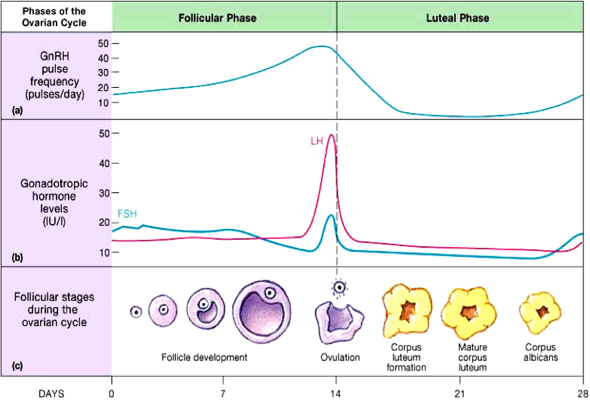
- AMaturation of oocyte and ovulation
- BResult of stimulaiton from GnRH
- CSurge result in maturation/ovulation
- DProduce estrogen and progesterone
114Match
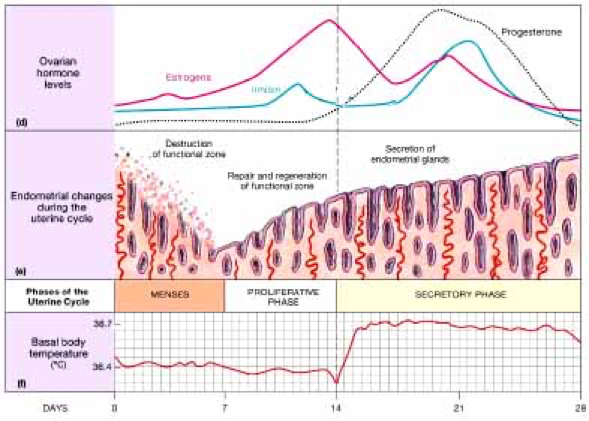
- AEstrogen->Kiss peptins->GnRH->LH&FSH
- BProduced by corpus luteum
- CBuild up caused by progesterone
- DRegression of corpus luteum
115If pregnancy occurs chorionic gonadotroph (sectreted from [blank_start]placenta[blank_end]) secretions prolong the [blank_start]progesterone[blank_end] secretion and maintains pregnancy
- APlacenta
- BCorpus Luteum
- CHyothalamus
- Dprogesterone
- Eestrogen
- FLH
- GGnRH
116All steroid hormones are derived from [blank_start]cholesterol[blank_end] and are lipid soluble therefore must utilize [blank_start]binding[blank_end] proteins
- Acholesterol
- Bamino acids
- Cglucose
- Dfatty acids
- Ebinding
- Fpairing
- Gmatching
- Hprotecting
117In the steroid hormone synthesis pathway:
-The Steroidogenic acute regulatory protein ([blank_start]StAR[blank_end]) moves [blank_start]cholesterol[blank_end] into the inner membrane of the [blank_start]mitochondria[blank_end] (shuttling protein)
-The [blank_start]cytrochrome[blank_end] P450 side chain cleavage is the rate limiting enzyme
-[blank_start]Aromatase[blank_end] is used in the conversion from androstenedione and testosterone to estrogen and Estradiol
-The only determination of product=[blank_start]specific[blank_end] enzymes along the pathway- AStAR
- Bcholesterol
- Camino acids
- Dglucose
- Emitochondria
- Fgolgi body
- GER
- HCell
- Icytrochrome
- JAromatase
- KAromylase
- LConvertase
- Mspecific
- Nmajor
- Oselective
118Androgens experience only [blank_start]-[blank_end] feedback
Estrogen experiences only [blank_start]+[blank_end] feedback- A-
- B+
119Which of these options correctly pairs pancreatic hormones with the type of cell that produces them?
- AInsulin- beta cells
- BInsulin- alpha cells
- CGlucagon- alpha cells
- DGlucagon- beta cells
120Which of these hormones are produced in the adrenal glands?
- AInsulin
- BGlucocorticoids
- CGlucagon
- DAdrenalin
121[blank_start]Glycogenolysis[blank_end]= the conversion of glycogen to glucose
[blank_start]Gluconeogenesis[blank_end]= the synthesis of new glucose from non-carbohydrate substrates (a.as or glycerol)- AGlycogenolysis
- BGlycogen Synthesis
- CGluconeogenesis
- DGlycolysis
122Insulin...
- AIncreases blood glucose
- BIs a hypoglycemic hormone
- CEnhanced cellular storage of glucose
- DOpposes fat synthesis
- EActs on RTK receptors
- FDecreases solute transport
- GIncrease oxidation of glucose in adipose tissues to produce ATP
- HIncrease gycogenesis in mainly muscle
- IDecrease protein synthesis as a result of increased a.a transport
123Type 1 Diabetes is an autoimmune disorder that is...
- AInsulin independent
- BInsulin dependent
- CInsulin acting
- DInsulin overloading
124What hormones oppose insulin action?
- AEstrogen
- BGlucagon
- CTestosterone
- DCortisol
- EAdrenaline
- FProgesterone
125Glucagon is a....
- AHyperglycemic hormone
- BEnhances the actions of insulin
- CActs on liver cells to increase glucose production
- DDecrease glucose levels in circulation
126What actions are characteristic of Glucagon?
- AIncreased glycogenolysis
- BDecreased glyconeogenesis
- CIncreased lipolysis
127What type of hormones are associated with the Adrenal Medulla?
- ACorticosteroids
- BCatecholamines
- CGrowth Hormones
- DSteroid hormones
128Within the Catecholamine synthesis pathway:
[blank_start]Phenylalanine[blank_end] is broken down by phenylalanine hydroxylase to make [blank_start]Tyrosine[blank_end] (the backbone for all amine hormones) is then broken down by Tyrosine hydroxylase (rate limiting enzyme) to produce [blank_start]dihydroxyphenylalanine[blank_end] (DOPA) which in turn in broken down to form Dopamine, then [blank_start]Norepinepherine[blank_end] which is lastly broken down by [blank_start]Phenylethanolamine-N-methyltransferase[blank_end] (PNMT) to form [blank_start]Epinepherine[blank_end].- APhenylalanine
- BTyrosine
- Cdihydroxyphenylalanine
- DNorepinepherine
- EPhenylethanolamine-N-methyltransferase
- FEpinepherine
129Andregenic receptors are sensitive to both E and NE although which one is more responsive to alpha and which to beta receptors?
- Aalpha- E, beta- NE
- Balpha-NE, beta- E
130Epinephrine has a more generalized bodily response when it comes to an emergency response than Norepinepherine.
- ATrue
- BFalse
131Adrenalin is a hyperglycemic hormone because it...
- AStimulates ACTH release
- BStimulates insulin release
- CStimulates glycogenolysis and gluconeogenesis
- DInhibits glucagon release
132The Adrenal cortes produces:
[blank_start]Mineralocorticoids[blank_end] such as aldosterone in the zona [blank_start]glomerulosa[blank_end]
[blank_start]Glucocorticoids[blank_end] such as cortisol in the zona [blank_start]fasciculata[blank_end]
[blank_start]Gondaocorticoids[blank_end] such as androgens in the zona [blank_start]reticularis[blank_end]
The only thing that differentiates what is produced at each layer are the [blank_start]enzymes[blank_end] that occur in the different areas- AMineralocorticoids
- Bglomerulosa
- CGlucocorticoids
- Dfasciculata
- EGondaocorticoids
- Freticularis
- Genzymes
- Hlipids
- Icomponents
133Chromaffin is the tissue in the medulla that secretes Catecholamine hormones
- ATrue
- BFalse
134The release and action of corticosteroids (steroid hormones) takes longer because...
- AThey act over a larger distance
- BThey move more slowly
- CThey result in new protein synthesis
- DThey are larger
135In the Hypothalamo-Hypophyseal-Adrenal axis:
The [blank_start]hypothalamus[blank_end] produces [blank_start]corticotropin releasing hormone[blank_end] (CRH) that acts on the [blank_start]pituitary[blank_end] which releases [blank_start]ACTH[blank_end] which binds to the [blank_start]adrenal cortex[blank_end] through the melanocortin 2 receptor ([blank_start]MC2R[blank_end]) which finally produces [blank_start]corticosteroids[blank_end].- Ahypothalamus
- Bcorticotropin releasing hormone
- Cpituitary
- DACTH
- Eadrenal cortex
- FMC2R
- Gcorticosteroids
136Glucocorticoids....
- Aincrease the avalability of glucose
- Binhibit the breakdown of proteins and fats for their conversion to carbohydrates for gluconeogenesis
- Cinhibits the uptake of glucose from certain cells
Information
- Description
- 2 Biological Sciences Quiz on ZOOL 461 Midterm Review, created by Grace Georgopoulos on 15/10/2016.
- Author
- Grace Georgopoulos
- Language
- English
- Views
- 362
- Tags
- Rating
- 5.0 out of 5 · 1 rating Rate this quiz