
Cardiovascular System mind maps
15 mind maps by 14 users
This GoConqr page gathers cardiovascular system mind maps on heart development, vessel structure and cardiac muscle. It offers university students ways to review these topics and teachers ready-made material. There are over 10 community-made mind maps for university-level study. Pick a map to start exploring.
Mind maps
-
 Histology of Heart and Blood Vessels
-
Heart Development
-
Heart
-
Histology of Heart and Blood Vessels
-
Cardiovascular-Cardiac Muscle
-
Structure of Vessels
-
Placenta and vascular development
-
Cardiovascular System
-
Cardiovascular Histo
-
Interatrial Septal Embryology
-
ATRIAL SEPTATION
-
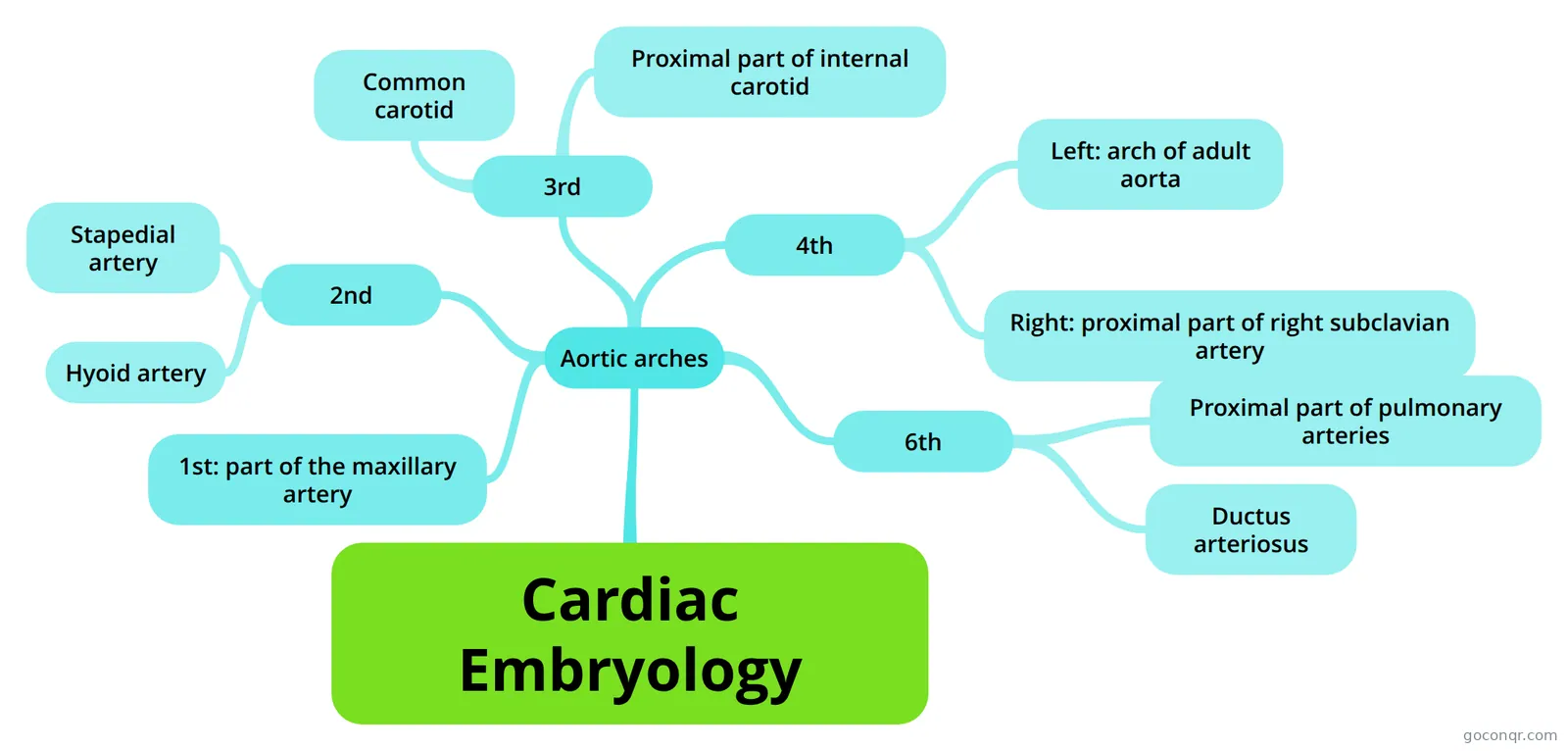 Cardiac Embryology Notes from Doctors in Training
-
EMBRIOLOGY OF THE HEART
-
WAKE UP DAD
-
Embryology of the venous system
More Cardiovascular System resources
About cardiovascular system mind maps
GoConqr OriginalCardiovascular system mind maps
The maps on this page bring together topics from histology and embryology. Structure of Vessels outlines vessel layers, while Cardiovascular-Cardiac Muscle describes cardiac muscle structure. Cardiac Embryology includes the aortic arches, and Placenta and vascular development covers vessels and the heart’s outflow tract.
How to use the maps
Start with Structure of Vessels if you want an overview of vessel layers. Read the branches, then try to recall the layers without looking. Return to the map to check the details you missed.
For development, compare the branches in Heart Development with those in Cardiac Embryology. When you want to test recall in a different way, switch to a quiz or flashcard deck on the unit page. Choose a topic and explore its map.
Frequently asked questions
Which mind map is a useful starting point for vessel structure?
Start with “Structure of Vessels” for an overview of vessel features and layers. Its branches include the tunica intima, tunica media and tunica adventitia. You can use the map to review those names, then check how they fit into the wider vessel overview.
Which maps cover heart development?
“Heart Development” covers the primitive heart field and folding. “Cardiac Embryology” includes the aortic arches, while “Interatrial Septal Embryology” follows early stages of development. Each offers a different set of branches, so the starting point depends on the part you want to review.
Are these mind maps free to use?
Yes. Every resource listed on this page is free to open and study, with no account needed. The maps were made by GoConqr users rather than by GoConqr. A free account also lets you save quiz scores and make your own study resources.