
Musical Instruments mind maps
254 mind maps by 200 users · Page 1 of 7
This Musical Instruments page gathers GoConqr mind maps on instrument families, playing techniques and individual instruments. It offers over 200 mind maps for school students exploring families, primary pupils learning instrument names, and teachers seeking ready-made material, with resources for primary and secondary study. Pick a map to begin.
Mind maps
-
Classification according to vibrating elements or Universal Classification Clasificación universal de los instrumentos musicales, o clasificación según los elementos que vibran.
-
INSTRUMENTS AND THEIR CLASSIFICATION
-
String instruments
-
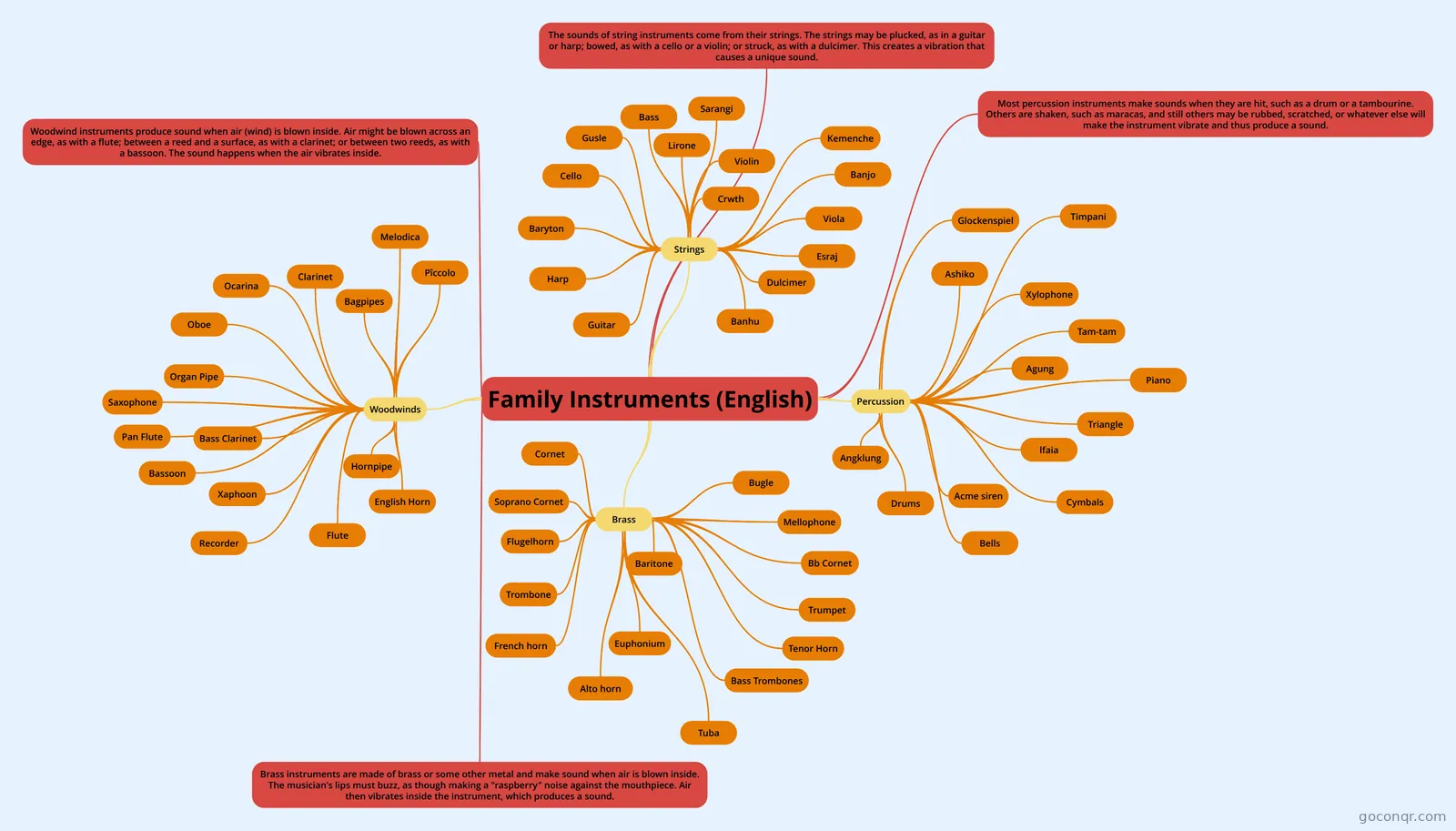 Family Instruments (English) Un trabajo sobre ejemplos de las familias de instrumentos (ingles)
-
Viola Practice
-
Unit 5 - The history, design and construction of back line instruments
-
1_Classification according to vibrating elements or Universal Classification Clasificación universal de los instrumentos musicales, o clasificación según los elementos que vibran.
-
Classification according to vibrating elements or Universal Classification Clasificación universal de los instrumentos musicales, o clasificación según los elementos que vibran.
-
Chinese Music
-
Approach
-
Musical instruments
-
STRING
-
Glass harmonica
-
STRING INSTRUMENTS
-
STRING INSTRUMENTS
-
Playing Techniques
-
STRING INSTRUMENTS
-
WIND INSTRUMENTS
-
Tone and Articulation
-
STRING INSTRUMENTS
-
WIND INSTRUMENT
-
WIND INSTRUMENTS
-
MUSIC UNIT 3 INSTRUMENTS
-
**Classifying music
-
WIND INSTRUMENTS
-
WIND INSTRUMENTS
-
String instruments
-
CHINESE INSTRUMENTS (String instruments from China)
-
WIND INSTRUMENTS
-
Untitled
-
Wind instrument
-
WIND INSTRUMENT
-
INSTRUMENTS FAMILIES
-
INSTRUMENTS AND THEIR CLASSIFICATION
-
WOODWIND INSTRUMENTS - ALICIA
-
SAXOPHONE
-
Modern classification of instruments
-
STRING INSTRUMRNT
-
Greek Folk Instruments
-
Woodwind instruments
More Musical Instruments resources
About musical instruments mind maps
GoConqr OriginalMusical Instruments mind maps
Mind maps lay out related ideas in branches, making them useful for following a topic from an overview to examples. Start with Family Instruments (English) for a look at brass, percussion and strings side by side. Its branches name instruments within each family, so you can connect the family names with examples.
For a closer look, String instruments groups examples under bowed, plucked and struck strings. The Trombone map moves from types to parts, while Playing Techniques includes strumming, tapping and other techniques.
Use the branches to revise
Read one branch at a time, then cover the examples and see which you can recall. Revisit the map to check. When you want a different kind of practice, switch to a quiz on the unit page; flashcards can help with shorter vocabulary review. Choose a branch and see where it leads.
Frequently asked questions
Which mind map is a useful starting point?
Try Family Instruments (English) for an overview of several families, including brass, percussion and strings. Its branches pair family names with examples such as the trumpet, drums and violin. You can then choose a map on one family if you want a closer look.
Do the maps cover individual instruments as well as families?
Yes. The list includes Trombone, which covers types and parts, and Viola Practice, which includes ideas about listening to tone. There are also maps on woodwind and string instruments, as well as Playing Techniques, so you can choose a broader or narrower topic.
Are these mind maps free to use?
Yes. Every resource listed here is free to open and study without an account. The maps were made by GoConqr users. A free account also lets you save quiz scores and make your own quizzes, mind maps, flashcards and notes.