
Test
Ceramics and gold part 1
Preguntas del test (10)
1What are the ages of the oldest and youngest Ceramics in the Millenium of Contact Exhibit?
- AT'ang (618-906 AD) and Ming (1642-1912 AD)
- BT'ang (618-906 AD) and Yuan (1642-1912 AD)
- CT'ang (618-906 AD) and Qing (1642-1912 AD)
- DT'ang (618-906 AD) and Long Bao (1642-1912 AD)
2Celadon wares are known for the following except for:
- AThe greenish color tries to replicate the color of the semi precious stone emerald.
- BThe greenish color is obtained from the use of iron oxides
- CThe greenish color was named after a Theater charater that wore the same colored costume
- DThe greenish color of the celadon produced in Longch'uan province is recognized as the source of the most refined celadon of the Sung Dynasty.
3How many ceramics are on loan by the Villanuevas?
- A100+ Chinese and Southeast Asian Ceramics are on display from the 3800+ collection on loan
- B200+ Chinese and Southeast Asian Ceramics are on display from the 3800+ collection on loan
- C300+ Chinese and Southeast Asian Ceramics are on display from the 3800+ collection on loan
- D500+ Chinese and Southeast Asian Ceramics are on display from the 3800+ collection on loan
4Which of the following is not true?
- APorcelain - White, highly vitrified, extremely hard and translucent when thin
- BDehua ware - White porcelain with ivory glaze first produced in the mid 10th century
- CQingbai- "bulish-white" or shadowed blue or green"
- DYue ware - An early greenware. Body is gray stoneware and the glaze an olive-green to gray
5Which of the following is NOT a correct desctiption of this piece?
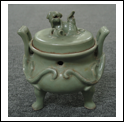
- AThis is a stone ware.
- BThis is an incense burner for ceremonial function
- CThis was created during the Yuan Dynasty (14th Century)
- DThis is a water vessel but spots of oil residues can be seen
6Which of the following materials were used for this piece?

- AIron,clay, copper, and cobalt oxide
- BIron, stoneware, copper and cobalt oxide
- CIron, clay, copper and iron oxide
- DIron, clay, stoneware and iron oxide
7Which of the following has a correct symbolism?
- AChrystanthemum - traits of harmony and vitality
- BLion or the "dog of fo" - traits of valor and energy
- CCrane - traits of obedience and flexibility
- DTwin gold fish - traits of the yin and yang
8Panika is the following EXCEPT for:
- ATerm for 18 karats
- BTerm for "inexpensive" jewelry during the Precolonial period
- CUsed for the hollow earrings and barter rings
- DUsed for the Kinarri and most of the religious images
9Which of the following statements are INCORRECT:
- ADalisay = 24 Karats
- BGinugulan = 22 karats
- CHilapo - 20 karats
- DBislig = 14 karats
10Which of the following statements are incorrect:
- ATumbaga is a malay word for copper
- BLingling-o is the omega shaped ornament
- CSaga is a measurement equal to 1 Tahil or one Chinese ounce
- DNaga is often identified with the sea serpent
Información
- Descripción
- Ceramics and gold
- Autor
- Joy Pena
- Idioma
- English
- Visitas
- 80
- Etiquetas
- Valoración
- Aún sin valoraciones Valora este test