
Test
Midterm Study Guide
Este test tiene tipos de pregunta que se abren en el reproductor de siempre.
Preguntas del test (83)
1The definition of communication is the [blank_start]process that people use[blank_end] to [blank_start]exchange ideas and information[blank_end], [blank_start]needs and desires[blank_end]/
- Aexchange ideas and information
- Bneeds and desires
- Cprocess that people use
2[blank_start]Form[blank_end], [blank_start]content[blank_end], and [blank_start]use[blank_end] are the components of language.
- AForm
- Bcontent
- Cuse
3[blank_start]Articulation[blank_end], [blank_start]fluency[blank_end], and [blank_start]voice[blank_end] are the components of speech.
- AArticulation
- Bfluency
- Cvoice
4Communication must include a [blank_start]receiver/sender[blank_end] and [blank_start]shared intent/means[blank_end]
- Areceiver/sender
- Bshared intent/means
5Which of the following are types of communication?
- AASL
- BPhonology
- CVerbal/Non-verbal
- DAlphabet
- EReceptive/Expressive
6Language is composed of [blank_start]phonology[blank_end], [blank_start]morphology[blank_end], and [blank_start]syntax[blank_end].
- Aphonology
- Bmorphology
- Csyntax
7Phonology is
- Athe smallest unit of sound
- Bthe study of the sound system of language
- Cthe smallest unit of language that changes meaning
- Dthe study of the meaning of words
8Phonemes are distinguished by [blank_start]place[blank_end], [blank_start]voice[blank_end], and [blank_start]manner[blank_end].
- Aplace
- Bvoice
- Cmanner
9Phonotactic constraints are rules that specify which [blank_start]sounds can and cannot occur together[blank_end] and [blank_start]specific to every language[blank_end].
- Asounds can and cannot occur together
- Bspecific to every language
10The study of words and how they are formed is called [blank_start]morphology[blank_end].
- Amorphology
11A bound morpheme can stand on it's own.
- AVerdadero
- BFalso
12The study of the rules that govern how words are put together to make phrases and sentences.
- APhonology
- BMorphology
- CSyntax
- DPragmatics
13The study of the meaning of words is
- APragmatics
- BSyntax
- CMorphology
- DSemantics
14The use of language for communication purpose is called
- APragmatics
- BSemantics
- CSyntax
- DPhonology
15Speech is produced by [blank_start]respiration[blank_end], [blank_start]phonation[blank_end], [blank_start]resonation[blank_end], and [blank_start]articulation[blank_end].
- Arespiration
- Bphonation
- Cresonation
- Darticulation
16Respiration is produced by the [blank_start]diaphragm[blank_end].
- Adiaphragm
17Phonation is produced by the [blank_start]larynx[blank_end].
- Alarynx
18Resonation is created with air in the
- Amouth, nasal cavities, & pharnyx.
- Blarynx, mouth, & voice box.
- Cpharnx, nasal cavities, & voice box.
19The types of articulation are [blank_start]place[blank_end], [blank_start]manner[blank_end], and [blank_start]voice[blank_end].
- Aplace
- Bmanner
- Cvoice
20Language is lateralized in the
- Aleft hemiphere.
- Bright hemisphere.
21Interpretation of paralinguistic cues occurs in the
- Aleft hemisphere.
- Bright hemisphere.
22The primary centers of the brain for language are the [blank_start]Broca's[blank_end] and [blank_start]Wernicke's[blank_end] area.
- ABroca's
- BWernicke's
23Damage to the Broca and Wernicke areas causes [blank_start]aphasia[blank_end].
- Aaphasia
24[blank_start]Myelination[blank_end] is the growth of sheathing around nerves that improves the transmission of messages.
- AMyelination
25[blank_start]Plasticity[blank_end] is the changes to the brain in response to injury.
- APlasticity
26Label the Phonological Awareness Umbrella below.
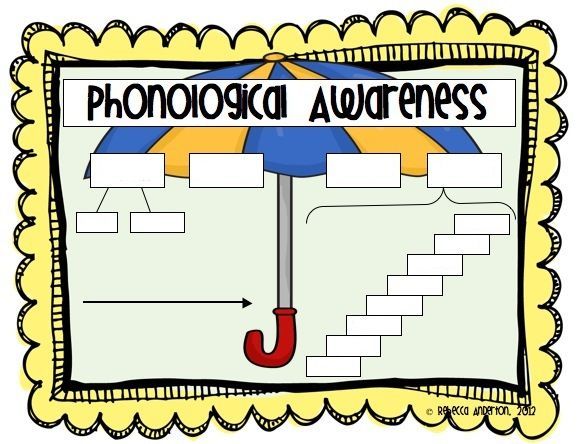
- AOnset-Rime
- BWord Awareness
- CRhyme
- DAlleration
- ESyllable Awareness
- FPhonemic Awareness
- GAddition
- HDeletion
- ISubstitution
- JSegmentation
- KBlending
- LIdentity
- MIsolation
- NCategorization
27In 1954, who said language was dependent on cognition.
- APiaget
- BVygotsky
- CPinker
- DMacWhinney
28In 1962, who said language and cognition are interdependent?
- APiaget
- BVygotsky
- CPinker
- DMacWhinney
29In 1994, who said language and cognition develop interdependently?
- APiaget
- BVygotsky
- CPinker
- DMacWhinney
30In 1998, who said that both language and cognition depended on social interaction, language input, and neurological development.
- APiaget
- BVygotsky
- CPinker
- DMacWhinney
31The behavioral model of language development was made by [blank_start]B.F. Skinner[blank_end]. Language is learned through [blank_start]imitation and reinforcement[blank_end], learned [blank_start]like other behaviors[blank_end], parents reinforce [blank_start]meaning not structure[blank_end], [blank_start]comprehension[blank_end] precedes [blank_start]production[blank_end]. It is limited by it's wrong prediction about [blank_start]word acquisitions[blank_end] and how to explain [blank_start]novel utterances[blank_end].
- AB.F. Skinner
- Bimitation and reinforcement
- Clike other behaviors
- Dmeaning not structure
- Ecomprehension
- Fproduction
- Gword acquisitions
- Hnovel utterances
32The Nativist/ Syntactic model was created by [blank_start]Noam Chomsky[blank_end]. Language is an [blank_start]inborn ability[blank_end] in humans meaning we have a [blank_start]language acquisition device[blank_end]. It is limited by the role of [blank_start]input[blank_end] and other [blank_start]parts of language[blank_end].
- ANoam Chomsky
- Binborn ability
- Clanguage acquisition device
- Dinput
- Eparts of language
33The Semantic-Cognitive model was created by [blank_start]Louis Bloom[blank_end]. [blank_start]Meaning[blank_end] precedes [blank_start]structure[blank_end] and the same utterance can [blank_start]have multiple meanings[blank_end]. It is limited by the relationship of [blank_start]cognition and language[blank_end].
- ALouis Bloom
- Bstructure
- CMeaning
- Dhave multiple meanings
- Ecognition and language
34The Social Interactionist model is created by [blank_start]Ninnio[blank_end] & [blank_start]Snow[blank_end] & [blank_start]Tomasello[blank_end]. The need to communicate precedes [blank_start]language structures[blank_end] and parents alter [blank_start]their language[blank_end] for their children. It is limited by not accounting for [blank_start]specific structures[blank_end] and it doesn't account for the [blank_start]child's role[blank_end].
- ANinnio
- BSnow
- CTomasello
- Dlanguage structures
- Etheir language
- Fspecific structures
- Gchild's role
35The Information Processing model was created by [blank_start]Bates[blank_end] & [blank_start]MacWhinney[blank_end]. Language structure emerges from [blank_start]communicative functions[blank_end] and competition eliminates [blank_start]unsuccessful forms[blank_end]. It is limited by [blank_start]research evidence[blank_end].
- ABates
- BMacWhinney
- Ccommunicative functions
- Dunsuccessful forms
- Eresearch evidence
36The Emergentist model was created by [blank_start]MacWhinney[blank_end]. Language emerges from [blank_start]interaction between input and biology[blank_end]. It's limited by [blank_start]evidence[blank_end].
- AMacWhinney
- Binteraction between input and biology
- Cevidence
37[blank_start]Prelocutionary[blank_end], [blank_start]illocutionary[blank_end], and [blank_start]locutionary[blank_end] are the stages of communicative development.
- APrelocutionary
- Billocutionary
- Clocutionary
38Non-intentional communication that relies on a partner for interpretation occurs in the
- Alocutionary stage
- Bprelocutionary stage
- Cillocutionary stage
39Intentional communication using non-linguistic & paralinguistic models occurs in the
- APrelocutionary stage
- BLocutionary stage
- CIllocutionary stage
40Intentional communication using words to convey a message occurs in the
- ALocutionary stage
- BIllocutionary stage
- CPrelocutionary stage
41During this stage of sound awareness, children have figure-ground awareness
- Aawareness
- Blocation
- Cdiscrimination
- Dmeaning
42During this stage of response to sound, children turn their head towards the sound.
- Aawareness
- Blocation
- Cdiscrimination
- Dmeaning
43During this stage of response to sound, children differentiate sounds.
- Aawareness
- Blocation
- Cdiscrimination
- Dmeaning
44During this stage of response to sound, children begin to understand what sound represents.
- Aawareness
- Blocation
- Cdiscrimination
- Dmeaning
45From 0-8 weeks, children can [blank_start]discriminate[blank_end] sounds, make [blank_start]vegetative[blank_end] sounds, and cry [blank_start]reflexively[blank_end].
- Adiscriminate
- Bvegetative
- Creflexively
46From 8-20 weeks, children [blank_start]coo[blank_end] and laugh, make [blank_start]vowel-like[blank_end] sounds, and cry [blank_start]more controlled[blank_end].
- Acoo
- Bvowel-like
- Cmore controlled
47From 16 to 30 weeks, children [blank_start]babble[blank_end], have more [blank_start]vocal[blank_end] play, have increased control [blank_start]over speech[blank_end], and [blank_start]prolonged variations[blank_end].
- Ababble
- Bvocal
- Cover speech
- Dprolonged variations
48From 25 to 50 weeks, children start [blank_start]reduplicated[blank_end] babbling, [blank_start]jargon[blank_end] speech, can can say [blank_start]some words[blank_end].
- Areduplicated
- Bjargon
- Csome words
49From 9 to 18 months, children start [blank_start]non-reduplicated[blank_end] babbling, start saying [blank_start]protowords[blank_end], and transition to [blank_start]language[blank_end].
- Anon-reduplicated
- Bprotowords
- Clanguage
50MLU stage 1 ranges from [blank_start]1.0[blank_end] to [blank_start]2.0[blank_end] for ages [blank_start]12[blank_end] to [blank_start]26[blank_end] months.
- A1.0
- B2.0
- C12
- D26
51MLU stage 2 ranges from [blank_start]2.0[blank_end] to [blank_start]3.0[blank_end] for ages [blank_start]27[blank_end] to [blank_start]30[blank_end] months.
- A2.0
- B3.0
- C27
- D30
52MLU stage 5 ranges from [blank_start]3.75[blank_end] to [blank_start]4.5[blank_end] for ages [blank_start]41[blank_end] to [blank_start]46[blank_end] months.
- A3.75
- B4.5
- C41
- D46
53MLU stage 3 ranges from [blank_start]2.5[blank_end] to [blank_start]3.0[blank_end] and from ages [blank_start]31[blank_end] to [blank_start]34[blank_end] months.
- A2.5
- B3.0
- C31
- D34
54MLU stage 4 ranges from [blank_start]3.0[blank_end] to [blank_start]3.75[blank_end] and from ages [blank_start]35[blank_end] to [blank_start]40[blank_end] months.
- A3.0
- B3.75
- C35
- D40
55MLU stage 6 ranges from [blank_start]4.5[blank_end] to [blank_start]+[blank_end] and from ages [blank_start]47[blank_end] to [blank_start]+[blank_end] months.
- A4.5
- B+
- C47
- D+
56To calculate MLU you count the number of morphemes in 50 to 100 utterances, then divide the total number of morphemes by the number of utterances.
- AVerdadero
- BFalso
57In the school years _______ is developed, noticed by inflectional prefixes, derivational suffixes, and reflexes.
- AMorphology
- BSemantics
- CSyntax
- DPragmatics
- EMetalinguistic ability
58In the school years, ________ is developed and seen by figurative language and irony.
- AMorphology
- BSemantics
- CSyntax
- DPragmatics
- EMetalinguistic ability.
59In the school years, ________ is developed and noticed by adjective ordering, verb tenses, irregular verbs, and noun & verb tenses.
- Amorphology
- Bsemantics
- Csyntax
- Dpragmatics
- Emetalinguistic ability
60In the school years, __________ is developed and seen through conversational competences, use of narrative and understanding of indirect requests.
- Amorphology
- Bsemantics
- Csyntax
- Dpragmatics
- Emetalinguistic ability
61________ is going beyond language use to thinking about language for writing, reading, and spelling.
- Amorphology
- Bsemantics
- Csyntax
- Dpragmatics
- Emetalinguistic ability
62Language development in the school years implicates teaching through use for [blank_start]organizing[blank_end] and [blank_start]planning[blank_end] instruction and [blank_start]student-teacher[blank_end] interaction.
- Aorganizing
- Bplanning
- Cstudent-teacher
63Phonological awareness is a good predictor of [blank_start]reading success[blank_end], a precursor to [blank_start]phonics[blank_end].
- Areading success
- Bphonics
64Phonological awareness is the ability to focus on and manipulate [blank_start]phonemes[blank_end] in [blank_start]spoken words[blank_end].
- Aphonemes
- Bspoken words
65__________ is important for reading comprehension, as well as receptive and expressive knowledge.
- ANarrative skills
- BSemantic skills
- CSyntactic Skills
66_________ is a contributor to reading success and vocabulary skills.
- ANarrative Skills
- BSemantic Skills
- CSyntactic Skills
67________ is seen through writing skills, through the beginning, middle, and end of a story; connection between the reader or listener; and stories becoming longer.
- ASemantic skills
- BNarrative skills
- CSyntactic skills
68Label the image below with the steps of the writing process.
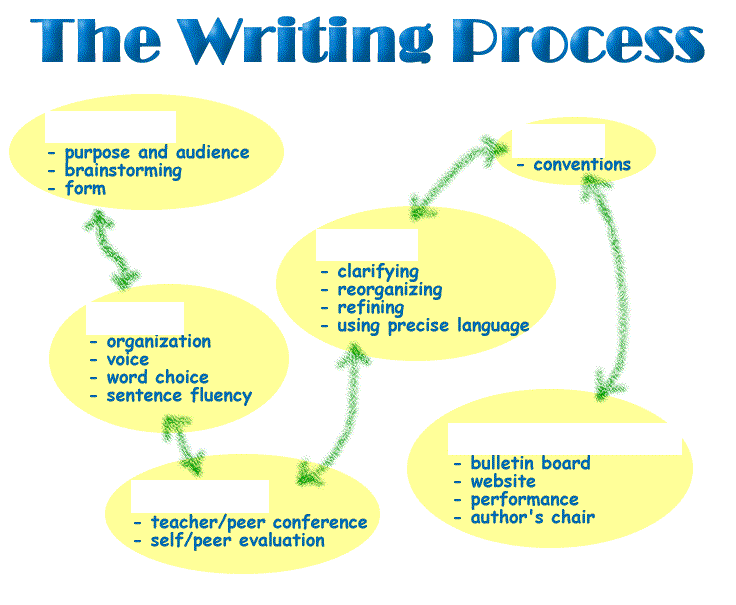
- APre-writing
- BWriting
- CResponding
- DRevising
- EEditing
- FPublishing
69Language and literacy implicates teaching through knowing which children are at risk for [blank_start]reading or writing difficulties[blank_end], students having reading and writing success, and teachers understanding the [blank_start]basis of literacy[blank_end].
- Areading or writing difficulties
- Bbasis of literacy
70Between the ages of __________ a child knows 50-200 words and can understand simple concepts and directions.
- A1-2 years
- B2-3 years
- C3-4 years
- D4-5 years
71Between the ages of __________ children know 500 to 700 words and understand concept pairs.
- A1-2 years
- B2-3 years
- C3-4 years
- D4-5 years
72Between the ages of ___________ children understand 1000+ words and "wh" questions. They also understand multi-step directions and comprehend stories.
- A1-2 years
- B2-3 years
- C3-4 years
- D4-5 years
73Between the ages of _________ children understand 2500 to 3000 words and has increased conceptional knowledge. They also can have a conversation about their life.
- A1-2 years
- B2-3 years
- C3-4 years
- D4-5 years
74During the ages of ________ children use up to 200 words can over/underextend meanings.
- A1-2 years
- B2-3 years
- C3-4 years
- D4-5 years
75During the ages of ___________ child use up to 570 words, have increased grammatical structure , and can initiate topics.
- A1-2 years
- B2-3 years
- C3-4 years
- D4-5 years
76During the ages of _________ children combine 4+ words, can relay personal experiences, and so best talking about the here and now.
- A1-2 years
- B2-3 years
- C3-4 years
- D4-5 years
77During the ages of __________ children can talk in lengthy, detailed sentences, can tell simple stories, and are more confident to initiate topics.
- A1-2 years
- B2-3 years
- C3-4 years
- D4-5 years
78From the ages of ________ children know object permanence and start to use basic toys appropriately.
- A9-12 months
- B1-2 years
- C24-30 months
- D3-4 years
- E5 years
79From the age of ________ children know the function of toys, use autosymbolic play, ask for adult help in unknown situations, and combines two toys in play.
- A9-12 months
- B1-2 years
- C24-30 months
- D3-4 years
- E5 years
80During the ages of _______ children use daily experiences in play and use realistic props.
- A9-12 months
- B1-2 years
- C24-30 months
- D3-4 years
- E5 years
81During the age of ________ children can sequence events, replay experienced events with different outcomes, can build 3-dimension objects, and use problem solving skills.
- A9-12 months
- B1-2 years
- C24-30 months
- D3-4 years
- E5 years
82At ________ old children use imaginative and cooperative play, do not need concrete props, and plans and organizes toys and people.
- A9-12 months
- B1-2 years
- C24-30 months
- D3-4 years
- E5 years
83At [blank_start]5 years[blank_end] old, children love jokes and riddles, can state basic information about themselves, and understand time concepts.
- A5 years
Información
- Descripción
- Questions created from given study guide
- Autor
- Judeth Lucas
- Idioma
- English
- Visitas
- 72
- Etiquetas
- Valoración
- Aún sin valoraciones Valora este test