
Test
ANZCA Part 2 MCQs - 2015
Preguntas del test (49)
1A young man has removed his buprenorphine patch on the morning of surgery. How long will it be before his plasma level reaches half its original level?
- A12 hours
- B18 hours
- C24 hours
- D30 hours
- E36 hours
2A young man has removed his fentanyl patch on the morning of surgery. How long will it be before his plasma level reaches half its original level?
- A12 hours
- B18 hours
- C24 hours
- D30 hours
- E36 hours
3A 58 year old with a solitary hepatic metastasis from colon cancer is scheduled for a resection of a right lobe of liver. In order to manage the risk of intra-operative haemorrhage, it is most important to maintain:
- AHigh CVP in anticipation of heavy blood loss
- BDecreased MAP to reduce arterial bleeding
- CDecreased CVP to reduce venous bleeding
- DNormal MAP in anticipation of heavy blood loss
- ENormal CVP to ensure adequate filling of the heart
4An 80 year old man is having a transuretheral bladder resection. The surgeon is using diathermy close to the lateral bladder wall which results in patient thigh adduction. The nerve involved is:
- AInferior gluteal
- BObturator
- CPudendal
- DScaitic
- ESuperior gluteal
5In Conn's syndrome, the usual derangement is
- AHypoglycaemia, hypokalaemia and hypernatraemia
- BHypoglycaemia, hyperkalaemia and hyponatraemia
- CNormoglycaemia, hypokalaemia and hypernatraemia
- DNormoglycaemia, hyperkalaemia and hyponatraemia
- EHyperglycaemia, hyperkalaemia and hyponatraemia
6A 60 year old woman is admitted to hospital with a subarachnoid haemorrhage. Her GCS is 11 and her blood pressure is 175/110 mmHg. She is administered oral nimodipine. The main reason for this treatment is:
- AControl her blood pressure
- BManage acute hydrocephalus
- CPrevent delayed cerebral ischaemia
- DReduce the risk of rebleeding
- ETreat angiographically-proven cerebral vasospasm
7You are the anaesthetist at a Caesarean Section for a 36/40 gestation pregnancy. The baby at birth is floppy and apnoeic. You decide that positive pressure ventilation via mask is necessary. The recommended FiO2 is:
- A0.21
- B0.4
- C0.6
- D0.8
- E1.0
8You are inducing a 20-year-old female who has an IV cannula in her antecubital fossa which was inserted in the emergency department. She complains of pain after 10mL of propofol and it becomes clear that cannula is intraarterial. The best management option is:
- AIntraarterial injection of 5mL 1% lignocaine
- BIntraarterial injection of 30mL Normal Saline
- CIntraarterial injection of 50mg paparverine
- DIntraarterial injection of 500u heparin
- EObservation
9When is it necessary to use glycine as irrigation fluid for TURP?
- AFor monopolar diathermy
- BFor bipolar diathermy
- CFor Nd:Yag laser
- DGreenlight laser
10A 69 yo man is brought into ED by ambulance with a compound fracture of his forearm from an unwitnessed fall. Has a history of schizophrenia and depression with uncertain medication compliance. He is confused and agitated with generalised rigidity but no hyperreflexia. Obs - HR 120, BP 160/90, RR 18, Sats 98 Temp 38.8 Likely Dx?
- AHeat stress from anticholinergic therapy
- BHypoxic ischaemic encephalopathy
- CNeuroleptic malignant syndrome
- DSerotonin syndrome
- EPain from the compound fracture
11With surgical bleeding, the first clotting factor to reach a critical level is
- AI
- BII
- CVII
- DX
- EXIII
12Anaesthetic and respirable gas supplies to wall outlets in the operating theatre is at pressures of
- A200kPa
- B400kPa
- C500kPa
- D750kPa
- E1200kPa
13The most useful sign to distinguish between severe serotonin syndrome and malignant hyperthermia are
- AClonus
- BHyperthermia
- CMetabolic acidosis
- DMuscle rigidity
- EWheeze
14A patient is having a laparotomy, who has been on prednisolone for 6 months at 10mg/day. What is the equivalent dose of dexamethasone?
- A2mg
- B4mg
- C6mg
- D8mg
- E10mg
15Patient having an operation of a lacerated index finger under regional anaesthesia. Which combination of nerves blocked on this axillary view will provide adequate cover?
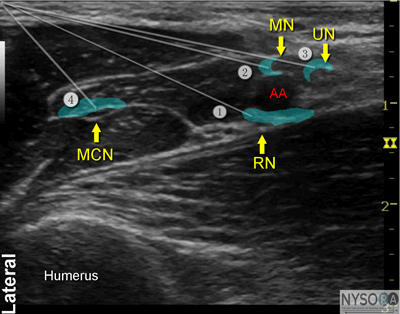
- A1 and 2
- B1 and 3
- C2 and 3
- D2 and 4
- E3 and 4
16A 20kg child has just had a caudal block but immediately has a VF arrest and is non-responsive to usual treatments. What dose of intralipid 20% would you give?
- A10ml
- B20ml
- C30ml
- D40ml
- E50ml
17An epidural for labour is placed. She then has a headache postpartum. Which of the following is inconsistent with a post-dural puncture headache.
- AHeadache located frontal only
- BPresents > 24 hrs post partum
- Cpresents immediately post partum
- Dassociated with auditory symptoms
- Eassociated with neck stiffness
18An eclamptic patient is given IV Magnesium. Which of these symptoms is often associated with magnesium administration?
- ABradyarrhythmia
- BCardiac arrest
- CHypotension
- DDepressed respiratory effort
19The clinical sign that a lay person should use to decide whether to start CPR is:
- Aabsence of breathing
- Bloss of central pulse
- Closs of peripheral pulse
- Dloss of consciousness
- Eobvious airway obstruction
20What is the maintenance fluid rate for a 15kg child?
- A60ml/hr
- B50ml/hr
21Patient's K+ is 7.0 what is the best initial management?
- AGive calcium
- BGive insulin and dextrose
22Which patients require antibiotic prophylaxis?
- APrevious Mitral valve ring annuloplasty
- BPrevious patch repair of vsd
23A 63 yo lady has a difficult thyroidectomy for cancer. Immediately post extubation she develops stridor and respiratory distress.
- AHypocalcaemia
- BRecurrent laryngeal nerve palsies
- CTracheomalacia
- DNeck oedema and haematoma
- EVocal cord oedema
24A 23 yo has a traumatic brain injury. Which fluid is relatively contraindicated?
- AAlbumin
- BNormal saline
- CCSL
- DColloid
- ESomething else
25A 53 year old smoker presents for a laparotomy. PFT results are:
FEV1 and FVC - both reduced
FEV1/FVC 98%
TLC, RV, DLCO 8 (30% of predicted)
What is the cause?- APE
- BObesity
- CBilateral phrenic nerve palsies
- DPulmonary fibrosis
- ECOPD
26A Traumatic Brain Injury patient has a cerebral angiogram that shows:
Cerebral perfusion = 15mL/100g/min,
Cerebral oxygen consumption = 3.5mL/100g/min.
This is consistent with:- ACerebral hyperperfusion
- BReperfusion injury
- CCerebral ischaemia
- DAppropriate autoregulation
- ECereberal vasoconstriction
27Absolute contraindication to ECT:
- ACochlear implants
- BEpilepsy
- CPregnancy
- DRaised intracranial pressure
- ERecent myocardial infarction
28FFP is given to a patient to treat hypofibrinogenaemia. The volume required to raise the fibrinogen by 1g/L is
- A1mL/kg
- B5mL/kg
- C10mL/kg
- D20mL/kg
- E30mL/kg
29 The diluted thrombin time measures the anticoagulant activity of:
- Aapixaban
- Brivaroxaban
- Cdabigatran
- Dwarfarin
- Eheparin
30In a trauma patient the main mechanism by which hypothermia exacerbates bleeding is by
- Aaltered blood viscosity
- Bcausing DIC
- Cinhibition of clotting factors
- Dpotentiation of anticoagulant effect of drugs used to treat DVT
- Edecreases platelet number and function
31A patient having a liver resection suffers a haemodynamically significant venous air embolism. During resuscitation how do you best position the patient?
- Ahead up, right side down
- Bhead up, left side down
- Chead up, no lateral tilt
- Dhead down, right side down
- Ehead down, left side down
32In a normal adult what amount of IV potassium chloride is needed to raise the serum potassium from 2.8 to 3.8mmol/L?
- A10mmol
- B20mmol
- C50mmol
- D100mmol
- E200mmol
33In a haemodynamically stable 20 year old man with blunt chest trauma, the best screening test to diagnose cardiac injury requiring treatment is:
- ACXR
- Bserum CK-MB
- Cserum troponin
- D12 lead ECG
- ETransthoracic Echocardiogram
34With regards to medical ethics, the concept of fidelity involves:
- Aequitable distribution of resources
- Bfollowing a professional code of conduct
- Cpromoting well being
- Dwise use of resources
- Ewitholding of futile treatments
35What is the correct position for the tip of a PICC in a child?
- ACarina
- BBelow right tracheobronchial angle
- CAbove right heart border
- DSternoclavicular junction
36What is the diagnosis?
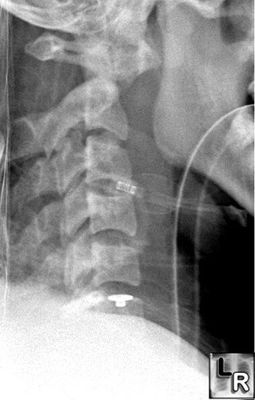
- AAtlantoaxial instability
- BRetropharyngeal haematoma (?or abscess)
- CTear drop fracture
- DEpiglottitis
- EUnilateral facet joint dislocation
37According to the ANZCA endorsed guidelines, what is the correct colour for the label for a subcutaneous ketamine infusion?
- APink
- BRed
- CBeige
- DBlue
- EYellow
38Prior to nasal intubation you spray Lignocaine/Phenylephrine preparation (CoPhenylcaine) into the nose. Some lands in the eye. What happens?
- AEcchymosis
- BMiosis
- CMydriasis
- DProptosis
- ENystagmus
39You trial a new drug to prevent PONV. It is 50% more effective than the current drug. Four percent of people still experience PONV with the new drug. How many people need to receive the new drug in place of the current drug to have one person less suffering from PONV?
- A2
- B8
- C15
- D25
- E33
40What does a white cylinder with a grey coloured shoulder/neck contain?
- AMedical air
- BCarbon Dioxide
- CHelium
- DOxygen
- EArgon
41The best solution to ensure asepsis prior to neuraxial anaesthesia is:
- A0.5% Chlorhexidine
- B0.5% Chlorhexidine with 70% alcohol
- C5% Povidine Iodine
- D5% Povidine Iodine with 70% alcohol
- E10% Povidine Iodine
42You are anaesthetising a 25 year male for an open appendicectomy. He has a Fontans circulation on a background of tricuspid atresia. The best strategy to manage his ventilation intraoperatively would be:
- AEnsure adequate PEEP
- BDecrease inspiratory time
- CAlter the I:E Ratio from 1:3 to 1:1.2
- DIncrease Inspiratory time but with reduced inspiratory pressures
- EEnsure adequate spontaneous ventilation
43You are anaesthetising a 70 year old woman for a CABG with a pulmonary artery catheter in situ. After separation from bypass you notice frank, copious blood rising in the endotracheal tube. Your immediate action should be to:
- ACheck ACT
- BInsert a double lumen tube
- CReinstate bypass
- DAdminister protamine
- EPull back the pulmonary artery catheter several centimetres
44Consider the following arterial blood gases. (Ref ranges in brackets)
-pH 7.28
-PaCO2 36
-Bicarbonate 18 mmol.l-1 (18-25)
-Base excess -7 mmol.l-1 (-4- +3)
-Na+ 142 mmol.l-1 (135-145)
-Cl- 112 mmol.l-1 (98-110)
These blood gases are consistent with:- Aacute renal failure
- Bdiabetic ketoacidosis
- Cethylene glycol overdose
- Dintraoperative infusion of 6 litres of normal saline
- Esalicylate overdose
45A 30 year old woman is admitted to ICU after a 500mg/kg aspirin overdose. What is the most effective therapy to enhance her elimination of the aspirin?
- AFrusemide
- BHaemodialysis
- CMannitol
- D0.9% sodium chloride
- ESodium bicarbonate
46MELD score: INR, Cr, Na, and
- Aalbumin
- BALT
- CAST
- Dbilirubin
- Efibrinogen
47Endovascular coiling of cerebral aneurysm under GA, patient suddenly develop hypertension. What is the most likely cause?
- AAcute hydrocephalus
- BRupture of aneurysm
- CContrast reaction
- DCerebral embolism
- ENothing
48A 70 year old is is intubated and ventilated post-laparotomy. He has CSL running @60ml/hr, with an NGT on suction with continuing high output. His ABG shows an appropriate pO2, pCO2 32, pH 7.66, Na 144, K 3.5, Cl 76. He has a normal creatinine and raised urea. How should you improve his acid base status? (Had a very very very long stem, with very long answers, but this was the gist, and I'm pretty confident with the answers except the first 2 fluid options).
- ALeave minute ventilation unchanged, (?leave fluids unchanged), commence PPI
- BLeave minute ventilation unchanged, (?leave fluids unchanged), commence acetazolamide
- CIncrease minute ventilation, change IVF to normal saline, commence PPI
- DIncrease minute ventilation, increase the fluid rate, commence acetazolamide
- EIncrease minute ventilation, leave fluids unchanged, commence acetazolamide
49What is the most sensitive monitor for detecting a venous air embolus during neuroanaesthesia?
- Atransoesophageal electrocardiography (yes - it said electro)
- Bprecordial Doppler
- Cprecordial stethoscope
- Dcapnography
Información
- Descripción
- ANZCA Part 2 MCQs - 2015 Sourced from http://www.kerrybrandis.com/wiki/mcqwiki/index.php?title=Finals_MCQs-Mar_2015
- Autor
- Branden Emmerson
- Idioma
- English
- Visitas
- 301
- Etiquetas
- Valoración
- Aún sin valoraciones Valora este test