
Fichas
Introduction to Clinical Oriented Anatomy
Fichas del conjunto (51)
- 1Terminologia Anatomica Purpose?The Language of Anatomy
- purpose is accuracy and concise - 2What is the Anatomical Position?head, gaze, toes - foward
arms adjacent to body
palms facing foward
lower limbs close together
feet parallel - 3Median planevertical plane down midline of body
dividing the body into right and left halves - 4Sagittal PlaneVertical plane parallel to the median plane
divides the body into right and left parts - 5Frontal (Coronal) PlaneVertical plane perpendicular to the median plane
divides the body into back and front - 6Horizontal (Transverse) Planecuts the body in segments
creating a top and bottom part - 7Anterior vs Posteriorfront vs back
- 8Ventral vs Dorsalrelated to CNS
front/face vs back - 9Superior vs Inferiortop most vs bottom most
closer to head vs closer to feet - 10Medial vs Lateralclosest to midline vs furthest from midline
- 11Proximal vs Distalnearest to axial vs furthest to axial skeleton
(related to points of attachments) - 12Rostral (cephalad) vs Caudaltoward the head vs toward the tail
(CNS associated) - 13Ipsilateral vs Contralateralon the same side vs opposite side of body
(in reference to the midline) - 14Superficial vs DeepToward the surface vs Away from the surface
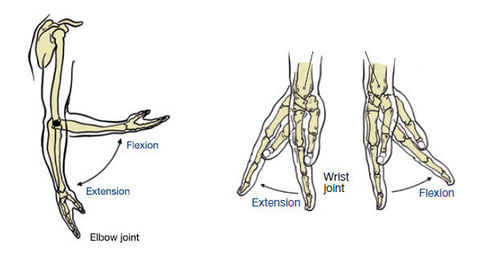
- 15Flexion vs Extensiondecrease the angle vs increase the angle
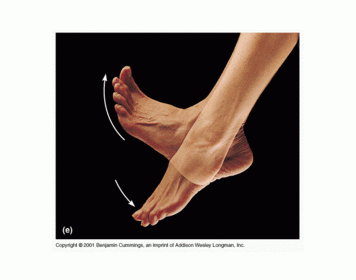
- 16Dorsiflexion vs PlantarflexionToes up vs point toes down
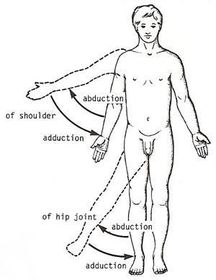
- 17Abduction vs Adductionoutward vs inward to body
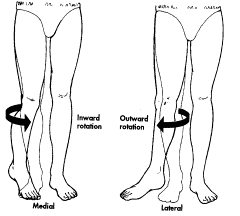
- 18Lateral rotation vs Medial rotationexternal (away from) vs internal (toward)
- 19CircumductionRelated to ball and socket joints
circular motion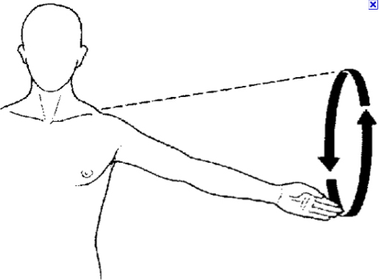
- 20Supination vs Pronationforward vs backward turn
Ex. Forearm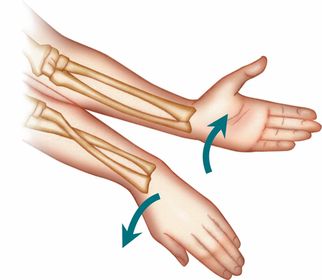
- 21Inversion vs EversionTurn the ankle in vs turn the ankle out
- 22Elevation vs DepressionUpwards vs downwards
Ex. shoulder - 23Protrusion vs Retrusionforward vs backward
Ex. TMJ - 24Opposition vs Repositiontoward the fingers vs back to anatomical position
Ex. the thumb with a saddle joint - 25Functions of Integumentary Systemprotection, containment, temperature, regulation, sensation, and endocrine
- 26Epidermissuperficial and cellular skin component
- 27Dermisdeep, connective tissue skin component
contains vascular, nerves, and appendages - 28Epithelial Cell ComponentsWide arrangements and variety
Avascular (located in basement membrane above the blood)
Polarity directionality - 29Fasciadense, organized connective tissue
- 30Functions of Fasciaorganizes regions into compartments
wraps, packs, and insulates deep structures - 31Bursaclosed sac or envelope of serous membrane
- 32Retinaculathickened deep fascia to hold tendons in place where they cross the joint during flexion and extension
- 33types of connective tissuetendons, ligaments, fascia, cartilage, bone, adipose
- 34intermuscular septaextend centrally from fascial sleeve to attach to bone
- 352 classifications of the skeletal systemAxial skeleton and
Appendicular skeleton - 36Axial SkeletonBones of the: head, neck, and trunk
- 37Appendicular SkeletonBones of the limbs including:
pelvic girdle and pectoral girdle - 38What is bone?Highly specialized hardened connective tissue
- 39What is bone mineralized by?Calcium and phosphate
- 40What is osteocytes?the living "bone cells"
- 41Types of osteocytesosteoblasts and osteoclasts
- 42Periosteumfibrous connective tissue covering skeletal element like a sleeve around bones, except at the articular cartilage
- 43Perichondriumfibrous connective tissue covering cartilage
- 44What are the 2 types of bone?Compact bone and spongy bone
- 45Classifications of BoneLong Bones
Short Bones
Flat Bones
Irregular Bones
Sesamoid Bones - 46Compact Bone and its functionSuperficial thin hard layer on bone.
Provides strength for weight bearing - 47Spongy Bonecentral mass surrounded by the compact bone
- 48Medullary Cavitymarrow cavity
either red or yellow bone marrow - 49Function of long bonesTubular bone
for rigidity and attachment of muscles and ligaments - 50Long bone Shapecontains the:
Diaphysis - shaft (greatest amount of compact bone)
Epiphysis - end
Metaphysis - middle - 51—
Información
- Descripción
- CHAPTER 1 OF MOORE CLINICALLY ORIENTED ANATOMY: Studying Anatomy, Anatomicomedical Terminology, Anatomical Variations, basics on integumentary system, fascia/bursae, cartilage/bones/joints, types of muscles, cardiovascular system, lymphoid system, CNS, PNS, ANS, medical imaging techniques
- Creado por
- Britney Matthews
- Visitas
- 64
- Etiquetas
- Valoración