
6763119

| Pregunta | Respuesta |
| The tendency to continue an endeavor once an investment in money, effort or time has been made | SUNK COST EFFECT |
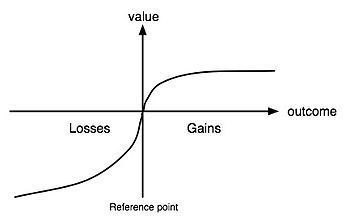
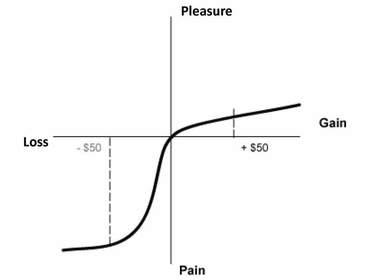
| The concept that explains why people think that losses loom larger than gains | PROSPECT THEORY |
| What is prospect theory? | Making decisions based on the potential value of loss/gain rather than the final outcome |
| What is it called when you continued to after the sunk cost? | Escalation & Commitment |
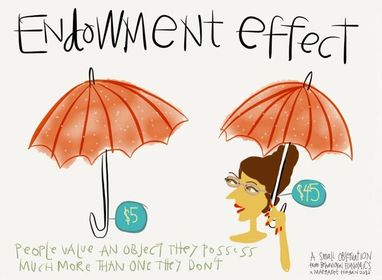
| What is the term for when people value an object more once it becomes theirs | Endowment Effect |
| What term does the eBay bidding wars and feeling ownership over the items exemplify? Why? | Psuedo Endowment effect - b/c when they are the highest bidder they feel ownership, even though they never had it. |
| When you feel ownership over an item that you didn't even technically own? | Psuedo-Endowment effect. WTA>WTP |
| What affects the magnitude of Psuedo Endowment ? | The amount of time spent being the fake 'owner' |
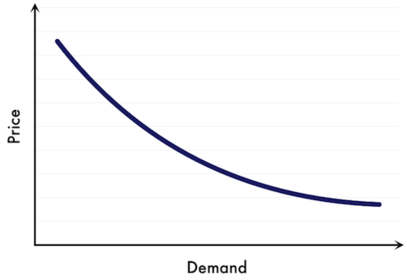
| What represents how much we can charge for an item before people will stop buying it? | The economic demand curve |
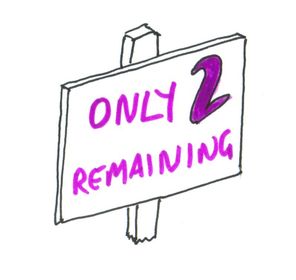
| What plays a role in determining the economic demand curve? | Scarcity - it creates demand |
| Why does Scarcity create demand? | B/c of 2 Misconceptions - 1. Scarcity = Quality 2. Reactance - people want what they cant have |
| What is Transaction Utility | When value is directly related to how good of a deal you think a price is, given the specific context you are in at the time |
| What is the Buyers VS Sellers question | What is the minimum $ you are willing to buy (willingness to pay) or sell an item (willingness to accept) |
| What were the results of the psychological Consequences of money study? | The people who were primed with with thoughts of money, tend to act in ways that reinforce the idea of self-sufficiency. |
| What is the Emotional Forecasting Error? | When people greatly overestimate their predicated amount of negative/positive emotion when dealing with loss or gain. |
| What is the omission bias? | The tendency to do nothing to avoid having to make a decision that could be interpreted as causing harm |
| Why do people feel the omission bias? | Because they don't want to be blamed, feel guilty if something goes wrong |
| What is preference reversal? | When the preference for something (A) instead of something (B) is switched when the 2 are put together side by side |
| What explains preference reversal? | The Failure of Procedure Invariance |
| Framing Effects are an example of what? and can cause what? | Failure of Procedure invariance & Preference Reversal |
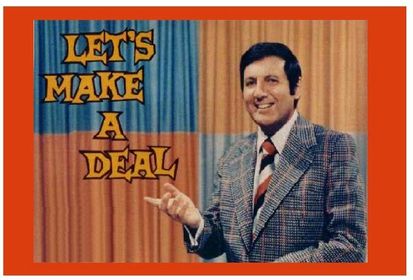
| Why do people get Monty's deal wrong? | B/c they ignore the game change, once a door is opened , the probabilty changes. 1/3...1/2 |
| What key terms influence the success of persuasion? | -Receivers Traits - Message Content - Senders Traits |
| What is important of Senders Traits in Persuasion? | -Is this source credible? - Are they likeable? |
| What makes a sender credible? | It depends on the context. |
| What determines how much we like someone? | - If they are similar to us - if they are trustworthy - if they are attractive |
| What types of message content influence people? | - Fear Appeal - Logic |
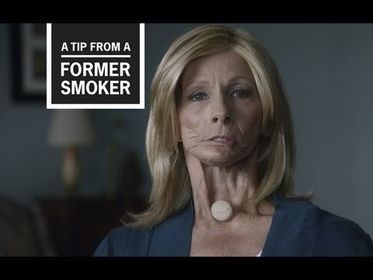
| To use fear effectively in a message, people must be ...what? | - Aware of the consequences - Given a realistic, workable solution |
| What happens when people are not given the necessary components of a fear message? | People feel helpless and might act in the opposite way you intended. |
| What receivers traits effect the message's persuasiveness | - Their need to think - Expectations - Pre-existing Beliefs |
| Which is more persuasive? A one or 2 sided argument? | Depends on the context |
| When is a one sided argument effective? | When the receiver already agrees with you or has no knowledge on the topic |
| When is a 2 sided argument more effective? | -When the reciever disagrees with you or knows 2 sides of the story |
| What is the dis confirmation Bias | When you spend more time finding fault w/ incompatible views. |
| What is Central Route Processing? What is it good for? | A controlled, logical process. Good for long-term durable change in behavior & better predictor of future behavior |
| What are central route processing people persuade by more so? | Persuaded by the actual message content |
| What is Peripheral Route Processing ? What is it good for? | Automatic Process -Good for quick, but not well thought out behavior |
| What are people using peripheral route processing more persuaded by? | Persuaded by non-message factors |
| How can Central Route Processing override Peripheral Route? | The receiver must be motivated to process the information & able to understand it |
| What is the elaboration likelihood model? | The amount of effort given to processing a message will determine whether the attitude change occurs. |
| What are the two types of Reasoning? | Deductive & Inductive |
| When you are moving beyond the given info. what type of reasoning are you using? | Deductive |
| When you are trying to draw conclusions, what type of reasoning do you use? | Inductive |
| What is is Deductive Reasoning? | When you start with a premise as the 'given' and you ask what follows from that |
| What is Inductive Reasoning? | When you make forecasts about new experiences based on past experiences |
| Why don't people get the Wason Card Selection Task? | B/c they ignore the falsification Principle and fail to prove the task right. |
| What is the falsification principle? | To prove a rule, you must look for situations that would prove it wrong... in order to prove it right. |
| What is a syllogism | A statement of logic *Deductive Reasoning* |
| What are categorical syllogisms? | premises & conclusions that describe a relationship b/t two categories that begin with all, no, or some. |
| What are conditional syllogisms | When you have IF...Then statements and draw conclusions from that |
| What type of syllogism is this? All birds are animals. All animals eat food. Therefore, All birds eat food. | Categorical Syllogism |
| What type of syllogism is this? If I study, then I'll get a good grade. I studied, therefore I got a good grade | Conditional Syllogism |
| What is the difference between truth and validity? | Validity- based on form/pattern Truth - based on content |
| How do we reach conclusions in inductive reasoning? | -Representativeness of observations -Availability of observations -Quality of Evidence |
| What is Attitude Polarization? | Attitude about a topic becomes even stronger after reading for & against arguments for it |
| What does Attitude Polarization lead to? | Biased assimilation of evidence |
| What does Motivated Reasoning describe? | -IF someone has a good reason to want to believe something, they will be more likely to believe it & vice versa if they have a reason not to believe something |
| When is it hard not to use motivated reasoning? | When you have prior knowledge & beliefs, it makes it difficult to recognize invalid arguments |
| What is the difference between Risk & Uncertainty | Risk - Probabilities are Known Uncertainty- Probabilities are Unknown |
| What is the Expected Value Theory & how do you calculate it | The optimal decision for a problem can be determined by finding the EV for the item Outcome X Associated Probablity |
| What is the Expected Utility Theory | Basing decisions on How much the outcome is worth to us |
| Are people usually risk takers or risk averse | Risk Averse |
| Risk Neutral means that... | Expected Value & Expected Utility are Equal |
| Are we risk neutral? | No, we place more value on inital sums of $ then our utility remains constant w/ increasing amounts of $ |
| What is Diminishing Marginal Utility | when somethings worth begins to plateau after a certain point |
| What is Certainty Equivalent | The amount of FOR CERTAIN money you that you would accept instead of x amount of money in a gamble. |
| IF you are risk neutral, your CE is what to your EV? If you risk Neutral, your CE is what to your EV? | Risk Neutral - CE = EV Risk Averse CE < EV |
| What is Risk Premium? | the difference between the EV money of a gamble & a risk averse CE. |
| If someone is risk averse, what is their risk premium? | 0, because their CE would equal their EV |
| When are people especially risk averse? | When dealing with gains |
| What affects risk seeking behavior? (not framing) | the size of the outcome & probablity |
| People are risk averse when questions are framed... how? | framed in in terms of gains (when you have a sure gain, but a chance to win big) |
| People are risk seeking when questions are framed...how? | framed in terms of losses (When you have sure loss and chance to win) |















¿Quieres crear tus propias Fichas gratiscon GoConqr? Más información.