
Fichas
Exchange
Fichas del conjunto (22)
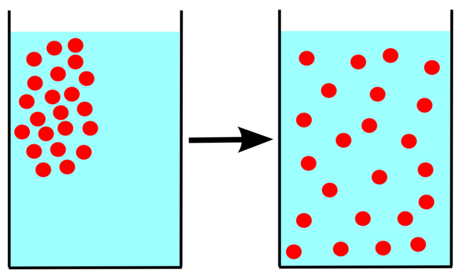
- 1What is this?Diffusion
- 2What is osmosis?Diffusion of water from a dilute to a concentrated solution through a PPM that allows passage of water mlocules.
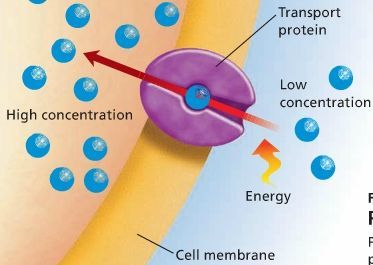
- 3What is this?Active Transport
- 4How would you make an exchange surface more effective in humans?> Having a large surface area
> Being thin to provide a short diffusion path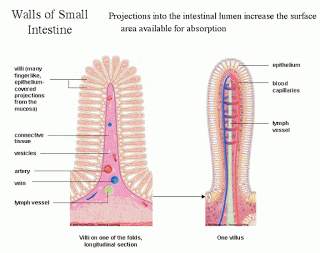
- 5What do the villi have/do to provide a surface area?Have an extensive network of capillaries to absorb products of digestion by diffusion and active transport.
- 6What is the surface area of the lungs increased by?The alveoli
- 7Why is surface area needed?To increase the reach to the centre of the cell, as the bigger the cell, the harder it is for fluids to reach from the surface.
- 8What is the difference between active transport and diffusion?Active T > Occurs AGAINST concentration gradient
> Requires energy - 9What is Active Transport?Substances that are absorbed against a concentration gradient. This enables cells to absorb ions from very dilute solutions.
- 10What is Diffusion?The net movement of particles from a high concentration to a low concentration through a PPM. This is towards to concentration gradient.
- 11When we breathe in, which way does our inside torso structure move?Our ribcage expands up and out and our diaphragm flattens. This is ventilation.
- 12Why do we breathe?So that oxygen from the air can diffuse into the bloodstream and carbon dioxide can diffuse out of it and into the air.
- 13Give three features of alveoli that allow large amounts of oxygen to enter the blood.> Large surface area
> Thin walls to allow shorter diffusion path
> Sufficient blood supply - 14In plants, which way does CO2 enter foliage?Diffusion
- 15What absorbs water and mineral ions in plants?Roots
- 16What is the surface area of roots increased by?Root hairs
- 17What is the surface area of the leaves increased by?Flattened space and internal air spaces
- 18Why do plants have a stomata?To obtain CO2 from the atmosphere and remove O2 produced in photosynthesis.
- 19What is transpiration?Evaporation and water vapour loss from the surface of the leaf.
- 20Where does most of the loss of water vapour take place?The stomata
- 21Evaporation is more rapid in which conditions?> Hot
> Windy
> Dry - 22How does the stomata prevent the leaf from dehydrating?If the plant loses more water than is replaced, the stomata closes to prevent wilting.
Información
- Descripción
- GCSE Biology B3.1
- Creado por
- victoirespongecake21
- Visitas
- 68
- Etiquetas
- Valoración