
Fichas
Types of solids
Fichas del conjunto (13)
- 1What type of solid consists of metals and non metalsionic solids
- 2carbon and silicon containing compounds sometimes form which type of solid?extended covalent networks
- 3metallic solids are made up of which type of atoms?metals
- 4name the particles involved in metallic solids molecular solids ionic solids extended covalent network solidsthe particles involved in
metallic solids - atoms
molecular solids - molecules
ionic solids - ions
extended covalent network solids - atoms - 5name the forces between neighbouring particles in metallic solids molecular solids ionic solids extended covalent network solidsthe forces involved in
metallic solids - metallic bonds
molecular solids - weak intermolecular forces
ionic solids - ionic bonds
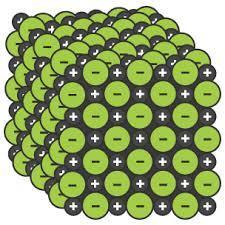
extended covalent network solids - covalent bonds - 6why is this solid brittlethis is an ionic solid. when force is applied, like charges align and repel
shattering the crystal - 7what types of solids can conduct electricity?metals
graphite
(ionic substances only as liquids or in solution NOT as a solid) - 8what types of solids are malleable?ones with nondirectional forces
(metals) - 9describe the structure of metalsmetals have atoms surrounded by delocalised valence electrons with
non directional metallic bonds
connecting these particles - 10describe the structure of ionic solidsan ionic solid is made up of anions surrounded by cations and vice versa. there is a strong electrostatic attraction called ionic bonds between oppositely charged ions
- 11describe the structure of diamondDiamond is a 3D extended covalent network made up of only C atoms.
Each C is bonded to 4 other carbons in a tetrahedral arrangement - 12name the solid which has this structuregraphite
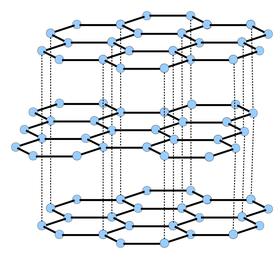
- 13explain why graphite conducts electricityeach C in graphite has one delocalised electron that exists between the layers.
These electrons can carry charge.
Información
- Descripción
- High School Level 2 Chemistry Fichas sobre Types of solids, creado por Tanya Haywood el 02/10/2015.
- Creado por
- Tanya Haywood
- Visitas
- 25
- Etiquetas
- Valoración