
Fichas
Anthropology
Fichas del conjunto (80)
- 1Wolff’s LawFinal form of a bone is representative of its function
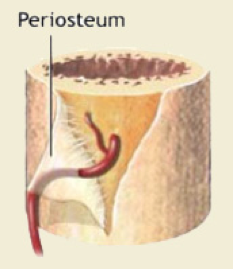
Periosteum!
Wolff's law is a theory developed by the German anatomist and surgeon Julius Wolff (1836–1902) in the 19th century that states that bone in a healthy person or animal will adapt to the loads under which it is placed. - 2Functional ComplexAnatomical region that we can talk about multiple functions responsible for the way something looks
(function shaping form) - 3Dental FormulaHumans, apes, old world monkeys: 2.1.2.3.
New world monkeys: 2.1.3.3. - 4Osteoblastis the cell building the bone
- 5Osteocytea bone cell, formed when an osteoblast becomes embedded in the matrix it has secreted.
- 6Osteoclasttakes away old bone
- 7Parabolic dentitionHumans
- 8Pentadactylprimitive trait of mammals
- 9What are some problems w/ the fossil record?Establish amount of variation throughout s species – developmental stages (children)–
Incomplete (time gaps!)
Fragmentary, isolated finds
Looking at morphological traits (rather the DNA, proteins…)
Can’t understand the range of variability – sexual dimorphism – geographic variation - 10Periosteuma dense layer of vascular connective tissue enveloping the bones except at the surfaces of the joints.
- 11OsteogenicStimulates bone growth
- 12Growth of a long bone occurs between theEPIPHYSIS AND DIAPHYSIS!!!
- 13Law of antagonistic compensation states that reduced use of a bone will result in a shorter, wider bone. True or False?TRUE
- 14The sagittal crest present at birth True/ False?FALSE
- 15Bone morphology is a result ofGenetics
Functions - 16How many total teeth do we have?32
- 17Compact bone is the dense, hard outer layer of bone that surrounds the second type of bone called porous bone. True or falseFalse!!
- 18trabecular bone or spongy boneone of two types of osseous tissue that form bones.
- 19What is the Human dental formula?2123
- 20What type of tooth do we have fewer of than other mammals?Premolars
- 21Homologous structureShared derived opposed to evolved characteristic
- 22What are some other derived characteristics (opposed ancestral)?Relatively large brain, upright posture, binocular stereoscopic vision
- 23Hypocone70+ million years ago we find mammalian teeth on the enamel is the cusp – this cusp becomes distinctive to primates
- 24Based upon what you have learned in lecture and observed in lab, what morphological differences between humans and other primate species are a result of locomotion.Foot function
Scapula
Law of antagonistic something
Fan shape portion will become shorter - 25What distinguishes dental primates from other mammals?Hypocone
- 26Name a true brachiating primateSiamangs
- 27Brachiationarm swinging, is a form of arboreal locomotion in which primates swing from tree limb to tree limb using only their arms.
- 28The genotype is the only factor that determine phenotype. True or FalseFalse
- 29Given the allele frequencies p - .3 and q-.7 what percentage of the population is expected to have the H (heterozygous) genotype?42 %
- 30A codona sequence of three base pairs codes for a specific amino acid
- 31Codonscode for amino acid
- 32Processes in protein synthesis results in the creation of MrnaTranscription
- 33Why is DNA important?Transfers hereditary info from parents to offspring
Control protein synthesis
Codes for protein - 34genotype containing two of the same alleles isHomozygous
- 35The possible variation of allele combination isgenotype
- 36AllelesAre different variations of a gene
- 37Which RNA nucleotide base corresponds to adenineGenes
- 38DNA nucleotide base corresponds to Guanine (G)?Cytosine
- 39Random occurrences that may or may not become more frequent in a population based upon natural selectionGenetic mutation
- 40Mutations are random. True or FalseTrue
- 41Mutations are always fatal. True or FalseFalse
- 42Genetic mutations are an intention product of natural selection. True or FalseFalse
- 43Natural SelectionIt changes the genotypic frequencies in a population
It occurs relative to environmental conditions - 44It was first proposed by Charles Darwin and Alfred WallaceNatural Selection
- 45Competing forces on pelvisbirth canal and bipedalism
- 46In anatomical position, the position of the forearm is called_________.Supinated (palms up)
- 47Normal variation between males and females of the same species, such as size difference is called________.Sexual Dimorphism
- 48Opposite of superiorInferior
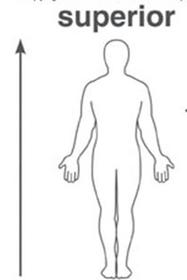
- 49Reptiles have _______ dentition, indicating they have the same type of teeth throughout their moth.Homodont
- 50____________ is the process by which a group of organisms rapidly diversifies and spread into new ecological niches.Adaptive radiation
- 51The earlier dental primates, such as Plesiadapis, had an additional tooth cusp call a/an)))))m which was an adaption to frugivory.Hypocone
- 52Three traits unique to primates (e.g., derived traits of primates NOT shared w/ the rest of Mammalia).Upright posture
Reduced snout (prognathism)
Nails, not claws
Binocular vision - 53The unit that natural selection acts upon is the population rather than the individuals. True or False?True
- 54Genetic mutation are always bad. True or FalseFalse
- 55Natural Selection in actionUnderlying genetic mutation
Environmental Pressure
Differential Reproduction - 56DNA base pairsA-T
G-C - 57RNA bas pairsA-U
G-C - 58Differences between DNA and RNADNA - Double stranded - Stays in nucleus -AT-GC - mx geres
RNA - Single stranded - Copy of 1 gere - AU-GC - leaves Nucleus - 59Mitosispart of the cell cycle in which chromosomes in a cell nucleus are separated into two identical sets of chromosomes, and each set ends up in its own nucleus.
- 60Meiosisprocess where a single cell divides twice to produce four cells containing half the original amount of genetic information
- 61DNAdeoxyribonucleic acid is a long molecule that contains our unique genetic code. Like a recipe book it holds the instructions for making all the proteins in our bodies.
- 62MRNAMessenger RNA (mRNA) is a large family of RNA molecules that convey genetic information from DNA to the ribosome, where they specify the amino acid sequence of the protein products of gene expression.
- 63tRNATransfer ribonucleic acid (tRNA) is a type of RNA molecule that helps decode a messenger RNA (mRNA) sequence into a protein. tRNAs function at specific sites in the ribosome during translation, which is a process that synthesizes a protein from an mRNA molecule.
- 64GeneImage result for genewww.news-medical.net
A gene is the basic physical and functional unit of heredity. Genes, which are made up of DNA, act as instructions to make molecules called proteins. In humans, genes vary in size from a few hundred DNA bases to more than 2 million bases. - 65Base pairA base pair is one of the pairs A-T or C-G. Notice that each base pair consists of a purine and a pyrimidine. The nucleotides in a base pair are complementary which means their shape allows them to bond together with hydrogen bonds. The A-T pair forms two hydrogen bonds.
- 66codonA codon is a sequence of three DNA or RNA nucleotides that corresponds with a specific amino acid or stop signal during protein synthesis. DNA and RNA molecules are written in a language of four nucleotides; meanwhile, the language of proteins includes 20 amino acids.
- 67ChromosomesChromosomes are thread-like structures located inside the nucleus of animal and plant cells. Each chromosome is made of protein and a single molecule of deoxyribonucleic acid (DNA). Passed from parents to offspring, DNA contains the specific instructions that make each type of living creature unique.
- 68TranscriptionTranscription is the first step of gene expression, in which a particular segment of DNA is copied into RNA (mRNA) by the enzyme RNA polymerase.
Both RNA and DNA are nucleic acids, which use base pairs of nucleotides as a complementary language. The two can be converted back and forth from DNA to RNA by the action of the correct enzymes. During transcription, a DNA sequence is read by an RNA polymerase, which produces a complementary, antiparallel RNA strand called a primary transcript. - 69somatic cellA somatic cell is any cell of the body except sperm and egg cells. Somatic cells are diploid, meaning that they contain two sets of chromosomes, one inherited from each parent.
- 70Sex cellsSex cells, or gametes, are unique to organisms that reproduce sexually. In animals and plants (fungi are somewhat different in this regard) there are two types of sex cells: male and female. The male sex cells are sperm, while the female sex cells are eggs.
- 71TranslationTranslation is the second part of protein biosynthesis (the making of proteins). It is part of the process of gene expression.
Before translation comes:
transcription produces a chain of introns and exons.
RNA splicing by spliceosomes which remove introns, and
formulate the messenger RNA from exons. - 72AllelesAn allele is a variant form of a gene. Some genes have a variety of different forms, which are located at the same position, or genetic locus, on a chromosome. Humans are called diploid organisms because they have two alleles at each genetic locus, with one allele inherited from each parent.
- 73homozygouswhether dominant or recessive, they are homozygous.
- 74Heterozygoushaving one each of two different alleles
- 75RecessiveRecessive traits can be carried in a person's genes without appearing in that person. For example, a dark-haired person may have one gene for dark hair, which is a dominant trait, and one gene for light hair, which is recessive.
- 76dominantDominance in genetics is a relationship between alleles of one gene, in which the effect on phenotype of one allele masks the contribution of a second allele at the same locus. The first allele is dominant and the second allele is recessive.
- 77Punnett SquareImage result for Punnett Squareen.wikipedia.org
The Punnett square is a diagram that is used to predict an outcome of a particular cross or breeding experiment. It is named after Reginald C. Punnett, who devised the approach. The diagram is used by biologists to determine the probability of an offspring having a particular genotype. - 78Mendelian traitsMendelian Traits are those traits which follow Mendel's rules of only 2 possible versions (1 dominant, 1 recessive). There are many examples of this in humans. 1. Use the chart below to determine your phenotype (appearance) and possible genotypes (a pair of alleles).
- 79Hardy–WeinbergThe Hardy–Weinberg principle, also known as the Hardy–Weinberg equilibrium, model, theorem, or law, states that allele and genotype frequencies in a population will remain constant from generation to generation in the absence of other evolutionary influences.
- 80—
Información
- Descripción
- Midterm
- Creado por
- Jonathan Miljus · feb 2016
- Actualizado
- 11 jun 2016
- Visitas
- 152
- Valoración