
Fichas
Skin & MSk
Fichas del conjunto (104)
- 1Cellulitis predominant causesGroup A strep and S. aureus
- 2Cellulitis TreatmentIf nonpurulent, Penicillinase-resistant PCN (naf and ox)
If risks of MRSA, vanc, linezolid, ceftaroline
Other options include clindamycin, TMP-SMX, doxycycline - 3Erysipelas etiologyGAS
- 4Erysipelas TreatmentPenicillin
Macrolide as an alternative - 5Furuncles & Carbuncles etiologyS. aureus
- 6Furuncles & Carbuncles TreatmentApply heat to facilitate drainage of pus
Antistaph antibiotic (naf, oxa), unless MRSA risks - 7Impetigo etiologyGAS & S. aureus
- 8Impetigo TreatmentPenicillinase-resistant PCNs (naf, oxa, amoxicillin-clavulanate)
Add coverage if risks for MRSA - 9Necrotizing Fasciitis EtiologyType I: Polymicrobial (usually anaerobe & GAS)
Type II: GAS - 10Nec. Fasciitis TreatmentDebridement
Broad spectrum antibiotics - 11Lymphangitis acuteGAS, S. aureus, Pasteurella
Use a GPS to track the cute lymph channels - 12Lymphangitis ChronicFungal (sporothrix schenckil)
Mycobacterial (M. marinum) - 13What is lymphadenitis?Acute or chronic inflammation of the lymph node
- 14What is lymphangitis?Inflammation of lymphatic channels
- 15Infectious arthritis etiologyS. aureus most common
Strep, gram neg possible
N. gonorrhoeae (~3%) - 16Osteomyelitis most common etiologyS. aureus
- 17Osteomyelitis If IVDU, think..S. aureus or Pseudomonas
- 18Osteomyelitis If sickle cell, think..Salmonella
- 19Osteomyelitis If jaw, think..Actinomyces
- 20Osteomyelitis Mechanism of Infection_Hematogenous seeding
_Contiguous spread from adjacent infection
_Direct inoculation (trauma/surgery) - 21S. aureus causes.. (under skin category)COFS
Cellulitis, Osteomyelitis, Furuncles, Septic arthritis
Staph-enie always COFS - 22SSSS caused by...Exfoliative Toxin A & B from S. aureus
You better exfoliate that skin or you'll be scalded - 23SSSS TreatmentNafcillin
- 24Nikolsky's signLight pressure to skin separates upper epidermis with wrinkling of skin
SSSS - 25Group A Strep causes... (skin related conditions)LICE.N
Lymphangitis, Impetigo, Cellulitis, Erysipelas, Necrotizing Fasciitis
Strep(pers) have Nasty LICE - 26M proteinGAS
Binds and stabilizes factor H to prevent complement fixation - 27StreptokinaseGAS
Binds plasminogen to form plasmin
GAS with plasmin allows GAS to spread through fibrin - 28Streptolysins S & OGAS
Hemolysins contribue to soft tissue damage - 29SpeStreptococcal pyrogenic exotoxins
Superantigens
_Nec. Fasc, TSS, Scarlet Fever - 30Scarlet FeverGAS
- 31GAS TreatmentPenicillins usually adequate
- 32C. perfringens microGram positive, spore-forming, obligatory anaerobic, bacilli
"I'm so positively perfect. Don't breath on me" - 33C. perfringens PathAlpha toxin (lecithinase)
_lyses RBCs, leukocytes, endothelial cells
_tissue destruction, hemolysis, bleeding
Beta, Epsilon, lota and an enterotoxin
_Iota toxin has necrotic activity & increases vascular permeability - 34Alpha toxinC. perfringens
aka lecithinase
_lyses RBCs, leukocytes, endothelial cells
_tissue destruction, hemolysis, bleeding - 35Iota toxinGAS
_Iota toxin has necrotic activity & increases vascular permeability - 36C. perf clinical manifestations (skin related)GM Mega Car (GMMC) are perf(ect)
Gas gangrene, Myositis, Myonecrosis, Celulitis - 37C. perfringens TreatmentSurgical derbidement
Penicillin
Can try hyperbaric oxygen - 38C. tetani microspore former, gram positive, anaerobic bacilli
- 39C. tetani PathogenesisTetanospasmin - plasmid-encoded, heat-labile neurotoxin
- 40TetanospasminB binds to lower
Goes to CNS via retrograde axonal transport
"A" subunit cleaves/inactivates ptns that regulate the release of GABA, so inc. in excitatory NT
-Spastic paralysis - 41Lockjaw (masseter muscles) tetanustrismus
- 42Facial muscle contraction tetanusRisus sardonicus
My face looks like that because someone put Reeses on Sardines - 43Back spasms tetanusOpisthotonos
"(O)h, my back. It feels like I (pis)sed tho ton(os)" - 44C. tetani TreatmentSurgical debridement
Penicillin or metronidazole
Tetanus Ig
Vaccination - 45C. tetani vaccineToxoid
- 46P. aeruginosa PathETA
Pyocyanin
Pyoverdin
LasA & LasB - 47LasA and LasBproteases
degrade eLAStin - 48Pyocyaninproduction of superoxide and H2O2
- 49Pyoverdinsiderophore
- 50Pseudomonas Clinical ManifestationsO PUBEES
(PseudoMONA was naked and you could see her PUBEES)
Osteochondritis, Pneumonia, UTI, Bacteremia, Ecthyma gangrenosum, Ear infections, Skin infections - 51Pseudomonas Skin InfectionsBurn wounds
_vascular damage, tissue necrosis, bacteremia
Folliculitis
Ecthyma gangrenosum - 52Vibrio microComma-shaped gram negative rods
Oxidase/catalase +
Grow in salt & TCBS - 53V. vulnificusLiver disease patients in particular
- Infections of wounds contaminated by salt water
• Progressive & severe wound infections
• Vesicles form followed by necrosis
- Also gastroenteritis after shellfish - 54V. parahemolyticus- Primarily gastroenteritis after shellfish/oysters
- Occasionally wound infections - 55Pasteurella multocida microGram neg. coccobacilli
Grow on blood/choc, not MAC - 56Pasteurella multocida TreatmentPenicillin
- 57Capnocytophaga microFilamentous, gram neg rods
Grows on blood/choc, not MAC
Requires higher CO2 - 58Capnocytophaga TreatmentAmoxicillin-clavulanate
- 59M. marinum from...wound suffered/contaminated in water
- 60M. marinum clinical manifestationsPapules on extremity
Ulcerate and form scare
"Fish tank granuloma"
Can have nodular lymphangitis (Sporotrichoid spread) - 61Mycobacterium leprae Good CMITuberculoid leprosy (paucibacillary)
- 62Mycobacterium leprae Poor CMILepromatous leprosy (multibacillary)
- 63Tuberculoid leprosy- Localized hypopigmented or erythematous skin lesions
- May have nerve involvement with palpable nerves
• Sensory loss
Low infectivity - 64Lepromatous leprosy- Numerous erythematous lesions of skin
- Diffuse nerve involvement with patchy sensory loss
- Tissue destruction (often of face/ears)
- Leonine facies & saddle nose
- Infectivity is high - 65Tuberculoid leprosy Treatment• Dapsone & Rifampin x6-12 months
- 66- Lepromatous leprosy Treatment• Dapsone, Rifampin & Clofazimine x2 years
- 67- Dapsone• Interferes with folic acid synthesis (PABA antagonist)
- 68- Clofazimine• Binds to guanine bases in DNA
• May cause hyperpigmentation & phototoxicity - 69Malassezia furfur MicroRequires olive oil (FAs) to grow
Can grown on blood agar or fungal agars (potato dextrose agar) with olive oil - 70Potato dextrose agarMalassezia furfur
- 71—Malassezia furfur
- 72—Malassezia furfur
"Spaghetti and meatballs"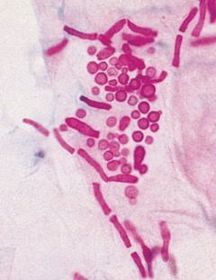
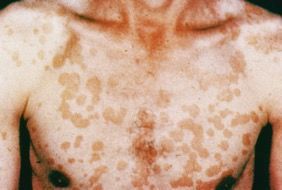
- 73Malassezia furfur Clinical Man.Tinea (Pityriasis) Versicolor
_Hypo/Hyperpigmented macules on upper body usually
Asymptomatic otherwise – rare pruritis
Occasionally TPN (Total Parenteral Nutrition)-related sepsis
_Lipids in TPN promote growth of yeast - 74Malassezia furfur TreatmentTopical azoles
Selenium sulfide - 75—Malassezia furfur
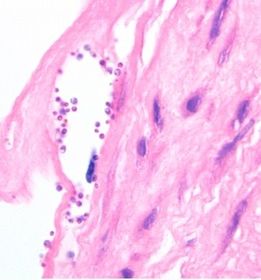
- 76—Malassezia furfur
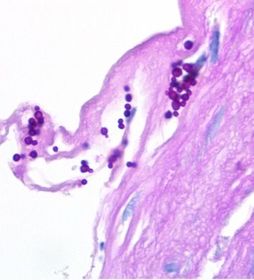
- 77Dermatophytes Treatment for localized and not affecting hair or nailsTopical (azoles, terbinafine)
- 78Dermatophytes Treatment affecting hng hair, nails, groin or diffuseOral agents (griseofulvin, terbinafine, azoles)
Hair is full of grease (griseofulvin) - 79—Dermatophyte
Tinea barbae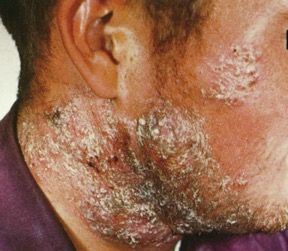
- 80—Dermatophyte
onychomycosis (Tinea unguium)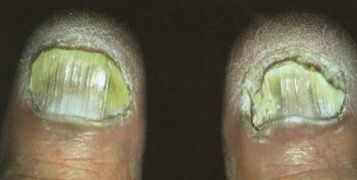
- 81—Dermatophyte
Tinea corporis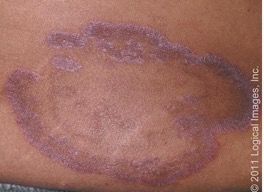
- 82Dermatophytes invade..skin, hair & nails – keratinophilic & keratinolytic
Primarily involve stratum corneum - 83—Dermatophytes
H&E biopsy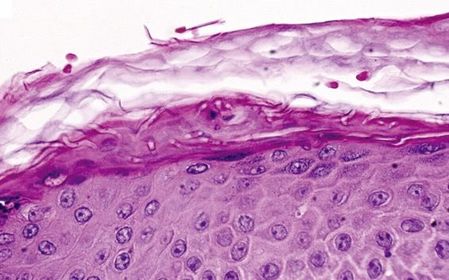
- 84—Sporothrix schenckii
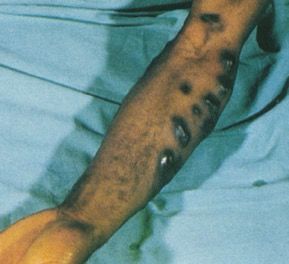
- 85—Sporothrix schenckii
(Donald Trump size hands)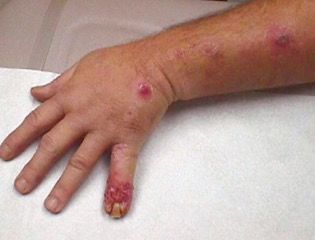
- 86Sporothrix schenckii MicroDimorphic fungus
Ubiquitous in soil & vegetation
Daisy/floret-like conidia as mold in culture at 25ºC
Cigar-shaped (and oval) yeasts in tissue - 87Sporothrix schenckii Clinical Man.“Rose-gardener’s disease”
Nodule at site of inoculation (+/- ulceration)
Nodules form along lymphatic channels ~2 weeks later - 88If you see "Sporotrichoid spread", think...S. schenckii,
M. marinum, & Nocardia - 89Sporothrix schenckii TreatmentPotassium iodide
Itraconazole often used instead - 90—Ancylostoma braziliense
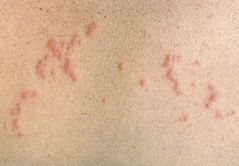
- 91—Ancylostoma braziliense
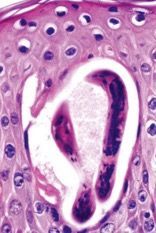
- 92Ancylostoma braziliense EpidemiologyWidespread
Often children in contact with feces-contaminated soil/sand
Larvae penetrate intact skin - 93Ancylostoma braziliense Clinical Man.Pruritis
Erythematous or vesicular reaction to serpentine tunnels - 94Ancylostoma braziliense TreatmentAlbendazole or Ivermactin
- 95Dracunculus medinensis Epidem.Isolated areas in Africa
- 96Dracunculus medinensis Transmission & Life Cycle*Larvae in water infect small crustaceans
*Ingestion of unfiltered water may contain crustaceans
*Larvae released in stomach & small bowel
*Get into abdominal cavity & retroperitoneum where they mate
*Males die, females move to subcutis & release larvae
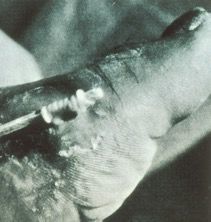
*Forms blister on skin which ruptures - 97Dracunculus medinensis Clinical Man.Painful ulcer with emergence of worm
Gross... - 98Dracunculus medinensis TreatmentRemove the worm. Duh.
- 99—- Dracunculus medinensis
- 100Trichinella spiralis Epidem.Worldwide, including US
Associated with pork consumption (haram!) - 101Trichinella spiralis Life Cycle*Pigs contain adult worms & encysted larvae
*Humans ingest encysted larvae in undercooked meat
*Larvae develop into adults in small intestine
*After mating, females release larvae
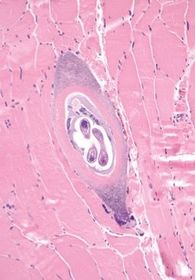
*The released larvae get into blood stream and lodge in muscle
*Can get cardiac, CNS, lung involvement - 102Trichinella spiralis Clinical Man.Periorbital & facial edema, conjunctivitis
Fevers, myalgias & weakness
Rarely myocarditis, CNS involvement & pneumonitis
Eosinophilia - 103Trichinella spiralis TreatmentAlbendazole
- 104—Trichinella Spiralis
Información
- Descripción
- Skin & MSk for Dr.Miller
- Creado por
- Amaal Salhieh
- Visitas
- 65
- Etiquetas
- Valoración