
Fichas
Leukocyte differentiation
Fichas del conjunto (10)
- 1Where do the leukocytes populate?The lymphoid organs, the blood, and the lymph.
- 2What is are the main divisions of leukocytes?They are divided into antigen-specific lymphocytes (which are diverse, specific, capable of memory and self-nonself recognition) and other leukocytes which can be involved in antigen-presenting cells, participating as effector cells in the elimination of antigen by phagocytosis, the secretion of immune effector molecules, and more.
- 3What proportion of bone marrow cells are haematopoietic stem cells?~1%, fewer than 1 per (5x10^4)
- 4Why are haematopoietic stem cells pluripotent rather than totipotent?They are limited in what they can differentiate into: lymphoid and myeloid progenitors, which can then further differentiate into different blood cells.
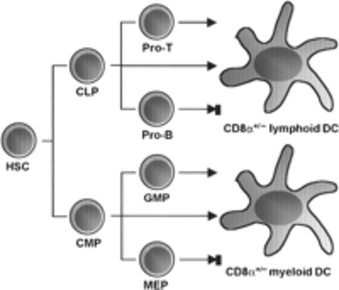
- 5Which cells can myeloid progenitors differentiate into?Erythrocytes, granulocytes (neutrophils, eosinophils, and basophils), platelets, monocytes, and dendritic cells.
- 6Which cells can lymphoid progenitors differentiate into?Lymphocytes, natural killer cells, and dendritic cells.
- 7There are two phenotypes of dendritic cells: CD8α+ and CD8α-. Which progenitors are these differentiated from?
- 8Describe the differentiation possibilities for progenitor cells.Progenitor cells have lost the capacity for self-renewal and are committed to a particular cell lineage.
- 9Stromal cells, where haematopoietic stem cells and their descendants differentiate, grow, and mature, consist of which cell types?Fat cells, endothelial cells, fibroblasts, and macrophages.
- 10How do stromal cells influence the differentiation of haematopoietic stem cells?They provide a haematopoietic-inducing microenvironment, consisting of a cellular matrix and factors that promote growth and differentiation. Many of these are soluble agents that can diffuse to their target cells, whereas others are membrane-bound molecules on the surface of stromal cells that require cell-to-cell contact between the responding cells and the stromal cells.
Información
- Descripción
- From the 27-09-13 Immunology and Disease lecture.
- Creado por
- sophietevans
- Visitas
- 93
- Etiquetas
- Valoración