
Fichas
F322 chains, energy and resources
Fichas del conjunto (29)
- 1interpret and use the terms: (i) empirical formulaas the simplest whole
number ratio of atoms of each element
present in a compound - 2interpret and use the terms: (ii) molecular formulaas the actual number of
atoms of each element in a molecule, - 3interpret and use the terms: (iii) general formulaas the simplest algebraic
formula of a member of a homologous
series, ie for an alkane: CnH2n + 2 - 4interpret and use the terms: (iv) structural formulaas the minimal detail that
shows the arrangement of atoms in a
molecule,
eg for butane: CH3CH2CH2CH3 or
CH3(CH2)2CH3 - 5intepret and use the terms: (v) displayed formulaas the relative
positioning of atoms and the bonds
between them, ie for ethanol - 6interpret and use the terms: (vi) skeletal formulaas the simplified organic
formula, shown by removing hydrogen
atoms from alkyl chains, leaving just a
carbon skeleton and associated functional
groups, ie for butan-2-ol - 7interpret, and use, the terms: (i) homologous seriesas a series of organic
compounds having the same functional
group but with each successive member
differing by CH2 - 8interpret, and use, the terms: (ii) functional groupas a group of atoms
responsible for the characteristic reactions
of a compound - 9use the general formula of a homologous series to predict the formula of any member of the seriesdiffer by CH2
- 10state the names of the first ten members of the alkanes homologous seriesmethane,ethane,propane,butane, pentane, hexane, heptane, octane, nonane, decane
- 11use IUPAC rules of nomenclature for systematically naming organic compoundssystematic naming, ie
2-methylbutan-1-ol - 12describe and explain the terms: (i) structural isomerscompounds with the
same molecular formula but different
structural formulae - 13describe and explain the terms: (ii) stereoisomersas compounds with the
same structural formula but with a different
arrangement in space - 14describe and explain the terms: (iii) E/Z isomerismas an example of
stereoisomerism, in terms of restricted
rotation about a double bond and the
requirement for two different groups to be
attached to each carbon atom of the C=C
group - 15describe and explain in terms: (iv) cis-trans isomerismas a special case of
EIZ isomerism in which two of the
substituent groups are the same - 16determine the possible structural formulae and/or stereoisomers of an organic molecule, given its molecular formula....
- 17describe the different types of covalent bond fission(i) homolytic fission forming two radicals, Cl--Cl---->cl. + cl. breaks evenly
(ii) heterolytic fission forming a cation and an anion Cl--Cl ---> Cl+ + Cl- - 18describe a ‘curly arrow’as the movement of an electron pair, showing either breaking or formation of a covalent bond
- 19outline reaction mechanisms, using diagrams, to show clearly the movement of an electron pair with ‘curly arrows’use curly arrows during electrophilic addition and nucleophilic substitution.
- 20carry out calculations to determine the percentage yield of a reaction% yield =(actual yield/predicted yield)X100
- 21explain the atom economy of a reaction as:molecular mass of the desired products /sum of molecular masses of all products X100%;
- 22explain that addition reactions have an atom economy of 100%, whereas substitution reactions are less efficientaddition makes 1 product while substitution has 1 desired product and 1 waste product
- 23describe the benefits of developing chemical processes with a high atom economy in terms of fewer waste materials;fewer waste materials, so more product from reactants, more economically viable
- 24explain that a reaction may have a high percentage yield but a low atom economyreactions can produce a high amount of products but they may predominantly be the undesired products so atom economy will be low. must find a compromise between both.
- 25Candidates should be able to: explain that a hydrocarbon is:a compound of hydrogen and carbon only
- 26Candidates should be able to: explain the use of crude oil asa source of hydrocarbons, separated as fractions with different boiling points by fractional distillation, which can be used as fuels or for processing into petrochemicals.
- 27Candidates should be able to: state that alkanes and cycloalkanes are...saturated hydrocarbons
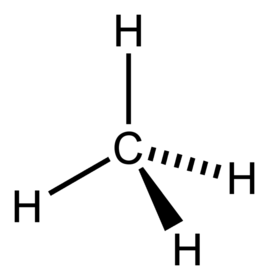
- 28Candidates should be able to: state and explain the tetrahedral shape around each carbon atom in alkanes
- 29explain, in terms of van der Waals’ forces, the variations in the boiling points of alkanes with different carbon-chain length and branchingmore branches, less van der waals' and lower BP
longer chain, more van der Waals', higher BP
Información
- Descripción
- chemistry Fichas sobre F322 chains, energy and resources, creado por kira.kyne el 19/04/2014.
- Creado por
- kira.kyne
- Visitas
- 33
- Etiquetas
- Valoración