
Fichas
Bicultural Reflexivity
Fichas del conjunto (16)
- 1ReflexivityRecognising the researcher, the methods and the researched as co-creators of a social phenomenon, rather than research being a standalone objective account of an emperical process
- 2Ethnographers and cultural mentalitiesCultural researchers have become increasingly sensitive about projecting their cultural mentalities onto the people they are researching and instead turning them into objects of instrumental inquiry. Black's IQ < White's is treated as an object of inquiry not a statement of fact.
- 3Linear cause-and-effect relationshipsare not idealised in bottom-up social constructionists epistemologies.
- 4Navel gazingReflexivity can become navel gazing, but at it's best, it can be used to reconstruct the self through the process of research. Personal rather than theoretical change, humans as agents of causality by interconnectedness.
- 5Human identities can behalls of illuminance, or fun houses of deception. they are constructed using others as mirrors to the soul of the self.
- 6Stereotypesare a necessary evil. They reduce the hum & buzz of reality down into a manageable daily routine. But, through their lens we miss so much because we accept too much as given.
- 7Tuhoe & their identitiesThe tuhoe were fighting so hard for their cultural identity, which helps us realise how valuable our symbolic and cultural resources are.
- 8Matemateaonenurturing relationships, between people, and with the environment which nurtures them.
- 9TauiwiA livable subject position in Te Urewera. It does not belong in any of the integrations categories. It is a guest position
- 10Minorities and their ethnic identityMinorities are much more aware of their ethnicity than majorities, this is an emperical fact.
- 11New reflections allow growthSeeing yourself in a new group’s eyes clears out the detritus of your self-stereotypes like a forest fire burning through underbrush.
Your identies become a exercise in creativity not an onerous obligation set down by your ancestors or a cage set down by the majority - 12Cloak of protectionFor young minority people, the task it to take your cultural identity and turn it into a cloak of protection rather than a blanket of suffering or constraint.
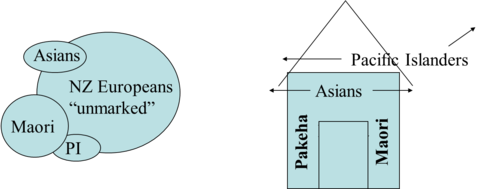
- 13—The first is a model of liberalism, the second is a model of Biculturalism built on the pillars of both Maori and Pakeha culture
- 14IATImplicit association test. In nz symbols, Maori faces were equally associated with nz symbols along with pakeha faces. Chinese were not
- 15Limitations of cultural positionsWhen in a low power position then you are free to develop personal reflexivity and change, but in high power positions you are not able to, it is seen as bad (a clear agenda and standpoint are required because people depend upon you)
- 16Limitations of reflexivityBicultural Psychology investment in Māori capacity building, reflexivity is not enough. Resources & Legitimacy are needed. Comes with time and difficult to act as an outsider, requires effective collaboration.
Información
- Descripción
- graduate study Social Psychology Fichas sobre Bicultural Reflexivity, creado por cjjstone el 13/05/2014.
- Creado por
- cjjstone
- Visitas
- 24
- Etiquetas
- Valoración