
Mapa mental
Aquaculture
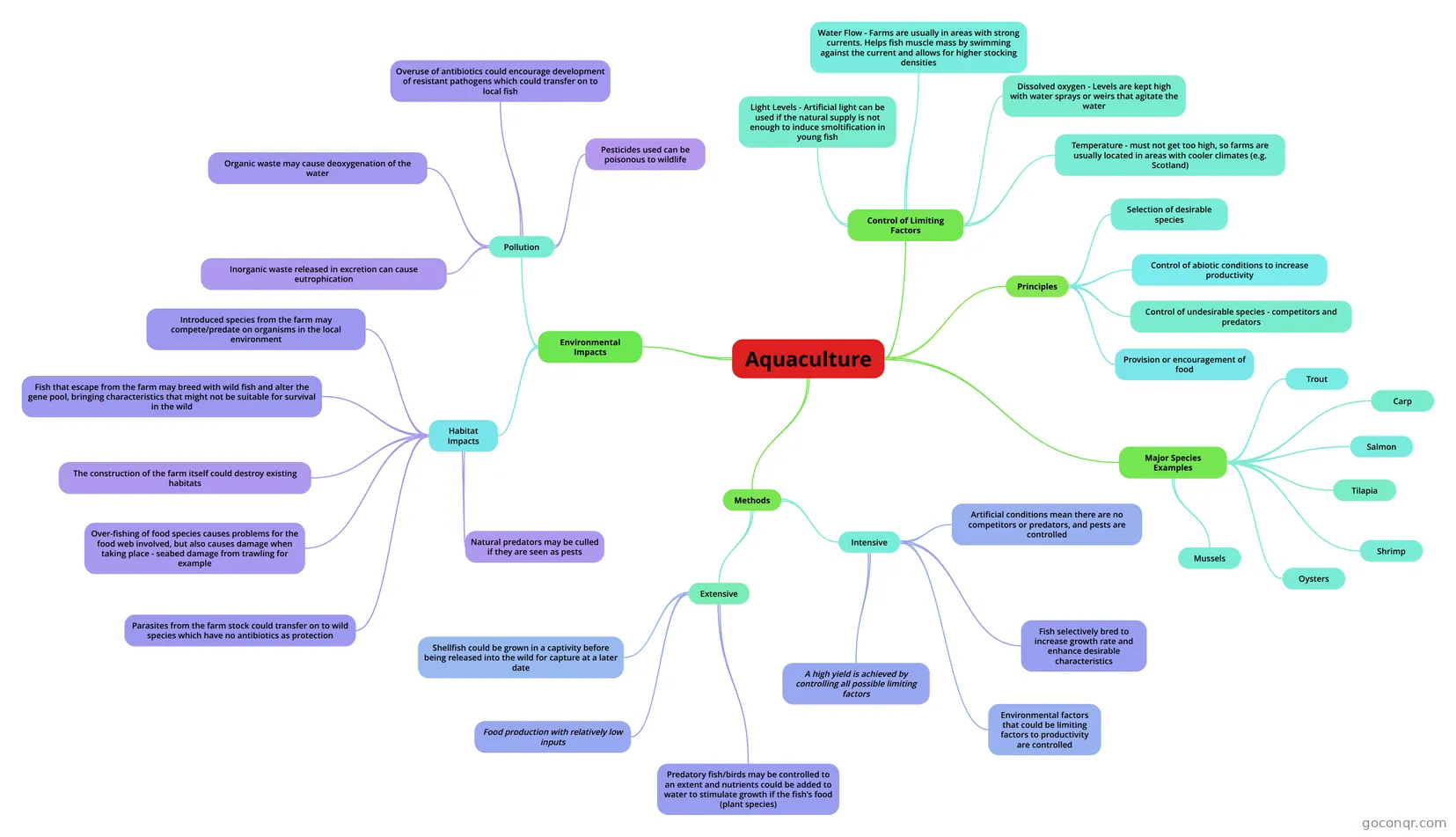
Mind map: aquaculture
Contenido del mapa
Aquaculture
Principles
- Selection of desirable species
- Control of undesirable species - competitors and predators
- Provision or encouragement of food
- Control of abiotic conditions to increase productivity
Major Species Examples
- Carp
- Salmon
- Tilapia
- Trout
- Shrimp
- Oysters
- Mussels
Methods
- Extensive
- Food production with relatively low inputs
- Predatory fish/birds may be controlled to an extent and nutrients could be added to water to stimulate growth if the fish's food (plant species)
- Shellfish could be grown in a captivity before being released into the wild for capture at a later date
- Intensive
- A high yield is achieved by controlling all possible limiting factors
- Fish selectively bred to increase growth rate and enhance desirable characteristics
- Artificial conditions mean there are no competitors or predators, and pests are controlled
- Environmental factors that could be limiting factors to productivity are controlled
- Extensive
Control of Limiting Factors
- Temperature - must not get too high, so farms are usually located in areas with cooler climates (e.g. Scotland)
- Dissolved oxygen - Levels are kept high with water sprays or weirs that agitate the water
- Water Flow - Farms are usually in areas with strong currents. Helps fish muscle mass by swimming against the current and allows for higher stocking densities
- Light Levels - Artificial light can be used if the natural supply is not enough to induce smoltification in young fish
Environmental Impacts
- Habitat Impacts
- Over-fishing of food species causes problems for the food web involved, but also causes damage when taking place - seabed damage from trawling for example
- Natural predators may be culled if they are seen as pests
- Parasites from the farm stock could transfer on to wild species which have no antibiotics as protection
- The construction of the farm itself could destroy existing habitats
- Introduced species from the farm may compete/predate on organisms in the local environment
- Fish that escape from the farm may breed with wild fish and alter the gene pool, bringing characteristics that might not be suitable for survival in the wild
- Pollution
- Pesticides used can be poisonous to wildlife
- Overuse of antibiotics could encourage development of resistant pathogens which could transfer on to local fish
- Organic waste may cause deoxygenation of the water
- Inorganic waste released in excretion can cause eutrophication
- Habitat Impacts
Información
- Descripción
- (AQUATIC PRODUCTION) Environmental Studies Mapa Mental sobre Aquaculture, creado por ZeroAnalysis el 27/05/2013.
- Creado por
- ZeroAnalysis
- Visitas
- 189
- Etiquetas
- Valoración