
Mapa mental
Health Governance
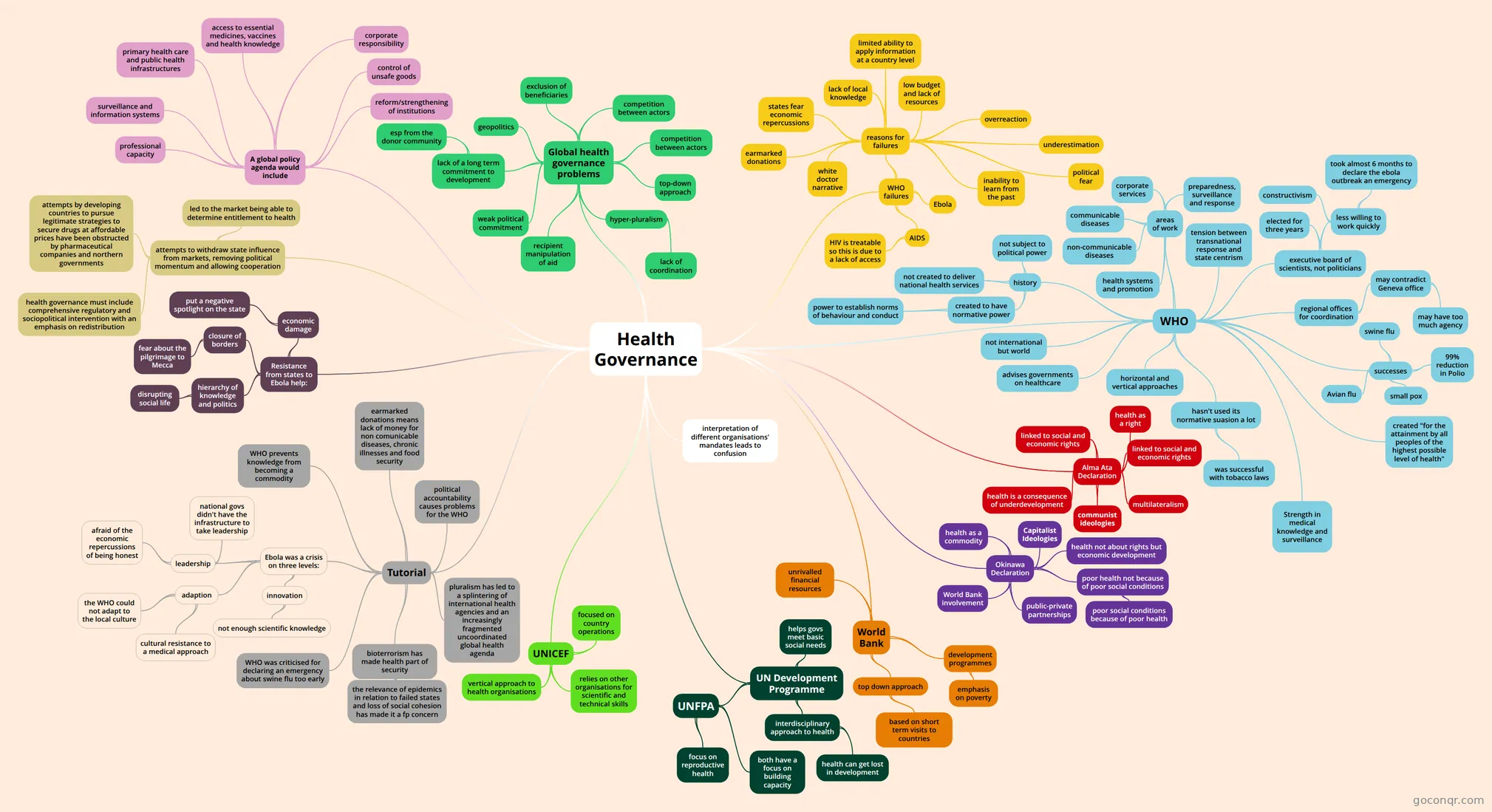
Mind map: Health governance
Contenido del mapa
Health Governance
WHO
- history
- created to have normative power
- power to establish norms of behaviour and conduct
- not subject to political power
- not created to deliver national health services
- created to have normative power
- not international but world
- advises governments on healthcare
- horizontal and vertical approaches
- hasn't used its normative suasion a lot
- was successful with tobacco laws
- areas of work
- health systems and promotion
- non-communicable diseases
- communicable diseases
- corporate services
- preparedness, surveillance and response
- tension between transnational response and state centrism
- executive board of scientists, not politicians
- elected for three years
- less willing to work quickly
- constructivism
- took almost 6 months to declare the ebola outbreak an emergency
- regional offices for coordination
- may contradict Geneva office
- may have too much agency
- may contradict Geneva office
- successes
- small pox
- swine flu
- Avian flu
- 99% reduction in Polio
- created "for the attainment by all peoples of the highest possible level of health"
- Strength in medical knowledge and surveillance
- history
Alma Ata Declaration
- communist ideologies
- multilateralism
- linked to social and economic rights
- linked to social and economic rights
- health is a consequence of underdevelopment
- health as a right
Okinawa Declaration
- health as a commodity
- Capitalist Ideologies
- health not about rights but economic development
- poor health not because of poor social conditions
- poor social conditions because of poor health
- public-private partnerships
- World Bank involvement
WHO failures
- AIDS
- HIV is treatable so this is due to a lack of access
- Ebola
- reasons for failures
- inability to learn from the past
- political fear
- overreaction
- underestimation
- low budget and lack of resources
- lack of local knowledge
- states fear economic repercussions
- earmarked donations
- white doctor narrative
- limited ability to apply information at a country level
- AIDS
Global health governance problems
- hyper-pluralism
- lack of coordination
- top-down approach
- competition between actors
- competition between actors
- exclusion of beneficiaries
- geopolitics
- recipient manipulation of aid
- lack of a long term commitment to development
- esp from the donor community
- weak political commitment
- hyper-pluralism
World Bank
- development programmes
- emphasis on poverty
- unrivalled financial resources
- top down approach
- based on short term visits to countries
- development programmes
UN Development Programme
- helps govs meet basic social needs
- UNFPA
- focus on reproductive health
- both have a focus on building capacity
- interdisciplinary approach to health
- health can get lost in development
UNICEF
- focused on country operations
- relies on other organisations for scientific and technical skills
- vertical approach to health organisations
interpretation of different organisations' mandates leads to confusion
Tutorial
- bioterrorism has made health part of security
- the relevance of epidemics in relation to failed states and loss of social cohesion has made it a fp concern
- pluralism has led to a splintering of international health agencies and an increasingly fragmented uncoordinated global health agenda
- WHO was criticised for declaring an emergency about swine flu too early
- Ebola was a crisis on three levels:
- leadership
- national govs didn't have the infrastructure to take leadership
- afraid of the economic repercussions of being honest
- adaption
- the WHO could not adapt to the local culture
- cultural resistance to a medical approach
- innovation
- not enough scientific knowledge
- leadership
- political accountability causes problems for the WHO
- earmarked donations means lack of money for non comunicable diseases, chronic illnesses and food security
- WHO prevents knowledge from becoming a commodity
- bioterrorism has made health part of security
A global policy agenda would include
- reform/strengthening of institutions
- control of unsafe goods
- corporate responsibility
- access to essential medicines, vaccines and health knowledge
- primary health care and public health infrastructures
- surveillance and information systems
- professional capacity
attempts to withdraw state influence from markets, removing political momentum and allowing cooperation
- led to the market being able to determine entitlement to health
- attempts by developing countries to pursue legitimate strategies to secure drugs at affordable prices have been obstructed by pharmaceutical companies and northern governments
- health governance must include comprehensive regulatory and sociopolitical intervention with an emphasis on redistribution
Resistance from states to Ebola help:
- economic damage
- put a negative spotlight on the state
- closure of borders
- fear about the pilgrimage to Mecca
- hierarchy of knowledge and politics
- disrupting social life
- economic damage
Información
- Descripción
- Politics Mapa Mental sobre Health Governance, creado por Jessica Leech el 04/12/2018.
- Creado por
- Jessica Leech
- Visitas
- 3
- Valoración
Más sobre World Health Organization