
Mapa mental
S&P coursework 1
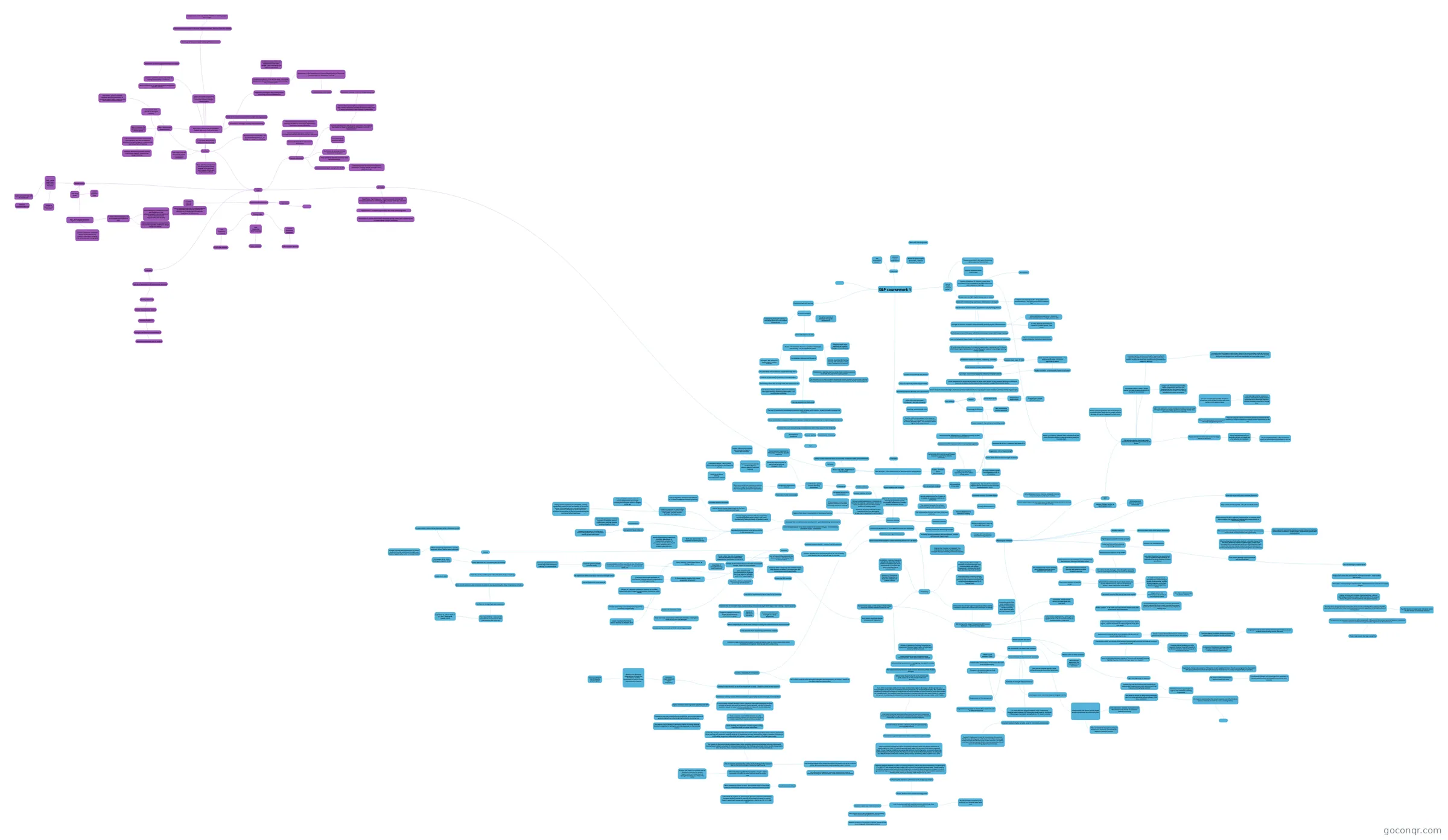
Mind map: S&P coursework 1
Contenido del mapa
S&P coursework 1
Eccentrics
- Age dependent matter?
- Isotonic versus isokinetic?>
- Better for hypertrophy & strength - flipping between the two ?
- Based off of findings that
Plyometric/ballistic training
- Is intent enough?
- Compsaring strength training + ( unloaded plyometrics vs loaded plyometrics)
- The effectiveness of assistaed vs regular plyometrics
- Start with physical quality
- Power- F*V Outcome measure a product of strength and velocity - not an adaptation itself -
- Requires super hogh specificty to produce changes in coordination-
- Strength - MU activation, hypertrophy ,tendon stiffness,
- Very well doen within practice- repott how may use it
- Evidence of that used in practice to increase power -
- Particularly those that are high load, low repetitions etc
- CAn however haver adverse effects on velocuty - fibre type shifting , excessive hypertrophy , too much tendon stiffness.
- Particularly those that are high load, low repetitions etc
- Evidence of that used in practice to increase power -
- Very well doen within practice- repott how may use it
- Velocity- maximal shortening velocity , Mu activation, firing rates, sarcomeres in seroies
- Plyometrics / ballistic exercise is the most common exercise used with the goal of increasing power
- The adaotations brought arouynd by plyometrics do the best to maximise maximal shoryening velocities and target neural adaptations that are highly velocity specific
- Plyometrics / ballistic exercise is the most common exercise used with the goal of increasing power
- Coordination underpins all threeIt h
- Training programmes that comb
- The use of loaded and unloaded ployometrics both increase performance - largely through changing the software
- Many studies have compared differences between loaded and unloded jumps in improving performances
- However there are many missing considerations within this research that is lakcing
- Performance meadures
- Session quality
- Combination of training
- FITT
- Session quality
- Performance meadures
- However there are many missing considerations within this research that is lakcing
- Many studies have compared differences between loaded and unloded jumps in improving performances
- The use of loaded and unloaded ployometrics both increase performance - largely through changing the software
- Training programmes that comb
- Power- F*V Outcome measure a product of strength and velocity - not an adaptation itself -
- Is intent enough?
Are all loads created equal ?
- Break down the light load vs heavy load to failure
- Based off of stimulating rep theory / differences in strength
- Weaknesses - measurement , population, real physiology heavy
- Compare the training loads - using approriatre measurements , The right performance markers etc
- Strength is outcome measure underpinned by several physcal characteristics:
- Early is due to neural changes - which become harder to gain with longer training
- Later is changes in hypertrophy - increasing PCSA , Increased moment arm, increased
- RT is the most effective way of increasing hypertrophy - particularly of TII fibres which have highest propensity of growth & greater rates of cross bridge cycloing - ATPase activity
- Intrpduce concept of volume , frequency , intensity
- Often debated is the importance of each of these, with mushc of the research landing on aslong as you train to failure( Define failure) then intensity ( weight lifted doesnt matter.
- Much research states that high , moderate and low loads and hence rep ranges if taken to failure produce similar hypertrophy
- Recent research - low vs heavy Beardsley study
- Introduce stimulating rep theoryu
- Only 4/5 reps that produce hypertrophy
- Mechanical tension & motor unit recruitment
- Other theories have been introduced - but lack relevance
- Swelling, metabolites & HGH
- Satelite cells do not appear to be relate to hypertrophy - insetad appear to be essential in muscle damage repair- not necessary when higher loads are produced
- Swelling, metabolites & HGH
- Other theories have been introduced - but lack relevance
- Mechanical tension & motor unit recruitment
- Only 4/5 reps that produce hypertrophy
- Hole poking
- Power?
- Small effect sizes
- Measures of hypertrophy
- Strength as a strong proxy measure
- Measures of hypertrophy
- Small effect sizes
- Physiology is different
- Non recoverable training sessions?
- Power?
- Much research states that high , moderate and low loads and hence rep ranges if taken to failure produce similar hypertrophy
- Sessions- sets, reps , % 1RM
- Brief mention of what these effects are
- Most research says that frequency - 1* a week is worse than 2 3 ios not significantly better
- Higher volumes - 12 sets weekly seem to be better
- rep range - determined largely by intensity is highly debated
- Higher volumes - 12 sets weekly seem to be better
- Most research says that frequency - 1* a week is worse than 2 3 ios not significantly better
- Often debated is the importance of each of these, with mushc of the research landing on aslong as you train to failure( Define failure) then intensity ( weight lifted doesnt matter.
- Intrpduce concept of volume , frequency , intensity
- There are other strutural mechanisms - tendon stiffness, costamere attatchment
- RT is the most effective way of increasing hypertrophy - particularly of TII fibres which have highest propensity of growth & greater rates of cross bridge cycloing - ATPase activity
- Later is changes in hypertrophy - increasing PCSA , Increased moment arm, increased
- Is a key physical performance measure in MANY sports - find some
- When defined as peak force - oftren an underpinning feature of high absolute RFD
- Early is due to neural changes - which become harder to gain with longer training
- Based off of stimulating rep theory / differences in strength
- Frequency problem- pick apart frequency / dose response relationship
- Qestion measurements- muscle type
- The stretch ?
- Break down the light load vs heavy load to failure
Final Idea
- Max strength - a key determinant of performance in many sports
- Ruigby , football, sprint performance
- Peak force key factor explaining variance in RFD - ceiling effect
- Strongly related to peak force explains a high % of variance
- Suchomel et al 2016- enhances late phase RFD
- heggelund - role of max strength
- Taber 2016- Effect of max strength on power
- Adaptations differ between elite vs recreatiibak atgketes
- Neuromuscular adaptations to resistance training in elite versus recreational athletes
- Hyrsomallis 2016-neck strength largely related to capacity for muscle tolerance
- Peak force key factor explaining variance in RFD - ceiling effect
- What explains max strength
- MU recruitment studies
- Not accepting Firing rates
- Hypertrophy - key one for my research - explains alot of variance in max strength measurements - PCSA
- Increases number of crossbridhges
- Primary determinant of
- Folland JP, Balshaw TG. Muscle growth does contribute to the increases in strength that occur after resistance training
- Baxter JR, Piazza SJ. Plantar flexor moment arm and muscle volume predict torque-generating capacity in young men
- Often displays a linear increase alongside training - once neaurl phase has been realised
- Human quadriceps cross-sectional area, torque and neural activation during 6 months strength training
- Increases number of crossbridhges
- Neural adaptations after 4 years vs 12 weeks of resistance training vs untrained
- The relation between the surface electromyogram and muscular force
- The relationship of motor unit size, ®ring rate and force
- Neural adaptation to resistance training
- The relationship of motor unit size, ®ring rate and force
- The relation between the surface electromyogram and muscular force
- Tendon stiffness
- Greater transfer of force
- Human tendon adaptation in response to mechanical loading: a systematic review and meta-analysis of exercise intervention studies on healthy adults
- Plasticity of human Achilles tendon mechanical and morphological properties in response to cyclic strain
- Human tendon adaptation in response to mechanical loading: a systematic review and meta-analysis of exercise intervention studies on healthy adults
- Costameres
- Increased lateral force transmission
- What causes in vivo muscle specific tension to increase following resistance training?
- Coordination - purely a motor learning component
- Antagonist coactivation reduced
- These two are not transferable
- Short-term unilateral resistance training affects the agonist-antagonist but not the force-agonist activation relationship
- Shown by improvements in performance without changes in EMG
- Neuromuscular responses to three days of velocity-specific isokinetic training
- Fatigue induces long-lasting detrimental changes in motor-skill learning
- Limited by fatigue - which limits short term performance and learning effects
- Misfiring of fibres altering neuromuscular control
- Neurmuscular responses to three days of velocity -specific isokinetic
- Neuromuscular responses to three days of velocity-specific isokinetic training
- Antagonist coactivation reduced
- Increased lateral force transmission
- Effects of resistance and stretching training programmes on the viscoelastic properties of human tendon structures in vivo
- Greater transfer of force
- Common training
- Resistance training
- Primary method of enhancing strength
- Primarily drives increases in MU recruitment , tendon stiffness and hypertrophy
- Involves the production of force against an external resistance
- Erskine RM, Fletcher G, Folland JP. The contribution of muscle hypertrophy to strength changes following resistance training
- Primarily drives increases in MU recruitment , tendon stiffness and hypertrophy
- Ballistic & plyometric training havce also been used
- Increase MU recruitment , increased firing rates ETC
- Explain effect sizes & mechanisms of resistance training
- Increased MU recruitment and coordinatrion - early Diminishing returns early
- Later changes appear to be more related to structural changes - increasedpcsa, pennation angle , costameres
- Myofibril genesis seems to be rhe key factor in the development
- A novel imaging method (FIM-ID) reveals that myofibrillogenesis plays a major role in the mechanically induced growth of skeletal muscle
- Both size and number in response to training are key
- Muscle hypertrophy and muscle strength: dependent or independent variables? A provocative review. Eur J Transl Myol. 2020;30(3):9311. 10.4081/ejtm.2020.9311
- Adaptive response of mammalian skeletal muscle to exercise with high loads-- earliest studies highlight the respponse
- Role of CaMKII and sarcolipin in muscle adaptations to strength training with different levels of fatigue in the set
- arding central regulatory mechanisms, training significantly enhances the excitability of the motor cortex, corticospinal tract, and spinal anterior horn neurons, allowing for more rapid and efficient transmission of neural impulses along the central-peripheral pathway.
- Activates Mtor
- Akt/mTOR pathway is a crucial regulator of skeletal muscle hypertrophy and can prevent muscle atrophy in vivo
- and growtrh factor slike IGF
- Research progress on the effects of insulin-like growth factor-I on skeletal muscle growth and repair
- Myofibril genesis seems to be rhe key factor in the development
- Neural factors versus hypertrophy in the time course of muscle strength gain
- Increased muscle thickness
- Over a long time, increased recruitment of TII fibres is apparent following training
- Later changes appear to be more related to structural changes - increasedpcsa, pennation angle , costameres
- Increased MU recruitment and coordinatrion - early Diminishing returns early
- Primary method of enhancing strength
- Resistance training considerations
- Much research has saught to understand the effects of RT variables
- Volume- appears to be the primary driver of -10-15 weekly sets seems to be the optimal way to increase
- Defined as sets to failure - volume load is irrelevant
- Intensity
- Alot of research has explored this - meta-analyses will display that LL=HL to failure
- However when comparing not to failure heavy load exceeds increases in strength gain and sometimes muscle hypertrophy
- SHown by BFR training
- Fry AC. 2004. The role of resistance exercise intensity on muscle fibre adaptations. Sports Med 34: 663–679.
- early research and reccomemdations highlight the 5 rep rage for strength and 12 for hypertropjhy
- Essentials of strength training and conditionin
- Due to the ability to maximally recruit high threshold MU
- Schoenfield did not find any effects size of hohj load vs low load - contradictory of 65% 1rm requirement - <60% 1rm
- Trend for greater growth found in study.
- No significant differences were found for strength either
- But did fndicate a trend towards
- Muscular adaptations in low- versus high-load resistance training: A meta-analysis
- No significant differences were found for strength either
- Trend for greater growth found in study.
- TII fibres display roughly 50% greater propensity for grwoth
- Characterization and regulation of mechanical loading-induced compensatory muscle hypertrophy
- Efficacy of 3 days/wk resistance training on myofiber hypertrophy and myogenic mechanisms in young vs. older adults
- Characterization and regulation of mechanical loading-induced compensatory muscle hypertrophy
- However when comparing not to failure heavy load exceeds increases in strength gain and sometimes muscle hypertrophy
- Low EMG is found during low vs high %1rm intensity
- Explains why for strength meta-analyes display increased strength with higher load training + specifcity point
- However both increase strength to a large proportion
- Mainly in untrained indivdials
- Subgroup analysis was even larger divide between intensities for graph
- Mainly in untrained indivdials
- When compairng the effects onto isomeytric testing the effects wrre not as pronounced
- Likely benefit when maximising a sensitivity analysis
- STRENGTH AND HYPERTROPHY ADAPTATIONS BETWEEN LOW- VS. HIGH-LOAD RESISTANCE TRAINING:ASYSTEMATIC REVIEW AND META-ANALYSISa
- However both increase strength to a large proportion
- Explains why for strength meta-analyes display increased strength with higher load training + specifcity point
- Kraemer & Ratamess, 2004
- Great overview- importance of different intensity - how higher loads are key for max strength
- Introduces the minimum of 65 % 1rm for hypertrophy
- Studies pertaining to low load producing similar increases in hypetrophy
- Burd, Mitchell, Churchward-Venne, & Phillips, 2012
- Given maximal effort Burd, Moore, Mitchell, & Phillips, 2012
- Burd, Mitchell, Churchward-Venne, & Phillips, 2012
- Great overview- importance of different intensity - how higher loads are key for max strength
- Failure
- Often described as a neccesaey part of training
- Drinkwater et al., 2005; Nobrega & Libardi, 2016)
- More recent evidence and collations of evidence are questioning the sheer importance of failure
- (Grgic et al., 2022
- Its effect on strength are less important
- Fibre type shifting , reduced MU recruitment in subsequent sets and sessions are a key isse
- (Carroll et al., 2018; Haun et al., 2017; Nobrega & Libardi, 2016)
- Fibre type shifting , reduced MU recruitment in subsequent sets and sessions are a key isse
- Likely due to the combinayion f MU activation, muscle swellong
- When comparing Repetitions - volume matched, failure did not seem essential
- trength Training with Repetitions to Failure does not Provide Additional Strength and Muscle Hypertrophy Gains in Young Women
- It seems that it may only be important when volumes are LOW
- Often described as a neccesaey part of training
- Alot of research has explored this - meta-analyses will display that LL=HL to failure
- Frequency
- Many studies apply a wide range of methodlogy - some are volume matched Some are not
- Non Volume matched display inreases with frequency
- Volume mathced has found no benefit of increased volume - based of meta-analysis
- Issues with this research?
- Physiological mishaps
- Does not agree with dose-response literature
- They cannot stand together - they do not make sense
- Meta-analyses of dose-response relationships of volumes show that icreasing the nyumber of setss within a week shows a diminishing results
- This cannot be true if frequency was to not matter - as three sets once a week would produce less hypertrophy
- Dose-response relationship between weekly resistance training volume and increases in muscle mass : a systematic review and meta-analysis
- When pulling data from other studies - elevated myops from the early phase are linked to hypertrophy ( longer rest increases size at early phase while not affecting later) light loads that increase injury elevates late phase elevations. Further the delayed myops increase late phase are indicative
- Plus muscle damage repair process is well documentged.
- This cannot be true if frequency was to not matter - as three sets once a week would produce less hypertrophy
- Meta-analyses of dose-response relationships of volumes show that icreasing the nyumber of setss within a week shows a diminishing results
- They cannot stand together - they do not make sense
- Atrophy research
- High frequency would minimise atrophy
- Draw link from eitrher growing or shrinking evidence
- Maintainance evidence- bring in MPS
- Exc essive muscle damage - often broughot about by current presciriptions is likely to accelerate atrophyt
- MR measurements of muscle damage and adaptation after eccentric exercise
- Also displays how muscle swelling after repeated exercise is still apparent but reduced
- other issues such as volumes, ecce contractions( fast) and poor sleep will also have effect -
- when stimuli is removed muscle mass losses are nearly instantaneous , and can be detected within 1 week- particular of the distal
- 5' UMP inhibited muscle atreophy due to detraining a double randomiszed , double blinded placebo-controlled , parallel grouo omparitive study
- Even more common in fascilce length
- Fast-twicth muscle fiber size is losy more rapidly
- largely due to the maintainence of activity in low thresholf Fibers
- The effects of detraining on power athletes
- Within a week - in as loittle as 2 days muscle mass can be lost - attyenuated with movement
- muscle dammaging evccentric exerciue attenuated disuse-induced declines in daily myofibrillar protein synthesis and transiently prevents muscle atrophy in healthy men
- detrainoing studies hihjlight how in particuylar distal region , muscle thickness ia reduces signoificantly after one weelk
- maintenance volumes allow us to calculate the amount of muscle mass that is lost
- 3 sets 1 a week shwon that muscle protein was gained and ten the exact amount lost at that trime.
- Exercise dosing to resaine resistance training adaptations in young and older athletes
- It highlights how we have both a stimulus period where we are anabolic and building muscle and then
- Exercise dosing to resaine resistance training adaptations in young and older athletes
- Post-workout MPS and mtops differ between trained and untrained individuals- not well researched enough
- However there remains very little research however thre MPS seems to be shorter duration and earlier peak in trained individuals
- A reeview of resistance training-induced changes in skeletal MPS and their contributiont ytp hypertrophy
- heart to delineate between myops of interval and sytrength training highlighting how muscle damage repair is a key part
- Regardless, myops rate elevation FSR seems to last roughly 48 hours therefore a progtramme that spikes MPS every 48 hours to avoid atrrophy since our muscles live in a state of hypertrophy or atrophy
- The most common timevframe sued to study FSR rates
- Coordinated collagen and muscle portein synthesis in human patella tendon and quadriceos muscle after exercise
- The most common timevframe sued to study FSR rates
- Regardless, myops rate elevation FSR seems to last roughly 48 hours therefore a progtramme that spikes MPS every 48 hours to avoid atrrophy since our muscles live in a state of hypertrophy or atrophy
- However there remains very little research however thre MPS seems to be shorter duration and earlier peak in trained individuals
- 3 sets 1 a week shwon that muscle protein was gained and ten the exact amount lost at that trime.
- maintenance volumes allow us to calculate the amount of muscle mass that is lost
- largely due to the maintainence of activity in low thresholf Fibers
- MR measurements of muscle damage and adaptation after eccentric exercise
- Exc essive muscle damage - often broughot about by current presciriptions is likely to accelerate atrophyt
- Maintainance evidence- bring in MPS
- Draw link from eitrher growing or shrinking evidence
- High frequency would minimise atrophy
- Does not make sense with fatigue literatyure
- Stimulus for the adaptations
- cant reach maxima;l mu recruitment , recruit highest threshold fibres, or maximise3 tendons tfinnfess if forces sare limite.
- Stimulus for the adaptations
- MPS
- Damas, Phillips, Vechin, & Ugrinowitsch, 2015
- Attenuated and shorter in trained individuals
- The stimulus period may most likely include the MYOPS during the furst 24-36 hours
- Myops ekevarions after injuries do not begin untiul 24-48 hours
- Injury mechanisms are the same as calcium ions build up and calpains are released
- The kicak abd systemuc effecrs of minor injury on muscle prtein synthesis in the rat
- Shown during surgical trauma as well 0 through upregulating mrna
- Effect of surgical trauma on muscle protein synthesuis in the ratEffect of surgical trauma on muscle protein synthesuis in the rat
- Injury mechanisms are the same as calcium ions build up and calpains are released
- Light load ytaoomh - which causes increased musle damage through calcium ion fatigue seems to increase myops rate elevations from 24 hours onwards
- Do not increase hypertrophy therefore elevations in the firwst 24 hours will occur earlier in the post-wrokout
- low load high volume resistance exercise stimulates muscle protein synthesis more than high load low volume resistance exercise in young men
- Do not increase hypertrophy therefore elevations in the firwst 24 hours will occur earlier in the post-wrokout
- compared to short reests , longer resylst increase greater elevations in myops in 1st 24 hours
- Longer rest increases hypertrophy when compared to shorter rest. Highlighting that the hypertrophy in the first 24 hours seems to be driving myofibrillar protein accrestion
- Muscle protein synthesis last much longer in untraiend lifters likely due to greater muscle damage and generic adaptatins that occur
- Considering this , and controlling for hypertrophyt it appears tjat MPS is related to hypertophy primarily withim the first 48 hours and elevations beyond that are related to damage
- Knowing that the hyppertrophic effect lasts 24-28 hours atrophy must be occuring from that point. This means stimulating studies every 48 hours should limit atrophy , and given low fatigue from workouts repeatedly increase hypertrophy
- Myops ekevarions after injuries do not begin untiul 24-48 hours
- Damas, Phillips, Vechin, & Ugrinowitsch, 2015
- Not all training is created equal
- fatigue will reduce Mu recruitment, mechanicl tension -- find studies that occurs
- when post -workout fatigue mechanisms - discomnforts and calcium ion related fatigye
- Higher volumes will increase muscle swelling , calcium iopn fatigue and hence reduce effectiveness of 1st set and hence the gains each week will be less physiologically
- This has been shown by both mechanistic data aswell as studies that compare the MPS rates when given different time frames between sessions regardless of phosphorylion of transcription
- the distribution of eukaryotic inhitation factor 4E after bouts of resistance exercise
- This seems to be related to resiatance when measured - influence of shortened recovery between resistance exercise sessions and muscle hypertrophic efgevt in rat skeletal muscle
- These may explain the high variability
- This has been shown by both mechanistic data aswell as studies that compare the MPS rates when given different time frames between sessions regardless of phosphorylion of transcription
- Higher volumes will increase muscle swelling , calcium iopn fatigue and hence reduce effectiveness of 1st set and hence the gains each week will be less physiologically
- when post -workout fatigue mechanisms - discomnforts and calcium ion related fatigye
- fatigue will reduce Mu recruitment, mechanicl tension -- find studies that occurs
- Does not agree with dose-response literature
- Set volumes do not mean total volumes
- Inconsistencies in measurement accuracy
- What is gold standard -MRI ?
- l. A more efficient magnetic Millan, 1974: 8 resonance imaging-based strategy for measuring quadriceps 30. Hettinger T. Physiology of strength. Springfield (IL): CC muscle volume
- Hypertrophy studies may not measure the right kind of hypertrophy
- Changes in pennation angle etc may change results
- Measuremet of the wrong sites?
- Regional heterogeneity in muscle fiber strain: the role of fiber architecture
- What is gold standard -MRI ?
- SOme studies use within person model and do not account for cross talk effect
- Effect of isometric strength training of mechanical, electrical, and metabolic aspects of muscle function
- Cross education: possible mechanisms for the contralateral effects of unilateral resistance training
- Inconsistencies in measurement accuracy
- Proximity to strength measurement s?
- one may be fresh , the other may be fatigued = no no
- Mainly relies on meta-analyses
- which do not appreciate the hetergeneity of exercises
- Sets are not created equally, think prime movers get more than synergists
- Strength tests are highly variable - even in very simple movements
- Nozaki D, Nakazawa K, Akai M. Uncertainty of knee joint 150. Reeves ND, Maganaris CN, Narici MV. Effect of strength muscle activity during knee joint torque exertion: the signifi- training on human patella tendon mechanical properties of cance of controlling adjacent joint torque
- High heterogeneity of response
- measures group level differences is unlikely an appropriate measurement with optimal ytaiining frequency being highly varaible
- the majority afounf no difference potentially due to a cross education effect between 1RM knee extension
- his may be explained by the varied response and inflammation between individuals with the same training history
- his may be explained by the varied response and inflammation between individuals with the same training history
- Individual muscle hypertophy to high vs low resistance training frequencies
- the majority afounf no difference potentially due to a cross education effect between 1RM knee extension
- measures group level differences is unlikely an appropriate measurement with optimal ytaiining frequency being highly varaible
- Physiological mishaps
- Often limited by a lack of sophisyicated measurements - both whole body are limited
- ultra sound arte usufeul for investigating site specific muscle growth
- But requiremultiplre sites not single sites to determine whole muscle changes
- Whole bodiy measurements such as mass and girth , dexa etc do not provide sufficient accurayc
- But requiremultiplre sites not single sites to determine whole muscle changes
- Effects of Resistance Training Frequency on Measures of Muscle Hypertrophy: A Systematic Review and Meta-Analysi
- n an effort to provide clarity on the topic, (Schoenfeld, Ogborn, & Krieger, 2016b) carried out a meta-analysis on the effects of resistance training frequency on muscle hypertrophy. The authors also conducted a subgroup analysis of studies that varied the number of times a muscle group was worked on a weekly basis. The analysis found that training a muscle group twice per week results in a greater increase in muscle size as compared to training a muscle group only once per week - only 7 sadly
- How many times per week should a muscle be trained to maximize muscle hypertrophy? A systematic review and meta-analysis of studies examining the effects of resistance training frequency
- Overall number of times a muscle group is trained weekly has negligible impact
- Howver more growth was found when volumes wre noty matched
- ubgroup analysis showed no effect of training frequency when only direct measures of hypertrophy (i.e., MRI, CT, and ultrasound) were taken into account on a volume-equated basis. These imaging modalities are generally believed to afford greater accuracy in detecting subtle changes in muscle growth that may occur over relative short time-frames as compared to LBM estimates (Delmonico, Kostek, Johns, Hurley, & Conway, 2008; Snijders et al., 2015
- ubgroup analysis showed no effect of training frequency when only direct measures of hypertrophy (i.e., MRI, CT, and ultrasound) were taken into account on a volume-equated basis. These imaging modalities are generally believed to afford greater accuracy in detecting subtle changes in muscle growth that may occur over relative short time-frames as compared to LBM estimates (Delmonico, Kostek, Johns, Hurley, & Conway, 2008; Snijders et al., 2015
- Refuted by the miniscule effectsizes in the subgroup analysis
- ISSues- studies used varipus training groups
- Lots of studies used high training volumes which may have introduced significant varoability
- the three times a week may be ytraining in a fatigued state each time
- Duration varies muc from 6- 24 hours
- Will need to look at the progression - but orinmary determinant is progressive overload
- Massiev variance in proximity to failure - some will be more fatigued , shortened positions
- Will need to look at the progression - but orinmary determinant is progressive overload
- Lots of studies used high training volumes which may have introduced significant varoability
- ISSues- studies used varipus training groups
- Refuted by the miniscule effectsizes in the subgroup analysis
- ubgroup analysis showed no effect of training frequency when only direct measures of hypertrophy (i.e., MRI, CT, and ultrasound) were taken into account on a volume-equated basis. These imaging modalities are generally believed to afford greater accuracy in detecting subtle changes in muscle growth that may occur over relative short time-frames as compared to LBM estimates (Delmonico, Kostek, Johns, Hurley, & Conway, 2008; Snijders et al., 2015
- ubgroup analysis showed no effect of training frequency when only direct measures of hypertrophy (i.e., MRI, CT, and ultrasound) were taken into account on a volume-equated basis. These imaging modalities are generally believed to afford greater accuracy in detecting subtle changes in muscle growth that may occur over relative short time-frames as compared to LBM estimates (Delmonico, Kostek, Johns, Hurley, & Conway, 2008; Snijders et al., 2015
- Howver more growth was found when volumes wre noty matched
- Overall number of times a muscle group is trained weekly has negligible impact
- How many times per week should a muscle be trained to maximize muscle hypertrophy? A systematic review and meta-analysis of studies examining the effects of resistance training frequency
- n an effort to provide clarity on the topic, (Schoenfeld, Ogborn, & Krieger, 2016b) carried out a meta-analysis on the effects of resistance training frequency on muscle hypertrophy. The authors also conducted a subgroup analysis of studies that varied the number of times a muscle group was worked on a weekly basis. The analysis found that training a muscle group twice per week results in a greater increase in muscle size as compared to training a muscle group only once per week - only 7 sadly
- ultra sound arte usufeul for investigating site specific muscle growth
- Non Volume matched display inreases with frequency
- Schoenfield found that higher frequencies when volume is equated- based off fo effect sizes and mean % change
- Interesting given that most studies found np effect of frequency - measured using short durations and lowe participant times
- did not have the power to determine differences between 1 2 and three days/week
- Some studies highlight that although not significant 8 vs 1% increases haveb been found between 1 and three
- Schenfield - founs similar effects on lower body but improved
- Many studies show trends toiwards increased strength and muscle grwoth with higher freqeuncies - showing the small gain ober short periods of times
- Does split body resiatcne training routines performed 2 vs three days per week induce distinct strength and morphoogical adapatations in RT trained men
- In addition, training frequency can also be described as the number of sessions per week (sessions·wk-1) in which the same muscle group is stimulated [2].
- nfluence of Resistance Training Frequency on Muscular Adaptations in Well-Trained
- Many studies apply a wide range of methodlogy - some are volume matched Some are not
- Volume- appears to be the primary driver of -10-15 weekly sets seems to be the optimal way to increase
- Much research has saught to understand the effects of RT variables
- Volume- independent of frquency
- Volume is often defined as the most important variable - explaining most of the variance
- Resistance Training Volume Enhances Muscle Hypertrophy but Not Strength in Trained Men
- Higher volumes result in greater signalling and MPS
- Resistance exercise volume affects myofibrillar protein synthesis and anabolic signalling molecule phosphorylation in young men.
- The degree of p70 S6k and S6 phosphorylation in human skeletal muscle in response to resistance exercise depends on the training volume
- Resistance exercise volume affects myofibrillar protein synthesis and anabolic signalling molecule phosphorylation in young men.
- A recent meta-analysis showed a dose–response relationship between the total number of weekly sets and increases in muscle growth - up until 10 weekly sessions- based on lower volumes available for research- mainly looked at untrained individuals
- Dose–response relationship between weekly resistance training volume and increases in muscle mass: a systematic review and meta-analysi
- These findinsg are important considering the ceiling response found in trained individuals
- pecifically, changes in muscle strength and muscle endurance were similar regardless of the volume performed when training in a moderate loading range (8–12 repetitions per set); alternatively, higher volumes of training in this loading range were associated with greater increases in markers of muscle hypertrophy.
- The results of the present study show a graded dose–response relationship between training volume and muscle hypertrophy in a sample of resistancetrained men. Our findings essentially mirror recent metaanalytic data showing a dose–response relationship between volume and hypertrophy (6)
- Alot of research questions the valifity of the findings in the research due to the shortcomings of statistical significance
- When chucking together many studies - krieger - meta regression reveaks a modest effect of multi vs single sets
- when comparing volume as sets - shcoenfield found a clear dose response relationship between sets per week and muscle growth
- small-moderate effects
- Schoenfeld, BJ, Ogborn, D, and Krieger, JW. Dose-response relationship between weekly resistance training volume and increases in muscle mass: A systematic review and meta-analysis. J Sports Sci 35: 1073-1082, 2017
- Krieger, JW. Single vs. multiple sets of resistance exercise for muscle hypertrophy: a metaanalysis. J Strength Cond Res 24: 1150-1159, 2010
- when comparing volume as sets - shcoenfield found a clear dose response relationship between sets per week and muscle growth
- ese findings suggest that volume should be increased only up to a certain point, and anything above might actually impair recovery
- he influence of frequency, intensity, volume and mode of strength training on whole muscle cross-sectional area in humans
- When chucking together many studies - krieger - meta regression reveaks a modest effect of multi vs single sets
- Alot of research questions the valifity of the findings in the research due to the shortcomings of statistical significance
- The results of the present study show a graded dose–response relationship between training volume and muscle hypertrophy in a sample of resistancetrained men. Our findings essentially mirror recent metaanalytic data showing a dose–response relationship between volume and hypertrophy (6)
- pecifically, changes in muscle strength and muscle endurance were similar regardless of the volume performed when training in a moderate loading range (8–12 repetitions per set); alternatively, higher volumes of training in this loading range were associated with greater increases in markers of muscle hypertrophy.
- Higher volumes result in greater signalling and MPS
- However, single sets with higher frequency
- Without Fail: Muscular Adaptations in Single-Set Resistance Training Performed to Failure or with Repetitions-in-Reserve
- Failure seemed to trend towards greater gains
- Without Fail: Muscular Adaptations in Single-Set Resistance Training Performed to Failure or with Repetitions-in-Reserve
- Resistance Training Volume Enhances Muscle Hypertrophy but Not Strength in Trained Men
- all in all the pelland meta-analaysis highlights the imnportance of volume - aswell as the dose-response relationship
- Volume is often defined as the most important variable - explaining most of the variance
- Resistance training
- MU recruitment studies
- Bruce-Low 2007 - definition of max strength
- Ability to exert maximal force to overcome resistance under given conditions
- Siff,2000
- Ability to exert maximal force to overcome resistance under given conditions
- My study
- Hypothesis- High frequency , volume matched training willl increase peak force of individuals . When heavy loads are used with 1-2 RIR
- Hypothesis II - increased hypertrophy will occur between groups.
- Hypothesis III- greater EMG will be measured suring testing also explaining the increased peak strength measures
- Hypothesis II - increased hypertrophy will occur between groups.
- Study
- Randomised control trial
- Three groups-
- High frequency M:W:F training
- 3 sets / exercise
- Low Frequency 1* weekly
- 9 Sets Per exercise
- Control/ Moderate frequency
- 5 & 4 sets per exercise
- High frequency M:W:F training
- 12 week training period
- Typical training blocks use 6 week periods BUT to determine the small magnitude of differences 12 weeks will increase the magnitude of differences
- Longitudinal
- Three groups-
- Trained individuals
- Majority of research is in untrained individuals
- Trained individuals are a much more homogenous sample with more similar responses
- The impotrtance of maximising resistance training variables is much more important in resistance trained individuals
- Trained individuals are a much more homogenous sample with more similar responses
- Trained individuals are less likely to experience the massive sarcoplasmic hyperttrophy which increases the error in measurement
- Muscle fiber hypertrophy in response to 6 weeks of high-volume resistance training in trained young men is largely attributed to sarcoplasmic hypertrophy
- Particulatr interest in the low freqyuency group
- Muscle fiber hypertrophy in response to 6 weeks of high-volume resistance training in trained young men is largely attributed to sarcoplasmic hypertrophy
- Defined as an average of three days/week for 2 years
- Have familarity with the exercises used within this study
- Free from injury , previous steroid
- Have familarity with the exercises used within this study
- displayed back squat strength of 1.25 BW
- Classification and Determination Model of Resistance Training Status. Strength Cond J. 2021;43:77–86.
- Majority of research is in untrained individuals
- Training ?
- 1 2 or three identical full body comound training
- Back squat, chest press,Lat pulldown, Seated Hamstring Curll,Calve raise
- Why ? whole body measurement
- Easy to manage the amount of sets per muscle group
- Low coordination biased- most would have squated, the rest are machine exercises that will be learnt - minimise the learning effect of training
- relatively shortened position exercise to minimise fatigue , common ins trength training
- Low session time - specific to strength training
- Progressive overload is the orimary factor - Intensituy will drive adapatation
- Subjective scale of 1-2 RIR will be used - the traine dpopulation should have a strong understanding if what 1-2 RIR equals
- Gradual increase from 4-6 repetitions of the same weight - then increasing the load for each week
- Application of the Repetitions in Reserve-Based Rating of Perceived Exertion Scale for Resistance Training
- A validated ans solid study
- Subjective scale of 1-2 RIR will be used - the traine dpopulation should have a strong understanding if what 1-2 RIR equals
- Warm-up will be prescribed- following RAMp protocols
- Increase muscle temp for 5 minutes - maybe stretches - but that may alter results
- 3 progressive warm-up sets 50, 70 90% of working weight for 1-2 reps
- Increase muscle temp for 5 minutes - maybe stretches - but that may alter results
- Based off of commun use within strength training practice
- Essentials of Strength Training and Conditioning
- Why ? whole body measurement
- Back squat, chest press,Lat pulldown, Seated Hamstring Curll,Calve raise
- Given nutritional advice and asked to keep a food diary - to control for dietary changes reducing gains
- All sessiona are supervised - not by the lead practition er - to allow for researhcer blinding
- Caffeine restriction will ba asked for all testing and training > 12 hours ?
- due to differences in responsiveness and attitudes tiwards caffeine
- abstinence of other supplements was also asked
- Total load lifted will be used as a post intervention comparator
- Were asked to refrain from intense physical activity outside of the exercise- limit fatigue effects and interference effects
- Rest times - given 3 minutes between sets and exercises - to maximise hypertrophic response and limit within workout fatigue
- 1 2 or three identical full body comound training
- Measurement
- Belt - squat peak lower body force measure
- Vastus laterallis EMG will be measured
- SENIAM - recommendations
- Maybe a dynamic test aswell??
- Vastus laterallis EMG will be measured
- 1RM chest press
- Lateral pulldown 1RM
- MRI - is the gookd standard - highest reliability however
- B mode ultrasonography can be a suitable alternative to MRI
- Methodological considerations for and validation of the ultrasonographic determination of human skeletal muscle hypertrophy and atrophy
- Vastus lateralis muscle cross-sectional area ultrasonography validity for image fitting in humans
- Cadaver validation of skeletal muscle measurement by magnetic resonance imaging and computerized tomography
- B mode ultrasonography can be a suitable alternative to MRI
- Belt - squat peak lower body force measure
- Overview
- Sign-on & familirisation & Edurcational overview
- Testing weeks 1-6
- Muscle measurement week 6
- Teraining weeks 6-12
- Strength test Start and End of week 8
- Muscle measurement end of week 8
- Strength test Start and End of week 8
- Teraining weeks 6-12
- Muscle measurement week 6
- Testing weeks 1-6
- Sign-on & familirisation & Edurcational overview
- Randomised control trial
- Hypothesis- High frequency , volume matched training willl increase peak force of individuals . When heavy loads are used with 1-2 RIR
- Ruigby , football, sprint performance
- Max strength - a key determinant of performance in many sports
Información
- Descripción
- Mapa Mental sobre S&P coursework 1, creado por Corey Gibbons el 26/11/2025.
- Creado por
- Corey Gibbons
- Visitas
- 0
- Valoración