
Methods of Training
122 resources created by 104 users
This Methods of Training page on GoConqr gathers community-made quizzes, mind maps, flashcards and notes, from the principles of training and FITT to periodisation, altitude training and HIIT. It's built for school students revising a topic, university students and professional candidates filling gaps, and teachers after ready-made material. There are over 1,000 resources here, including more than 40 quizzes and over 700 mind maps, with exam-style material for GCSE PE, A-level PE, BTEC Sport and NASM CPT. Pick a topic, try a quiz, then build your own sets.
Top Methods of Training resources
-
100 questionsPhysical Education Exam Factors you should consider before starting a training program include
-
37 questionsPractice Exam (Emailed on Sunday) Part 2 Which of the following increases as an adaptation to chronic resistance training but decreases as an adapta...
-
81 cardsAll Edexcel GCSE PE key terms
-
Mind map Periodisation Overview An overview of periodisation
-
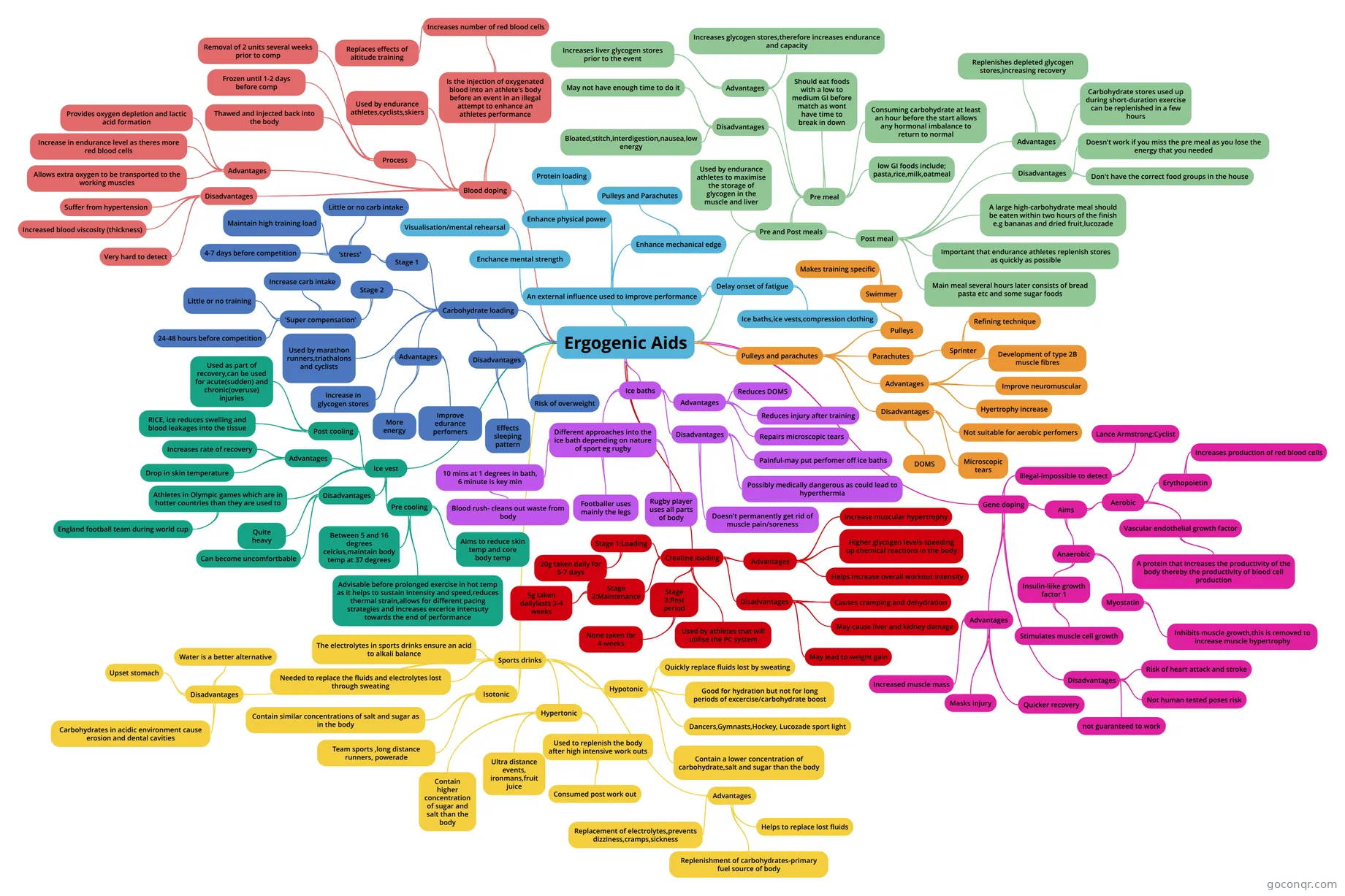 Mind map Ergogenic Aids
-
Mind map Prep of the Body
-
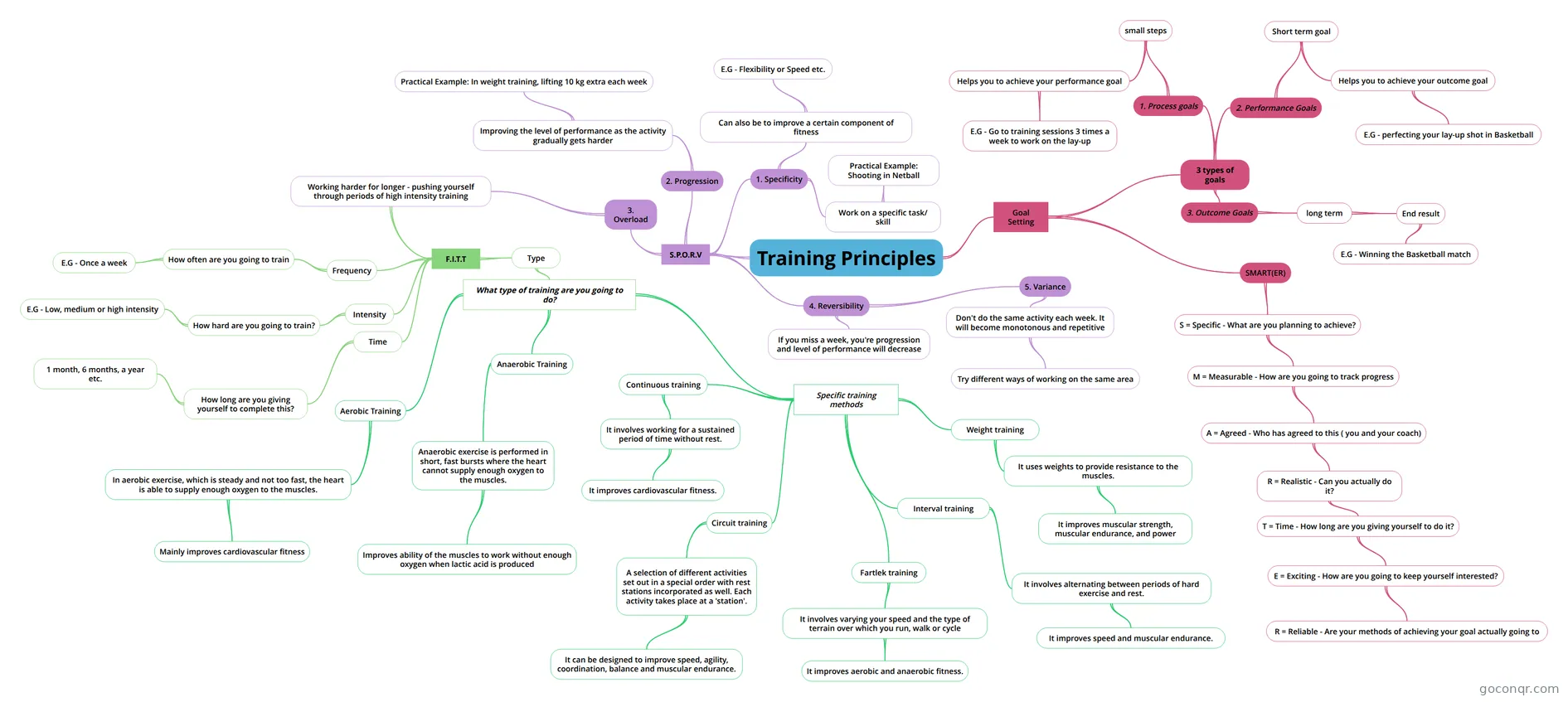 Mind map Training Principles SPORV FITT Goal Setting SMART(ER)
-
10 questionsChapter 10: Resistance Training: Programming and Progressions Which of the following terms is defined as the product of muscular strength and movement speed?
Quizzes
See all 14 quizzes-
100 questionsPhysical Education Exam Factors you should consider before starting a training program include
-
37 questionsPractice Exam (Emailed on Sunday) Part 2 Which of the following increases as an adaptation to chronic resistance training but decreases as an adapta...
-
10 questionsChapter 10: Resistance Training: Programming and Progressions Which of the following terms is defined as the product of muscular strength and movement speed?
-
10 questionsChapter 11: Cardiorespiratory Training: Programming and Progressions Chapter 11: Cardiorespiratory Training: Programming and Progressions quiz
-
10 questionsChapter 13: Mind-body Exercise Which form of mind-body exercise is BEST described as a form of moving meditation?
-
7 questionsFITT Test What does the F stand for in FITT
-
45 questionsUnit 6: Principles of Training and Training Methods Principles of Training: To train harder than normal. Which principle does this relate to?
-
58 questionsGRIT Process and detail
Mind maps
See all 59 mind maps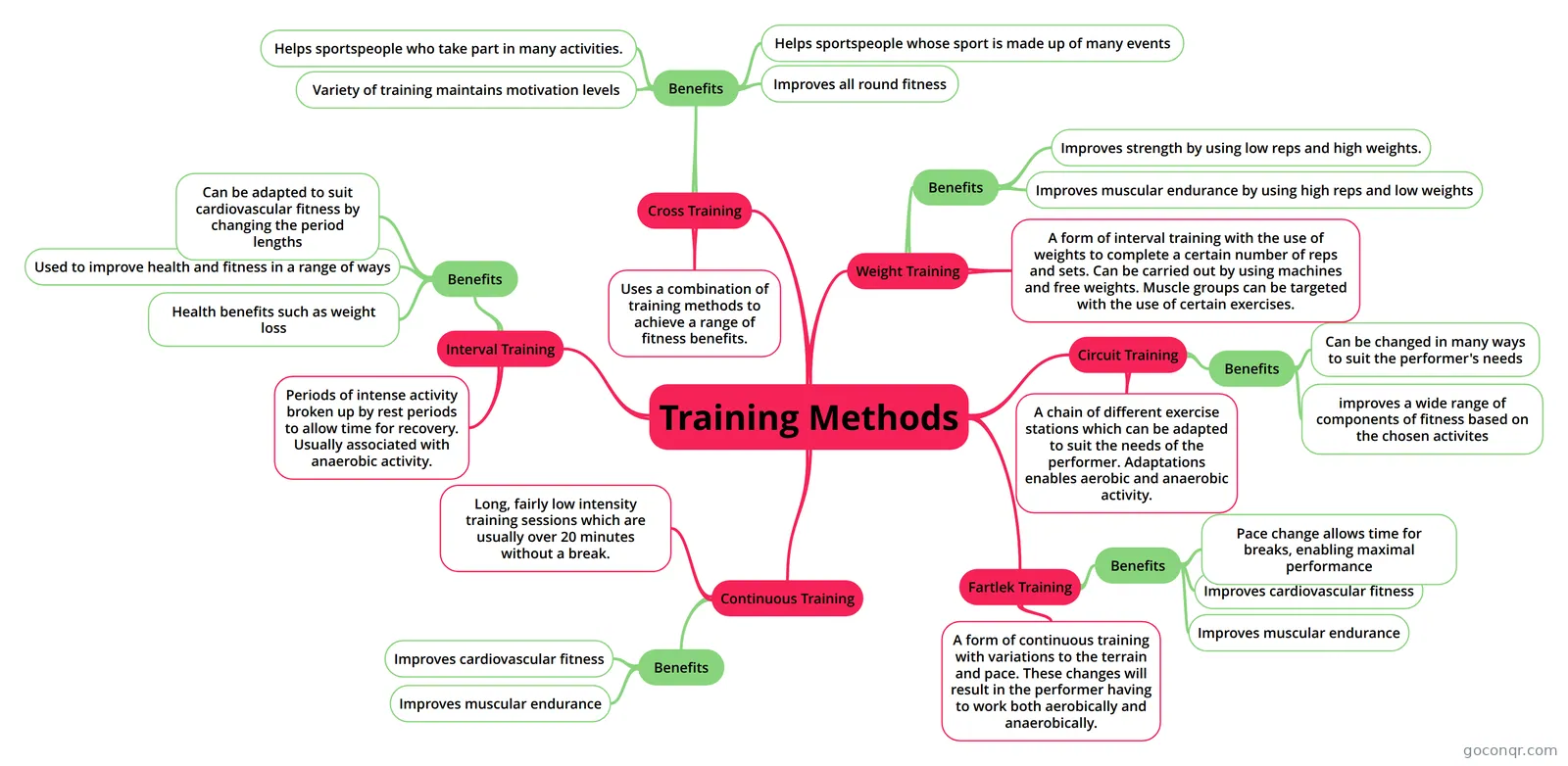
Flashcards
See all 43 flashcards-
81 cardsAll Edexcel GCSE PE key terms
-
12 cardstypes of practices Massed practice (Definition and example)
-
11 cardsPE Principles of Training PRINCIPLES OF TRAINING
-
11 cardsQuzziz. The performer exercises at a steady pace and moderate intensity for a minimum of 30 minutes.
-
10 cardsLifetime Health and Wellness Chapter 5 When using free weights a spotter is not necessary.
-
61 cardsUnit 6: Principles of Training and Training methods What is the acronym for the Principles of Training?
-
24 cardsUntitled_8 Describe the features of strength training
-
45 cardsPE FLASHCARDS- Gcse exam tomorrow What is Aesthetic appreciation?
Flowcharts
Notes
-
Chest Workouts Emphasise your... chest Take as wide a grip as possible. The further away from each other your hands, the more your arms are forced to move toward the centre of the body as the barbell is lowered, placing greater stra...
-
STUDY NOTES: TRAINING PRINCIPLES 5 Training Principles: Duration Frequency Specificity progressive overload Intensity Training Principles: Duration Intensity Frequency Intensity Progressive Overload 5 Additional Pr...
-
Triceps Preparation Lie on bench and grasp barbell from rack with shoulder width grip. Execution Lower weight to chest with elbows close to body. Push barbell back up until arms are straight. Repeat. Preparation Stand between...
-
Back Preparation Kneel over side of bench by placing knee and hand of supporting arm on bench. Position foot of opposite leg slightly back to side. Grasp dumbbell from floor. Execution Pull dumbbell to up to side until it ...
Slides
More Physical education and sport topics
About Methods of Training
GoConqr OriginalWhat the resources cover
The mind maps are the largest group here. The Methods Of Training map covers fartlek (a Swedish word meaning speed play), cross training and more. The Training Methods map lists interval, cross, weight, fartlek, continuous and circuit training, each with a short description. Other maps cover Ergogenic Aids, PNF Stretching, Altitude Training and Periodisation Overview, which uses a footballer as a case study and starts with pre-season work.
Where to start
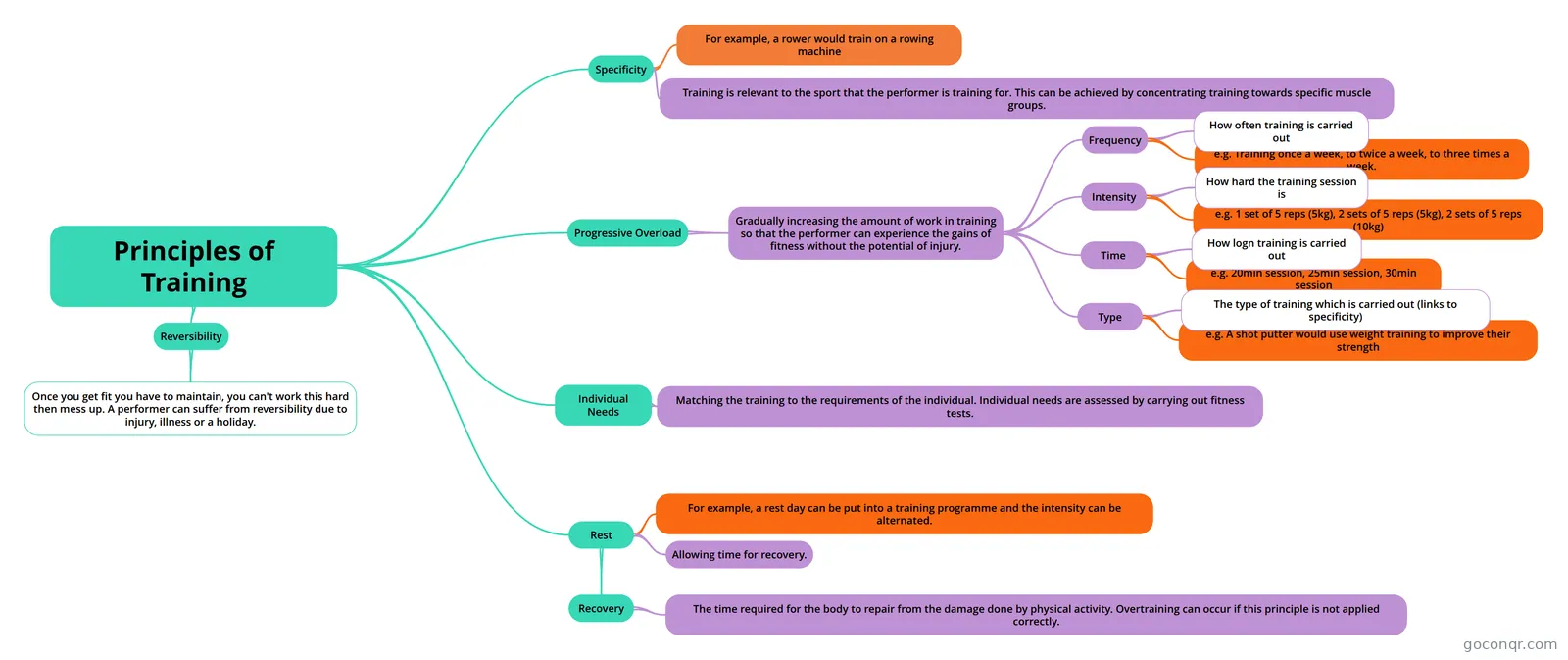
Begin with the principles: specificity, progressive overload, individual needs, rest, recovery and reversibility. The Principles of Training mind map sets these out, and the flashcard deck PE Principles of Training adds F.I.T.T. and S.P.O.R.T. Then move to the methods themselves, and after that to periodisation and specialised training.
- Read a principles map.
- Work through a methods map.
- Check key terms with flashcards, such as the deck of Edexcel GCSE PE key terms.
- Try the practice types deck, which covers massed and distributed practice.
Using quizzes and maps together
Read a map first, then take a quiz to see what stuck. The Methods of Training Quiz and FITT Test suit early revision. For professional certification, the page also lists chapter quizzes on resistance training, cardiorespiratory training and plyometrics, plus an ACE PT quiz and an NSCA quiz. Go back to the map for any question you miss.
Where this unit sits
This unit belongs to the Fitness, Training and Testing strand of Physical education and sport. It sits alongside testing material, such as the Prep of the Body map on fitness tests like the 12 minute Cooper test.
Open a map or quiz that matches your course, then make your own flashcards from the gaps you find.
Frequently asked questions
Where should I start with Methods of Training?
Start with a principles of training mind map, then move to the Training Methods map, which lists interval, cross, weight, fartlek, continuous and circuit training. Once those feel familiar, take the Methods of Training Quiz to find gaps and return to the maps for anything you missed.
Are the resources free to use?
Yes. Every resource listed here is free to open, study and take, with no account needed. They were made by GoConqr users, not by GoConqr itself, so it is worth checking that a resource matches your own course before relying on it.
Which exams do these resources suit?
The listed resources mention GCSE PE, A-level PE, BTEC Sport and NASM CPT, along with ACE and NSCA CSCS material for professional candidates. Most resources are at secondary level, with smaller groups for university students and professional candidates.
What do the mind maps cover?
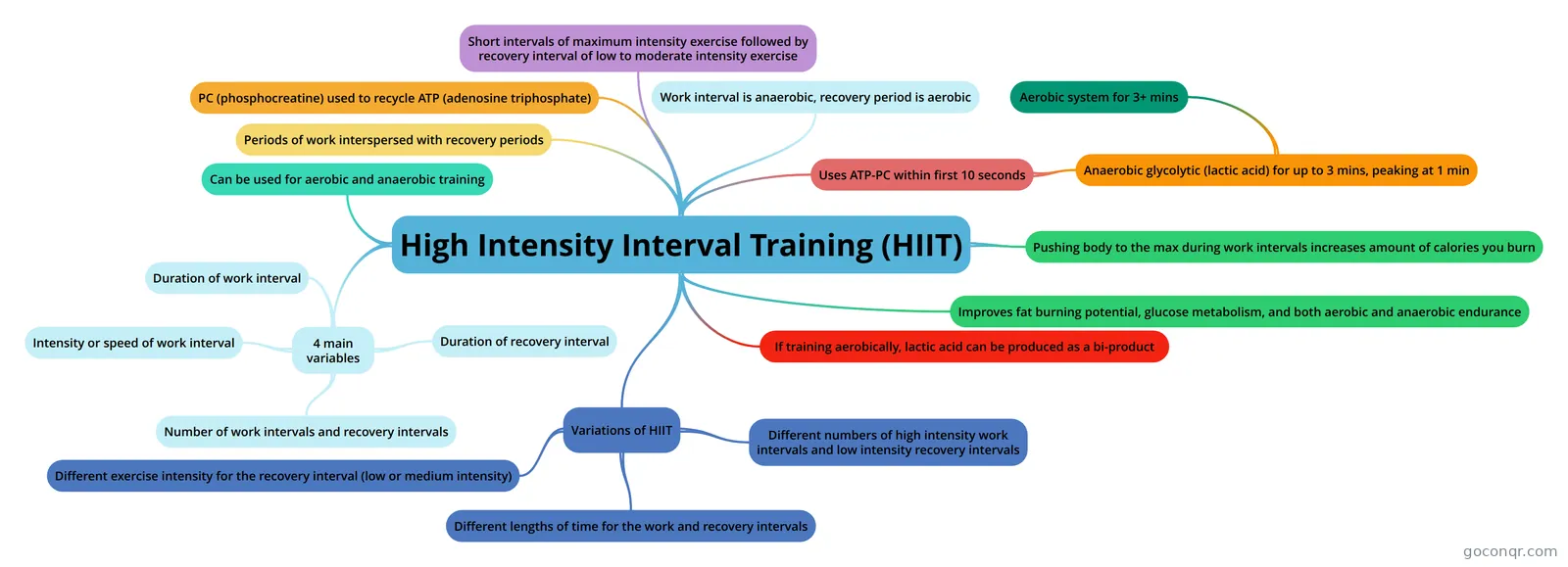
They cover principles of training, training methods, periodisation, altitude training, ergogenic aids, PNF stretching, HIIT, warm up and cool down, and somatotypes. Many break each method into short points on what it is and how it works, which makes them handy for quick revision.
Can I save my quiz scores or make my own resources?
A free account saves your quiz scores and lets you make your own quizzes, mind maps, flashcards and notes. Building your own set from the topics you find hardest is a good way to revise.
What if I can't find the topic I need?
Try a nearby title. Stretching, for instance, appears in the PNF Stretching map, the Types of Stretches slides and the Flexibility flashcards. Strength and resistance work appear under several titles, such as Weight Training and Strength Training.