
Mapa mental
Predicting Extinction Risk
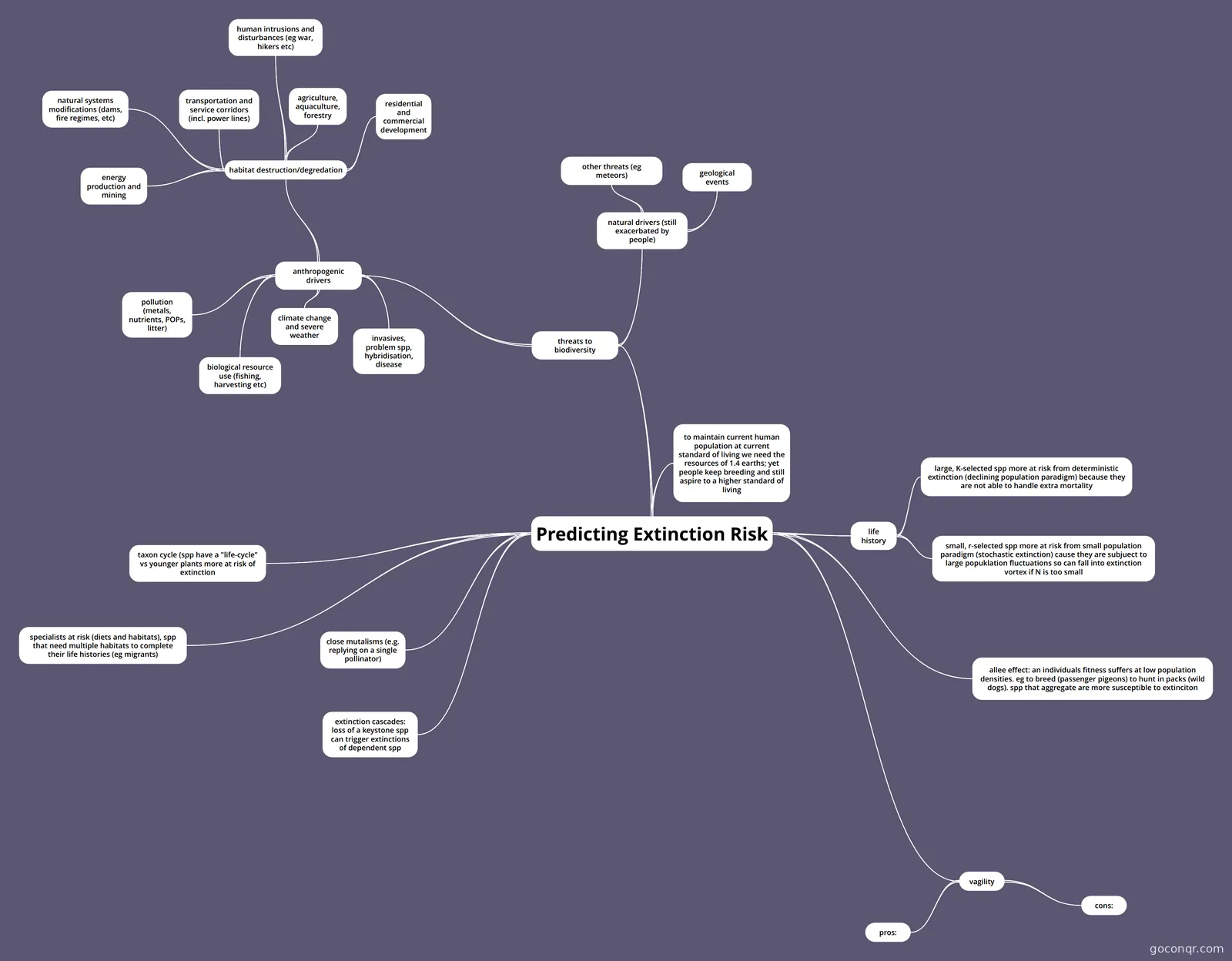
Mind map: Predicting extinction risk
Contenido del mapa
Predicting Extinction Risk
threats to biodiversity
- anthropogenic drivers
- biological resource use (fishing, harvesting etc)
- invasives, problem spp, hybridisation, disease
- pollution (metals, nutrients, POPs, litter)
- climate change and severe weather
- habitat destruction/degredation
- residential and commercial development
- agriculture, aquaculture, forestry
- energy production and mining
- transportation and service corridors (incl. power lines)
- human intrusions and disturbances (eg war, hikers etc)
- natural systems modifications (dams, fire regimes, etc)
- natural drivers (still exacerbated by people)
- geological events
- other threats (eg meteors)
- anthropogenic drivers
to maintain current human population at current standard of living we need the resources of 1.4 earths; yet people keep breeding and still aspire to a higher standard of living
life history
- large, K-selected spp more at risk from deterministic extinction (declining population paradigm) because they are not able to handle extra mortality
- small, r-selected spp more at risk from small population paradigm (stochastic extinction) cause they are subjuect to large popuklation fluctuations so can fall into extinction vortex if N is too small
taxon cycle (spp have a "life-cycle" vs younger plants more at risk of extinction
specialists at risk (diets and habitats), spp that need multiple habitats to complete their life histories (eg migrants)
close mutalisms (e.g. replying on a single pollinator)
extinction cascades: loss of a keystone spp can trigger extinctions of dependent spp
allee effect: an individuals fitness suffers at low population densities. eg to breed (passenger pigeons) to hunt in packs (wild dogs). spp that aggregate are more susceptible to extinciton
vagility
- pros:
- cons:
Información
- Descripción
- Mapa Mental sobre Predicting Extinction Risk, creado por lexi_s el 05/01/2016.
- Creado por
- lexi_s
- Visitas
- 20
- Etiquetas
- Valoración