
Mapa mental
Innate Immunity

Contenido del mapa
Innate Immunity
1st line defence
- present @ birth
- induces+ amplifies adaptive response
- no memory of prior exposure
- rapid
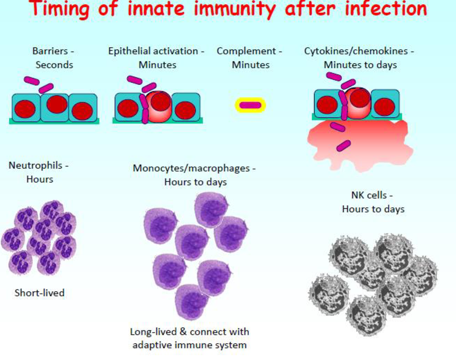
Innate immunity=0-4 hours
Early induced innate response=4-96 hours
properties + contrast with adaptive system
- See slide 4-5
Anatomical Physical Barriers
- see slide 7
- Skin: Physical barrier- prevent pathogens /dehydration, surface- lactic acid + antimicrobial fatty acids- pH3-6, deeper layer- keratinocytes - produce IL-8 + TNF if damaged> inflammation
- Epithelial cells - Slide 11
- Tears/ Saliva -lysozyme- digests peptidoglycan components of bacterial cell walls. Phospholipase A- highly basic enzyme, hydrolyses phospholipids in cell membranes
- Mucosal Surface-Internal epithelial (mucosal epithelial) secretes mucus contains mucins, protective layer of mucus over epithelia- pathogens coated in mucus prevented from adhering to surface. AIRWAY- mucociliary escalator- moves mucus + trapped particles 2 throat 2 swallow. STOMACH - mucus protects gastric mucosa from stomach acid Commensal bacteria + fungi inhabit mucosal surface- compete with pathogens 4 sites of attachment, some produce antimicrobial mols- e.g. lactic acid by vaginal lactobacili, but if allowed to over-grow can cause disease
- Temperature/pH-bacteria optimum growth 20-25 degree C, 37 degree C=bacteriostatic 4 sum bacteria. Similarly 37-40 d C in fever also inhibits bacterial + viral infection
- Tears/ Saliva -lysozyme- digests peptidoglycan components of bacterial cell walls. Phospholipase A- highly basic enzyme, hydrolyses phospholipids in cell membranes
- Epithelial cells - Slide 11
Soluble innate immune molecules
- Enzymes e.g. Lysozyme + secretory phospholipase A2-disrupts bacterial cell walls,
- Antimicrobial peptides- disrupt microbial membranes, secreted by mucosal epithelia + macrophages, 3 main types: defenins, cathelicidins, histatins
- Lectins- bactericidal proteins, bind carbohydrates groups on pathogens + damage cell membrane
- Complement components- lyse bacteria, opsonise bacteria, induce inflammation
- Cytokines + chemokines- diverse collection of soluble proteins + peptides that modulate behaviour of cells at nM to pM concs (cansee S21)
- Acute phase protein (APP) - ill defined set of proteins, increase in conc rapidly upon infection
- C-reactive protein (CRP) binds to some bacteria via surface phospholipids and stimulates both phagocytosis + complement activation. /is a good marker of inflammation
Innate antigen recognition (PRRs and PAMPs
- Pathogen associated molecular pattern 'PAMPs' - 'danger signals' . We possess molecules which have evolved 2 recognise + bind 2 such molecules (Pattern recognition receptors- PRRs) . 2 major groups 1) Toll-like receptors - often found on cell surfaces (in membranes) and 2) NOD- like receotirs- found often within the cell's cytoplasm
- NOD- like receptors (NLRs) Large fam of cytosolic PRRs , activated by intracellular PAMPs, can sense changes in intracellular enviro . In contrast to TLRs , NLRs are located in cytoplasm of epithelial, macrophages, DCs. Recognise intracellular PAMP (more info S29)
- see slide 27
- Pathogen associated molecular pattern 'PAMPs' - 'danger signals' . We possess molecules which have evolved 2 recognise + bind 2 such molecules (Pattern recognition receptors- PRRs) . 2 major groups 1) Toll-like receptors - often found on cell surfaces (in membranes) and 2) NOD- like receotirs- found often within the cell's cytoplasm
Innate immune effector response
- These are defenses the body uses no matter what the invader may be
- phagocytosis
- inflammation- caused by HISTAMINE release from LEUKOCYTES
- Impinges on both innate + adaaptive systems, a local response to injury, important in recruitment of cells o immunity + repair to site of injury/infection. Largely cordinated by lymphocyte + lymphocyte traffic , gross characteristics= swelling, redness, heat & pain , see S39
- Control of movement of white blood c (espesh neutrophils + lymphocytes across endothelium blood vessels = v important 4 process of inlammation , controlled by intracellular adhesion molecs (CAMS)
- Mediators of inflammation, some small complement fragments act as inflammatory mediators. These fragments enhance blood supply 2 area in which they are released, by binding 2 receptors on endothelial cells inducing the small blood vessels and inducing an increase in capillary diameter. They also attract other cells to the site of tissue damage. THE CHEMOKINES- group of peptides responsible 4 coordination+ regulation of leukocyte adhesion, activation + attraction to areas of inflammation (CHEMOTAXIS), upregulated by no. chemokines involved in infection+ inflamamtion importantly g-interferon & TNF-a. Are TWO TYPES of chemokine:1) CC type 2) CXC type. These are produced by no. cell types + affect mostly leukocytes-espesh lymphocytes-via chemokine receptors
- margination
- diapedesis- (S39)
- complement
- refers 2 set of serum proteins that cooperates wiv innate + adaptive immune syst 2 eliminate blood + tissue pathogens . Complement proteins interact with 1anuva in catalyti cascades. Various complement components bind + opsonise bacteria, rendering them suceptible 2 receptor-mediated phagocytosis by macrophages, which express membrane receptors 4 complement proteins
- series of ova 30 proteins that constantly circulate in blood + fluids that bathe the tissues
- most made by liver also produced by monocytes + macrophages
- Secreted as inactive enzymes known as zymogens (enzymes that must b modified in order 2b active)
- Most of these r inactive until theyr cleaved by protease which in turn converts them in2 a protease by splitting the protein in2 small + large fragments. This pattern of sequential info produces expanding cascade of activity, when activated cooperate wiv other host defense systems 2 generate inflammation + rapidly remove patbogen (S57-58)
- Complement inhibitors (S59)
- complement deficiency (S60)
- refers 2 set of serum proteins that cooperates wiv innate + adaptive immune syst 2 eliminate blood + tissue pathogens . Complement proteins interact with 1anuva in catalyti cascades. Various complement components bind + opsonise bacteria, rendering them suceptible 2 receptor-mediated phagocytosis by macrophages, which express membrane receptors 4 complement proteins
- phagocyte migration
- phagocytosis (S31-33)
- What stimulates phagocytosis?1) -ve charged particulates-latex microspheres will b phagocytosed by macrophages 2) Opsonisation- coating of targets with antibody/ complement which is detected by phagocytes via receptors3) Pattern recognition molecules- recognise specific molecular patterns on bacterial membranes (e.g. toll-like receptors)
- Intracellular killing pathways : O2 dependent, NO dependent, OTher indepdent- S37
- What stimulates phagocytosis?1) -ve charged particulates-latex microspheres will b phagocytosed by macrophages 2) Opsonisation- coating of targets with antibody/ complement which is detected by phagocytes via receptors3) Pattern recognition molecules- recognise specific molecular patterns on bacterial membranes (e.g. toll-like receptors)
- phagocytosis (S31-33)
- fever
- These are defenses the body uses no matter what the invader may be
Cells of the Innate Immune System
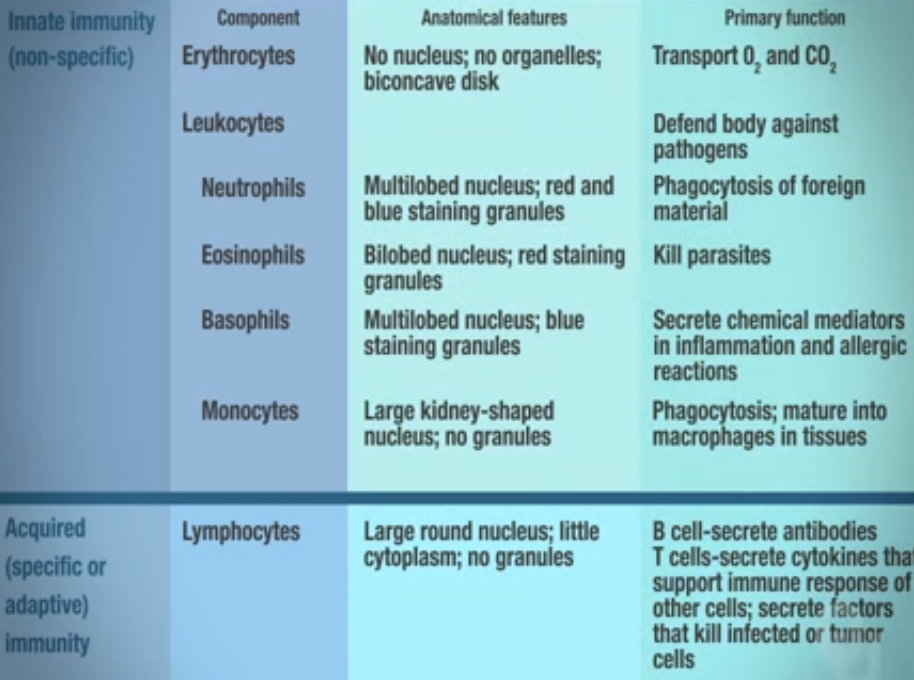
- Macrophages - derived from hematopoietic stem cells in bone marrow (S63), MONOCYTES migrates into the tissues and differentiate into macrophages. Monocytes: phagocytose microbes, differentiate into macrophages, present antgens to T-cells (bot of S64)
- DENDRITIC CELLS- most POTENT antigen presenting cells, Interstitial Dc in most organs, Interdigitating DC in lymphoid tissue, circulating DC
- Major type of Ag presenting cell (professional), presents antigen to T-cell receptor, different types depdent on body, location +origin e.g. Langerhans (skin), myeloid, lymphoid, Patrol major portals of pathogen entry – skin, GI tract, respiratory tract, GU tract, patrol blood + tissues, constantly saple enviro by pinocytosis + phagocytosis in search of Ag for T cells “immune survelliance”, express receptors (PRRs) for PAMPs, express receptors for chemokines released @ sites of acute inflammation L3 S57
- L3 S54
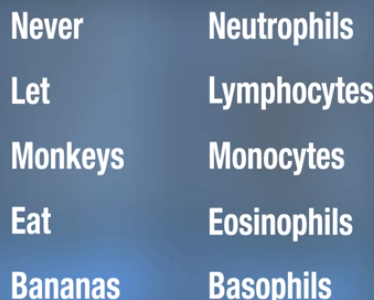
- Neutrophils- 50-50% of circulating white cells. Infection activates Cytokines that stimulate bone marrow 2 make 20million neutrophils per ml of blood. Neutrophils= active phagocytic cells, circulate in peripheral blood and migrate by EXTRAVASATION into tissues where have life span of few days. Neutrophils= attracted to tissues by CHEMOTACTIC FACTORS
- Basophils/ Mast Cells
- Basophils = in circulation, mast cells= in tissue, primary granules in these cells contain histamine + leukotrienes – released when stimulated wiv allergen, products of granules enhance inflammation, mast cells – fond in skin, connective + mucosal tissue, important role in devel of allergies.
- mast cells in inflammatory response: Vasoactive amines released by MAST cells cause RELAXATION of smooth muscle in blood vessel walls, dilating blood veseels&increase bloodflow. Also promote loosening of connections b2wen blood vessel endothelial cells- producing leakage of serum in2 tissues- local oedema,
- Basophils = in circulation, mast cells= in tissue, primary granules in these cells contain histamine + leukotrienes – released when stimulated wiv allergen, products of granules enhance inflammation, mast cells – fond in skin, connective + mucosal tissue, important role in devel of allergies.
- Eosinophils- granulocytes able 2 kill Ab-coated parasites through degranulation, involved in allergic reactions
Imágenes y archivos del mapa
Información
- Descripción
- Mapa Mental sobre Innate Immunity, creado por mfbi20 el 08/05/2016.
- Creado por
- mfbi20
- Visitas
- 0
- Valoración