
Mapa mental
Classroom Assessment
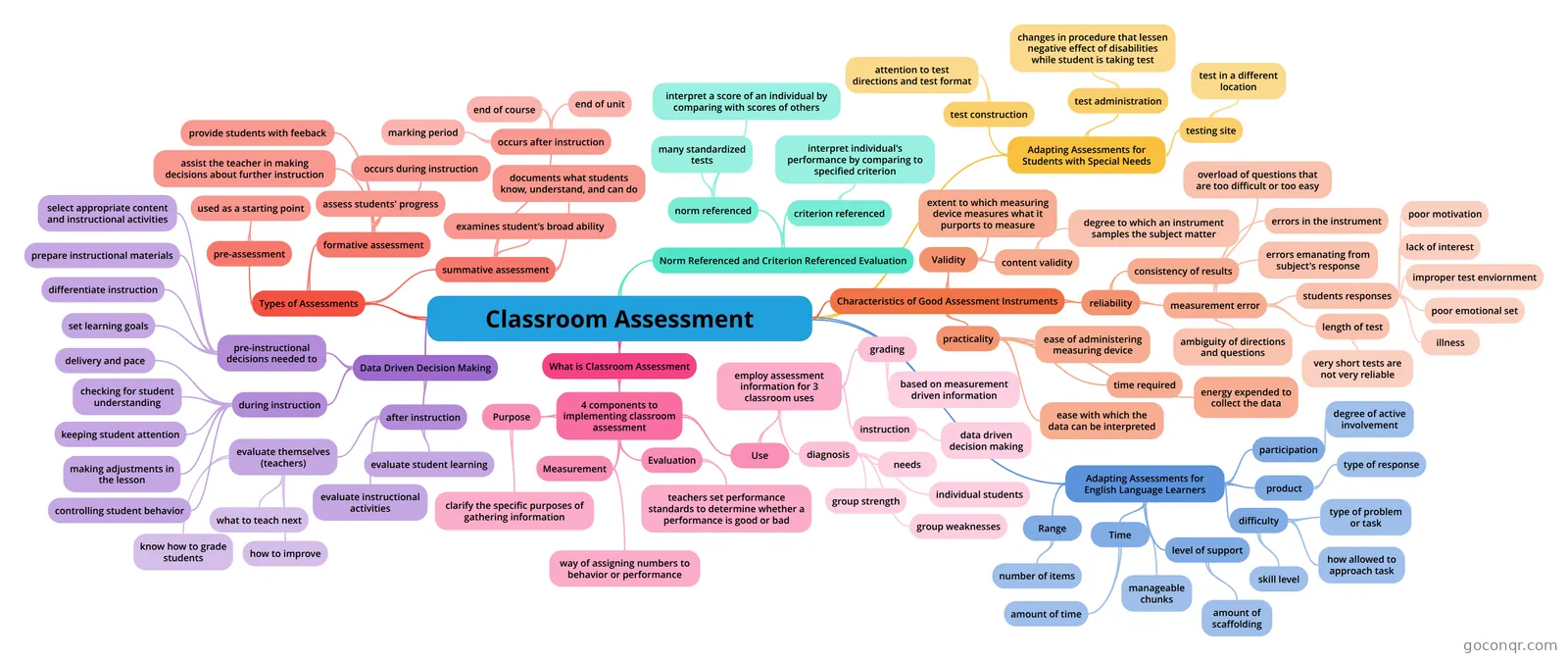
Mind map: Classroom assessment
Contenido del mapa
Classroom Assessment
What is Classroom Assessment
- 4 components to implementing classroom assessment
- Purpose
- clarify the specific purposes of gathering information
- Measurement
- way of assigning numbers to behavior or performance
- Evaluation
- teachers set performance standards to determine whether a performance is good or bad
- Use
- employ assessment information for 3 classroom uses
- diagnosis
- individual students
- group strength
- group weaknesses
- needs
- grading
- based on measurement driven information
- instruction
- data driven decision making
- diagnosis
- employ assessment information for 3 classroom uses
- Purpose
- 4 components to implementing classroom assessment
Data Driven Decision Making
- pre-instructional decisions needed to
- set learning goals
- select appropriate content and instructional activities
- differentiate instruction
- prepare instructional materials
- during instruction
- delivery and pace
- keeping student attention
- controlling student behavior
- checking for student understanding
- making adjustments in the lesson
- after instruction
- evaluate student learning
- evaluate instructional activities
- evaluate themselves (teachers)
- know how to grade students
- what to teach next
- how to improve
- pre-instructional decisions needed to
Types of Assessments
- pre-assessment
- used as a starting point
- formative assessment
- occurs during instruction
- assess students' progress
- provide students with feeback
- assist the teacher in making decisions about further instruction
- summative assessment
- occurs after instruction
- end of unit
- marking period
- end of course
- documents what students know, understand, and can do
- examines student's broad ability
- occurs after instruction
- pre-assessment
Norm Referenced and Criterion Referenced Evaluation
- norm referenced
- interpret a score of an individual by comparing with scores of others
- many standardized tests
- criterion referenced
- interpret individual's performance by comparing to specified criterion
- norm referenced
Characteristics of Good Assessment Instruments
- Validity
- extent to which measuring device measures what it purports to measure
- content validity
- degree to which an instrument samples the subject matter
- reliability
- consistency of results
- measurement error
- errors in the instrument
- errors emanating from subject's response
- length of test
- very short tests are not very reliable
- ambiguity of directions and questions
- overload of questions that are too difficult or too easy
- students responses
- poor motivation
- lack of interest
- improper test enviornment
- poor emotional set
- illness
- practicality
- ease of administering measuring device
- time required
- energy expended to collect the data
- ease with which the data can be interpreted
- Validity
Adapting Assessments for English Language Learners
- Range
- number of items
- Time
- amount of time
- manageable chunks
- level of support
- amount of scaffolding
- difficulty
- skill level
- type of problem or task
- how allowed to approach task
- product
- type of response
- participation
- degree of active involvement
- Range
Adapting Assessments for Students with Special Needs
- test construction
- attention to test directions and test format
- test administration
- changes in procedure that lessen negative effect of disabilities while student is taking test
- testing site
- test in a different location
- test construction
Información
- Descripción
- (11 Assessing Student Performance) DOC1 Mapa Mental sobre Classroom Assessment, creado por Dylan Teresa el 23/07/2016.
- Creado por
- Dylan Teresa
- Visitas
- 0
- Valoración
Más sobre Classroom Assessment Methods and Tools