
Assessment and Evaluation
1,634 resources created by 1,271 users
This Assessment and Evaluation page on GoConqr gathers community-made mind maps, quizzes, flashcards and notes on topics such as authentic assessment, peer and self assessment, assessment for learning and standardised tests. It's built for university students and professional candidates working through assessment theory, and for teachers after ready-made material. There are over 1,500 resources here, including more than 1,400 mind maps and more than 40 quizzes, made by over 1,200 contributors. Pick a topic, try a quiz to find your gaps, then build your own revision set.
Top Assessment and Evaluation resources
-
24 questionsChapter 5 Quiz BIO 400 Azusa Pacific University
-
Mind map Authentic Assessment This mind map shows different authentic assessments teachers can use in the classroom with ESL students. It...
-
Mind map Authentic Assessment & Emergent Bilinguals
-
Mind map Traditional Assessments vs. Authentic Assessments Traditional Assessments vs. Authentic Assessments
-
16 questionsFeedback statements Tell me more. What did you do on the visit out? How did you get there?
-
Mind map Authentic Assessment This mind map explores 5 big ideas about authentic assessment and explores how they can be applied in diver...
-
Mind map Authentic Assessment: What's the Big Idea? A look at the various forms of authentic assessment and how they can be applied in an ESL classroom
-
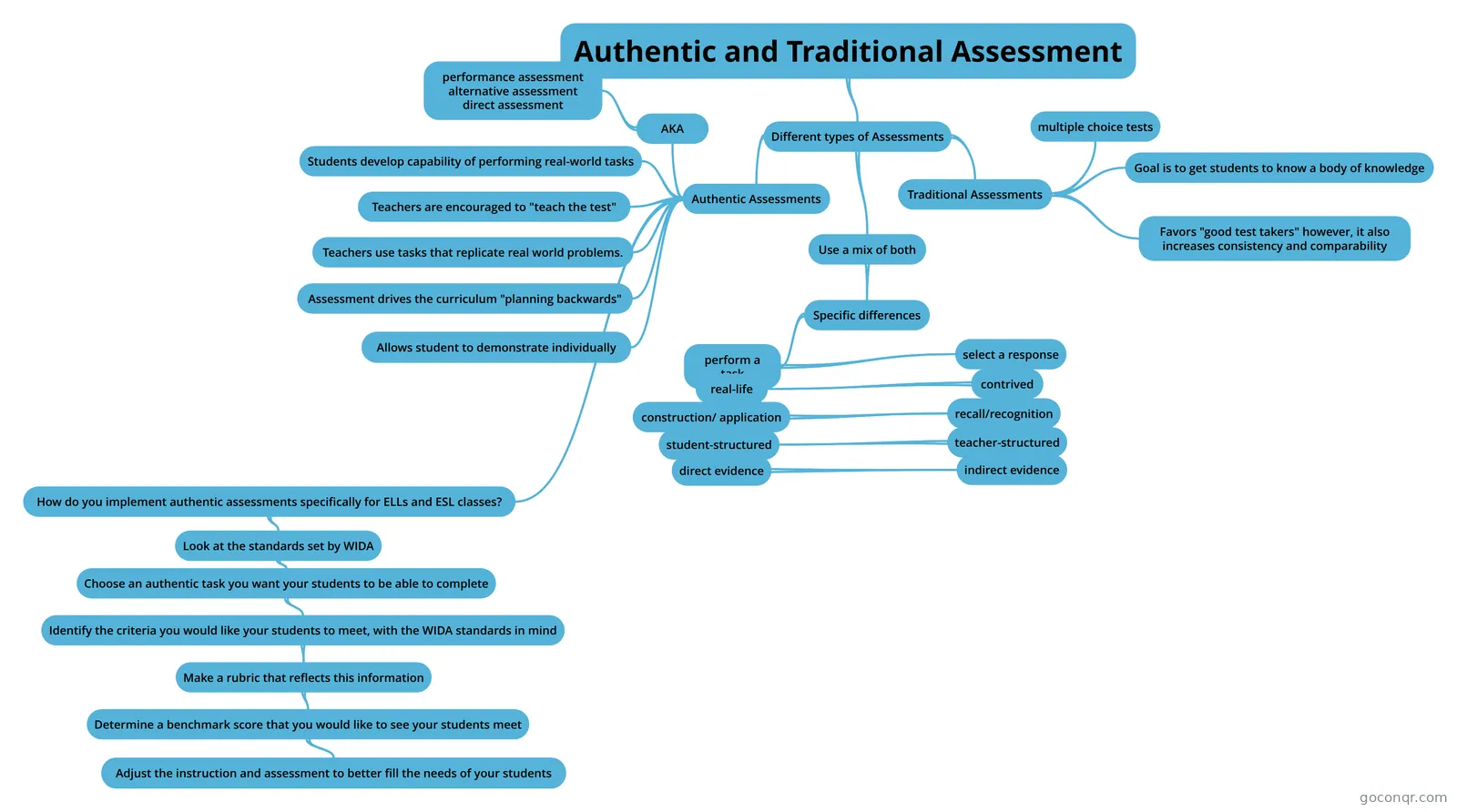 Mind map Authentic and Traditional Assessment This mind map highlights the differences between authentic and traditional assessment.
Quizzes
See all 50 quizzes-
24 questionsChapter 5 Quiz BIO 400 Azusa Pacific University
-
16 questionsFeedback statements Tell me more. What did you do on the visit out? How did you get there?
-
20 questionsFilipino Set A Alin sa mga sumusunod ang may tamang pares ng element o bahagi ng pagsusulit na pagtatapat-tapatin.
-
20 questionsASSESSMENT TEST According to the Decree 198 assessment will be
-
4 questionsBuilding Student Rapport (Through Feedback) What is something a teacher should NOT do when providing feedback?
-
2 questionsHarnessing ICT to Support Formative Assessment Teacher first shared with students that they have to create an animation to show the concept of water cycle...
-
5 questionsED 507 When establishing what to assess within training and education what do I need to consider?
-
5 questionsModule Three Quiz According to John Hattie's research, which of the following are the three elements most effective for teach...
Mind maps
See all 1,463 mind maps-
Authentic Assessment This mind map shows different authentic assessments teachers can use in the classroom with ESL students. It...
-
Authentic Assessment & Emergent Bilinguals
-
Traditional Assessments vs. Authentic Assessments Traditional Assessments vs. Authentic Assessments
-
Authentic Assessment This mind map explores 5 big ideas about authentic assessment and explores how they can be applied in diver...
-
Authentic Assessment: What's the Big Idea? A look at the various forms of authentic assessment and how they can be applied in an ESL classroom
-
Authentic and Traditional Assessment This mind map highlights the differences between authentic and traditional assessment.
-
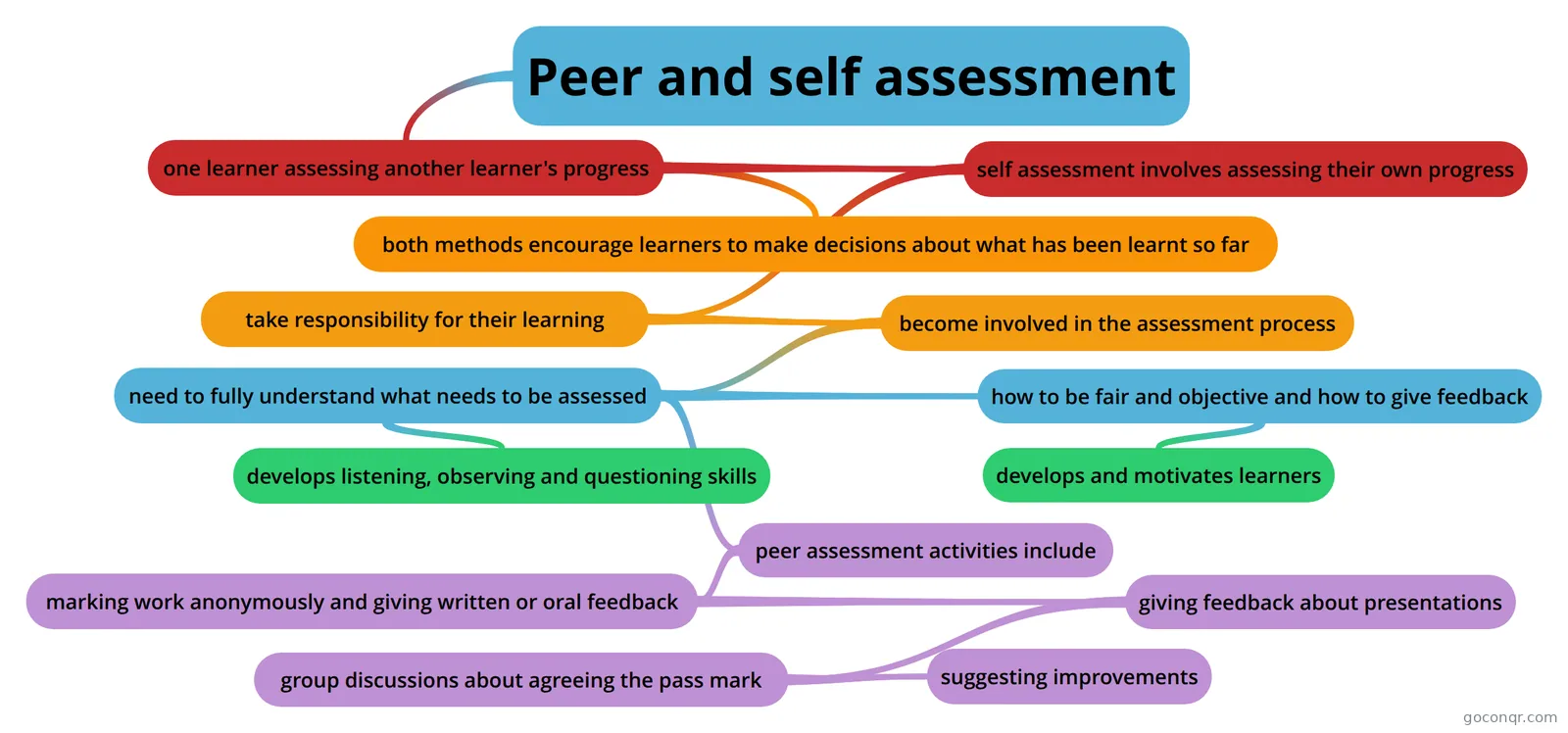 Peer and self assessment peer and self assessment process
-
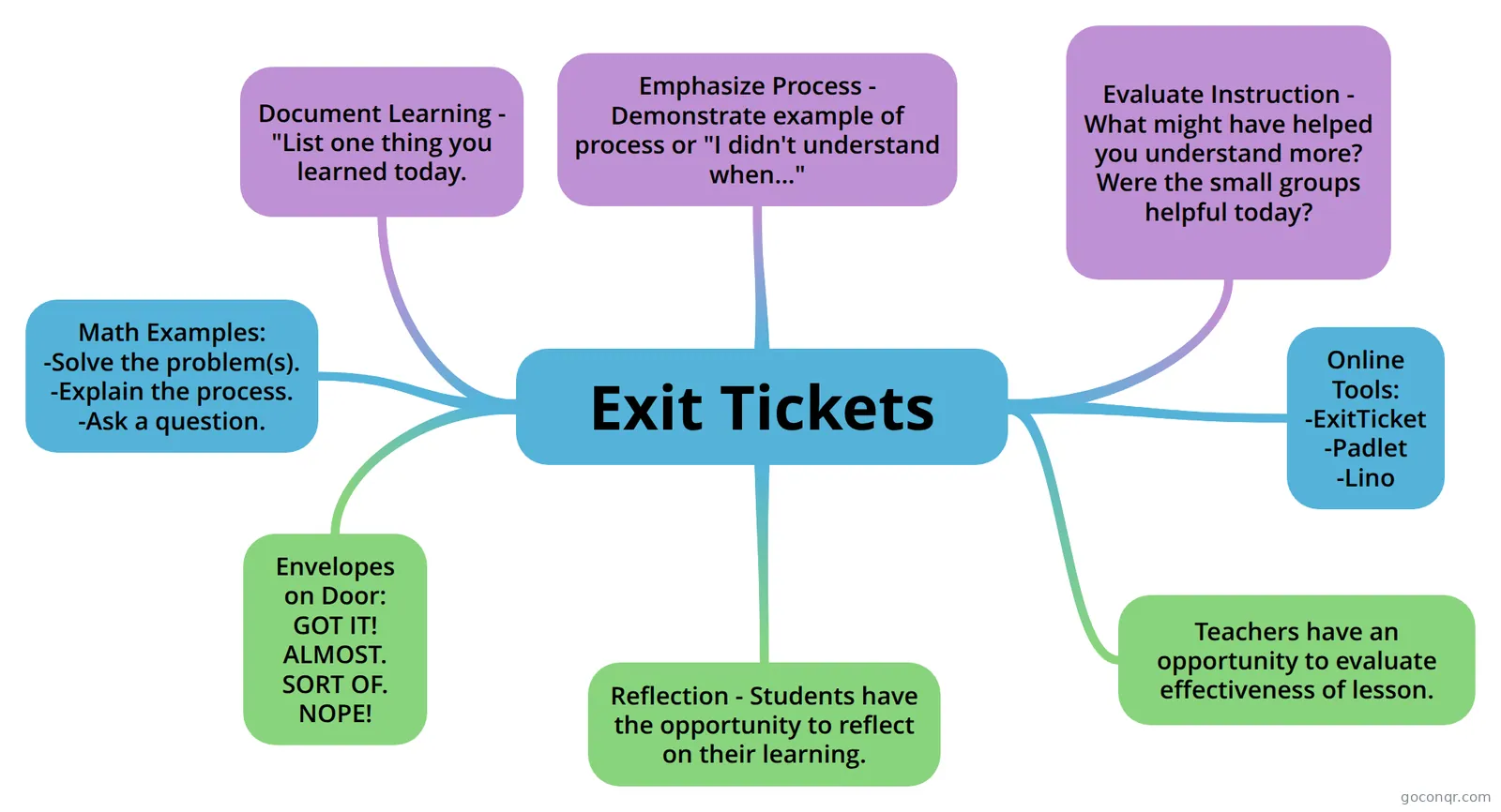 Exit Tickets I've been struggling to incorporate exit tickets into my classroom since I made the switch from teaching EL...
Flashcards
See all 32 flashcards-
34 cardsData Based Decision Making Adapted from G. Pacitto, J. Borchert, & A. Duncan presentation on DBDM
-
42 cardsMT Health Education 1st Year (first Semester) -Gathering information to increase students’ learning. and development - What students know and have learned
-
10 cardsEvaluation of the linguistic competence glossary by Evangelina Letrán These cards offer information about assessment terminology so teachers can be aware of vocabulary to refer ...
-
10 cardsAssessment terminology flashcards AfL Assessment for learning
-
10 cardsChapter 14 A test designed to measure general abilities and to predict future performances
-
10 cardsE-assessment is a glossary about the topic
-
4 cardsUntitled_1
Flowcharts
See all 49 flowcharts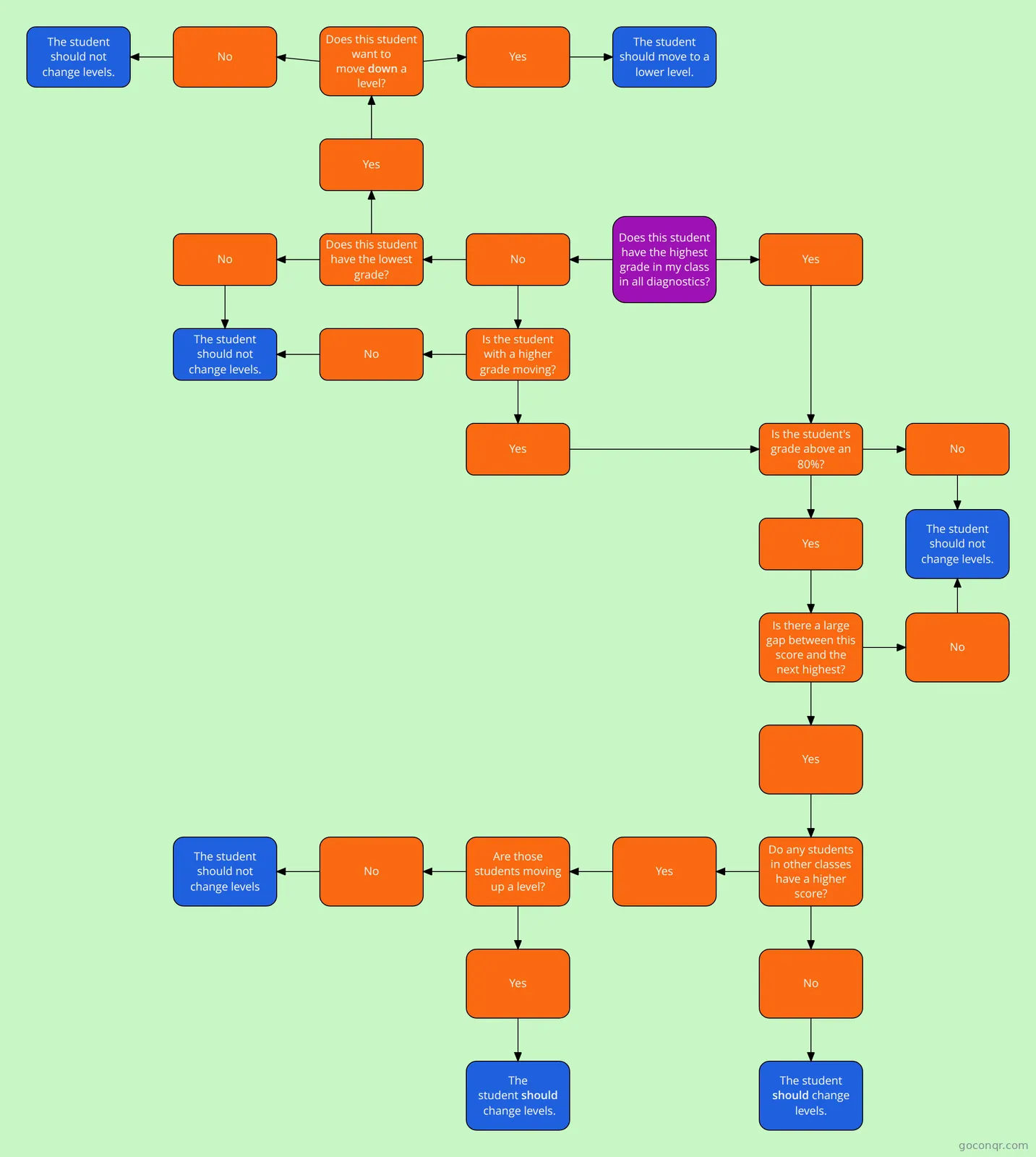
Notes
See all 29 notes-
How to Make an Effective Quiz or Test Question: What makes a great online quiz? Answer: Read on to find outWith hundreds of thousands of quizzes created by GoConqr users, from language teachers to corporate trainers, and professional study group participa...
-
Welcome Welcome to Teens Extreme 7! In this class we will be learning a lot together in all sorts of different ways. I will try to incorporate technology in every way possible so that your learning experience can be as awesom...
-
A Note about assessment Summative assessment is "assessment OF learning" such as a test, assignment or exam that is graded and counts towards a student's award.Formative assessment is "assessment FOR learning" and provides both the tutor and...
Slides
See all 11 slidesMore Education and pedagogy (incl. teaching methods, curriculum, educational psychology) topics
About Assessment and Evaluation
GoConqr OriginalWhat this page covers
This unit sits in the Assessment and Evaluation strand of Education and pedagogy. Most of what you will find is mind maps, with quizzes, flashcard decks, notes, flowcharts and a slide set alongside them. Everything was made by GoConqr users, so styles and depth vary.
Where to begin
Start with the big picture. The mind map Peer and self assessment explains how one learner can judge another's progress, and how self assessment builds responsibility for learning. Then move to Authentic and Traditional Assessment, which sets real-world tasks against conventional tests.
- Read Authentic Assessment for attributes, examples such as oral reports and portfolios, and what does not count as authentic.
- Compare approaches in Traditional Assessments vs. Authentic Assessments, which lists similarities and differences.
- Look at Authentic Assessment & Emergent Bilinguals if you work with language learners.
Testing yourself
Once a map feels familiar, try the Chapter 5 Quiz. It asks you to define assessment and evaluation and to match types of assessment to when they happen. The Feedback statements quiz looks at what makes feedback formative and useful. Quiz answers that surprise you show which map to reopen.
Other angles
- Formative approaches: Formative Assessment and several maps on assessment for learning.
- Large-scale testing: Standardized Tests and a flowchart on large scale assessments.
- Quality of tests: Vadilty and Reliability and the note on how to make an effective quiz or test.
- Quick vocabulary checks: the flashcards on assessment terminology.
Some resources mention TKT, so teachers preparing for it may find useful material here.
Make it your own
Open a map, take a quiz, and see what sticks. Then write your own notes or flashcards on the ideas you found hardest.
Frequently asked questions
Which resource should I open first?
Try the mind map Peer and self assessment for a clear starting point, then Authentic and Traditional Assessment to see the main contrast. After that, the Chapter 5 Quiz is a good way to check that you can define assessment and evaluation and place each type in context.
What do the mind maps cover?
They cover authentic and traditional assessment, peer and self assessment, assessment for learning, formative assessment, standardised tests, validity and reliability, and exit tickets. Some focus on adapting assessment for ESL and ELD learners. Over 1,400 maps are listed, so you can compare several takes on one idea.
Are these resources free to use?
Yes. Every resource listed here is free to open, study and take, with no account needed. They were made by GoConqr users, not by GoConqr itself. If you want to save quiz scores or make your own quizzes, maps, flashcards and notes, you can add a free account.
Who are these resources suited to?
Most are aimed at university students and professional candidates studying assessment and evaluation, with teachers also able to use them as ready-made material. A few resources mention TKT, so teachers working towards that may want to browse the language-focused maps and notes.
Is there anything on feedback?
Yes. The Feedback statements quiz shows an example of quality formative feedback, where a student gets guidance on how to improve. There is also a quiz on building student rapport through feedback, and several assessment for learning maps that put feedback in context.
What if I cannot find the topic I need?
Try nearby terms, such as evaluation, testing or formative assessment, since contributors title things differently. If nothing fits, make your own mind map, quiz or flashcard set on the topic. Your own version can also help you learn it more thoroughly.