
Mapa mental
Vitamins and minerals
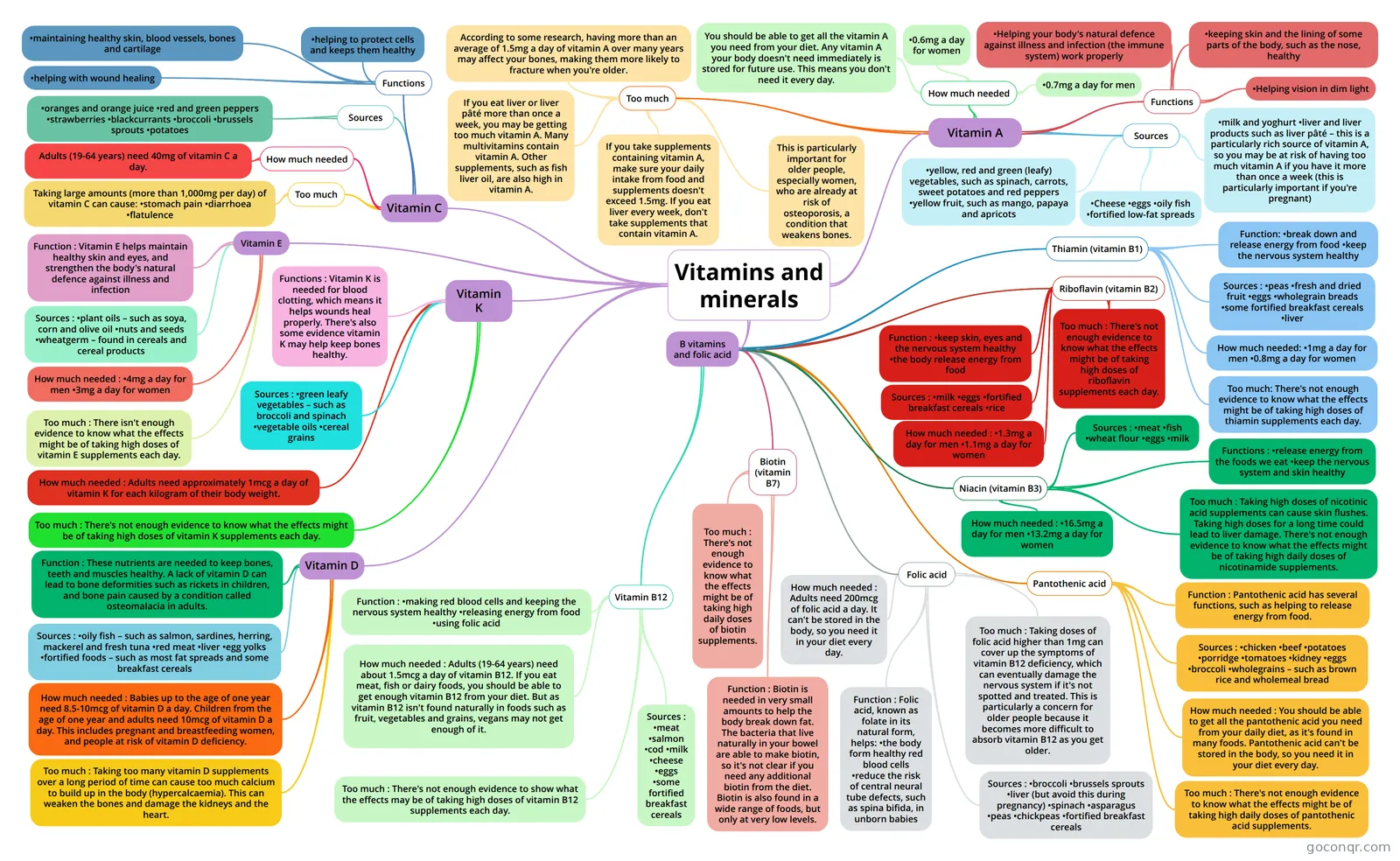
Mind map: Vitamins and minerals
Contenido del mapa
Vitamins and minerals
Vitamin A
- Functions
- •Helping your body's natural defence against illness and infection (the immune system) work properly
- •Helping vision in dim light
- •keeping skin and the lining of some parts of the body, such as the nose, healthy
- Sources
- •Cheese •eggs •oily fish •fortified low-fat spreads
- •milk and yoghurt •liver and liver products such as liver pâté – this is a particularly rich source of vitamin A, so you may be at risk of having too much vitamin A if you have it more than once a week (this is particularly important if you're pregnant)
- •yellow, red and green (leafy) vegetables, such as spinach, carrots, sweet potatoes and red peppers •yellow fruit, such as mango, papaya and apricots
- How much needed
- •0.7mg a day for men
- •0.6mg a day for women
- You should be able to get all the vitamin A you need from your diet. Any vitamin A your body doesn't need immediately is stored for future use. This means you don't need it every day.
- Too much
- According to some research, having more than an average of 1.5mg a day of vitamin A over many years may affect your bones, making them more likely to fracture when you're older.
- This is particularly important for older people, especially women, who are already at risk of osteoporosis, a condition that weakens bones.
- If you eat liver or liver pâté more than once a week, you may be getting too much vitamin A. Many multivitamins contain vitamin A. Other supplements, such as fish liver oil, are also high in vitamin A.
- If you take supplements containing vitamin A, make sure your daily intake from food and supplements doesn't exceed 1.5mg. If you eat liver every week, don't take supplements that contain vitamin A.
- Functions
B vitamins and folic acid
- Thiamin (vitamin B1)
- Function: •break down and release energy from food •keep the nervous system healthy
- Sources : •peas •fresh and dried fruit •eggs •wholegrain breads •some fortified breakfast cereals •liver
- How much needed: •1mg a day for men •0.8mg a day for women
- Too much: There's not enough evidence to know what the effects might be of taking high doses of thiamin supplements each day.
- Riboflavin (vitamin B2)
- Function : •keep skin, eyes and the nervous system healthy •the body release energy from food
- Sources : •milk •eggs •fortified breakfast cereals •rice
- How much needed : •1.3mg a day for men •1.1mg a day for women
- Too much : There's not enough evidence to know what the effects might be of taking high doses of riboflavin supplements each day.
- Niacin (vitamin B3)
- Functions : •release energy from the foods we eat •keep the nervous system and skin healthy
- Sources : •meat •fish •wheat flour •eggs •milk
- How much needed : •16.5mg a day for men •13.2mg a day for women
- Too much : Taking high doses of nicotinic acid supplements can cause skin flushes. Taking high doses for a long time could lead to liver damage. There's not enough evidence to know what the effects might be of taking high daily doses of nicotinamide supplements.
- Pantothenic acid
- Function : Pantothenic acid has several functions, such as helping to release energy from food.
- Sources : •chicken •beef •potatoes •porridge •tomatoes •kidney •eggs •broccoli •wholegrains – such as brown rice and wholemeal bread
- How much needed : You should be able to get all the pantothenic acid you need from your daily diet, as it's found in many foods. Pantothenic acid can't be stored in the body, so you need it in your diet every day.
- Too much : There's not enough evidence to know what the effects might be of taking high daily doses of pantothenic acid supplements.
- Biotin (vitamin B7)
- Function : Biotin is needed in very small amounts to help the body break down fat. The bacteria that live naturally in your bowel are able to make biotin, so it's not clear if you need any additional biotin from the diet. Biotin is also found in a wide range of foods, but only at very low levels.
- Too much : There's not enough evidence to know what the effects might be of taking high daily doses of biotin supplements.
- Folic acid
- Function : Folic acid, known as folate in its natural form, helps: •the body form healthy red blood cells •reduce the risk of central neural tube defects, such as spina bifida, in unborn babies
- Sources : •broccoli •brussels sprouts •liver (but avoid this during pregnancy) •spinach •asparagus •peas •chickpeas •fortified breakfast cereals
- How much needed : Adults need 200mcg of folic acid a day. It can't be stored in the body, so you need it in your diet every day.
- Too much : Taking doses of folic acid higher than 1mg can cover up the symptoms of vitamin B12 deficiency, which can eventually damage the nervous system if it's not spotted and treated. This is particularly a concern for older people because it becomes more difficult to absorb vitamin B12 as you get older.
- Vitamin B12
- Function : •making red blood cells and keeping the nervous system healthy •releasing energy from food •using folic acid
- Sources : •meat •salmon •cod •milk •cheese •eggs •some fortified breakfast cereals
- How much needed : Adults (19-64 years) need about 1.5mcg a day of vitamin B12. If you eat meat, fish or dairy foods, you should be able to get enough vitamin B12 from your diet. But as vitamin B12 isn't found naturally in foods such as fruit, vegetables and grains, vegans may not get enough of it.
- Too much : There's not enough evidence to show what the effects may be of taking high doses of vitamin B12 supplements each day.
- Thiamin (vitamin B1)
Vitamin C
- Functions
- •helping to protect cells and keeps them healthy
- •maintaining healthy skin, blood vessels, bones and cartilage
- •helping with wound healing
- Sources
- •oranges and orange juice •red and green peppers •strawberries •blackcurrants •broccoli •brussels sprouts •potatoes
- How much needed
- Adults (19-64 years) need 40mg of vitamin C a day.
- Too much
- Taking large amounts (more than 1,000mg per day) of vitamin C can cause: •stomach pain •diarrhoea •flatulence
- Functions
Vitamin D
- Function : These nutrients are needed to keep bones, teeth and muscles healthy. A lack of vitamin D can lead to bone deformities such as rickets in children, and bone pain caused by a condition called osteomalacia in adults.
- Sources : •oily fish – such as salmon, sardines, herring, mackerel and fresh tuna •red meat •liver •egg yolks •fortified foods – such as most fat spreads and some breakfast cereals
- How much needed : Babies up to the age of one year need 8.5-10mcg of vitamin D a day. Children from the age of one year and adults need 10mcg of vitamin D a day. This includes pregnant and breastfeeding women, and people at risk of vitamin D deficiency.
- Too much : Taking too many vitamin D supplements over a long period of time can cause too much calcium to build up in the body (hypercalcaemia). This can weaken the bones and damage the kidneys and the heart.
Vitamin E
- Function : Vitamin E helps maintain healthy skin and eyes, and strengthen the body's natural defence against illness and infection
- Sources : •plant oils – such as soya, corn and olive oil •nuts and seeds •wheatgerm – found in cereals and cereal products
- How much needed : •4mg a day for men •3mg a day for women
- Too much : There isn't enough evidence to know what the effects might be of taking high doses of vitamin E supplements each day.
Vitamin K
- Functions : Vitamin K is needed for blood clotting, which means it helps wounds heal properly. There's also some evidence vitamin K may help keep bones healthy.
- Sources : •green leafy vegetables – such as broccoli and spinach •vegetable oils •cereal grains
- How much needed : Adults need approximately 1mcg a day of vitamin K for each kilogram of their body weight.
- Too much : There's not enough evidence to know what the effects might be of taking high doses of vitamin K supplements each day.
Información
- Descripción
- A level Catering Mapa Mental sobre Vitamins and minerals, creado por William Mcgann el 15/03/2017.
- Creado por
- William Mcgann
- Visitas
- 7
- Valoración
Más sobre Vitamins and Minerals