
Mapa mental
PHYSICS_AQA GCSE Physics Unit 3 Mindmap
Contenido del mapa
PHYSICS_AQA GCSE Physics Unit 3 Mindmap
Medical applications
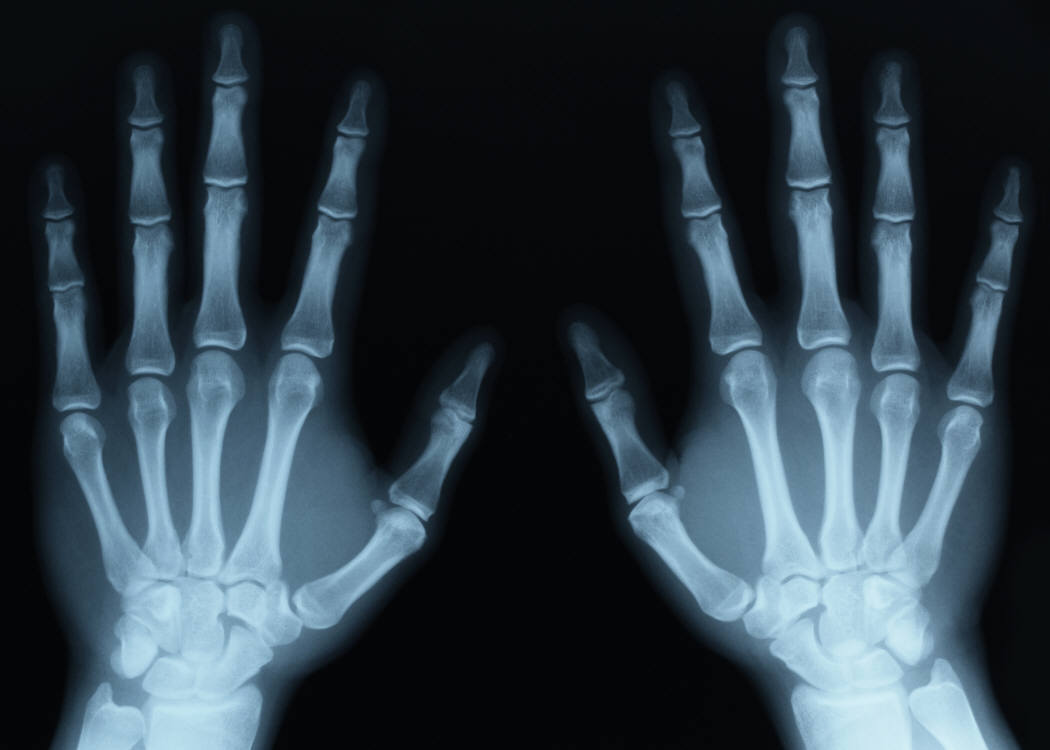
- X-rays
- High frequency and short wavelength
- Properties
- Affect photographic film in the same way as light
- Absorbed by metal and bone
- Why lead aprons are worn
- Absorb the rays and reduce exposure to radiation
- Can cause cancer
- Aswell as kill cancerous cells
- At the surface
- Near the surface of the body
- Aswell as kill cancerous cells
- Film badges
- Show amount of exposure
- Why lead aprons are worn
- Transmitted by healthy tissue
- CCD
- form electronic images
- CT scanners
- Digital cross-section
- Soft tissue organs filled with contrast medium
- Absorb X-rays to be seen
- Ultrasound waves
- Sound waves
- With a frequency above 20,000Hz
- Human ear
- Detect sound waves between 20Hz and 20,000Hz
- Produced by electronic systems
- wave meets a boundary between 2 different materials
- Part of the wave is reflected
- Travels back through material to detector
- Time taken to reach the detector can calculate how far away the boundary is
- Results may be processed by a computer to produce an image
- May need to half the time as it has travelled there and back
- Time taken to reach the detector can calculate how far away the boundary is
- wave meets a boundary between 2 different materials
- Non ionising
- So its safer than X-rays
- For scanning
- Unborn babies (not unicorn)
- And soft tissue
- E.g. the eye
- Not kleenex
- And soft tissue
- Therapy
- Shatter kidney stones
- Unborn babies (not unicorn)
- Sound waves
- Refractive index
- Refraction
- The change of direction of light from one substance to another
- Takes place because waves change speed when they cross a boundary
- Because of the change in speed
- How much a substance can refract a light ray
- Sin i divided by Sin r
- Incidence
- Refraction
- Sin i divided by Sin r
- TAGAGA
- Air to glass refracted towards the normal
- Glass to air away from the normal
- Refraction
- The endoscope
- Critical angle
- angle of incidence of a light ray in a transparent substance
- Produces refraction along the boundary
- If angle of incidence is higher than the critical angle the light ray under goes total internal reflection
- When it occurs the angle of reflection is equal to the angle of incidence
- Refractive index = 1 divided by sin c (critical angle)
- angle of incidence of a light ray in a transparent substance
- Used to look inside a patients body
- without cutting it open (bleh)
- contain bundles of optical fibres
- Thin, flexible glass fibres
- Visible light sent along
- By total internal reflection
- Laser light may be used for cutting
- Colour is matched to tissue type
- To produce maximum absorption
- Colour is matched to tissue type
- Critical angle
- Lenses
- Converging (convex)
- Used in magnifying glasses
- If the object is NEARER to the lens than the principal focus, an upright virtual image is formed behind the object
- If the object is FURTHER away from the lens than the principal focus an inverted real image is formed
- Parallel light rays pass through and are refracted so they converge at a point called the principal focus
- Diverging (concave)
- If you go in a cave and there is a mean bear you will die (so a concave lens is diverging)
- Light can pass through the lens in either direction there is a principal focus soon either side of the lens
- Image is always virtual
- Distance from the centre of the lens to the principal focus is the focal length
- parallel light rays pass through and are refracted so they diverge away from a point, the principal focus
- Magnification = image height divided by object height
- Cameras use converging lenses to form a real image of an object on a film
- Ray diagrams
- Parallel to axis and through f
- Through centre
- Through F then parallel to axis
- Through centre
- Parallel to axis and through f
- Converging (convex)
- The eye
- Iris - coloured ring of muscle that controls the amount of light entering the eye
- Cornea - Transparent layer that protects the eye and helps focus light onto the retina (like corn which is yellow like light so it focuses light)
- Retina the light sensitive cells around the inside of the eye
- Pupil - The central hole formed by the iris and where light enters the eye through the pupil
- Blind spot - region where the retina isn't sensitive to light
- No light sensitive cells are present
- Ciliary muscles - Attatched to the lens by suspensory ligaments to change the thickness of the eye lens
- Optic nerve - carries nerve impulses to the brain
- Eye lens - focuses light onto the retina
- Conjuctiva membrane (its just there!)
- Aqueous humour - transparent watery liquid that supports the front of the eye
- Vitreous humour - transparent jelly like substance that supports the back of the eye
- Eye muscles - move the eye in the socket
- Power of a lens
- = 1 divided by f (focal length)
- Power of a lens is measured in deportees (D)
- Focal length is measured in metres (m)
- Human eye
- Near point 25cm and a far point of infinity! (and beyond)
- Range of vision
- Eyeball defects may cause long or short sightedness (if thats a word)
- Short sighted
- See close objects clearly
- distant objects are blurred
- uncorrected image is formed in front of the retina
- distant objects are blurred
- Eyeball being too long
- eye lens too powerful
- Corrected with a diverging lens
- See close objects clearly
- Long sighted
- see distant objects clearly
- the uncorrected image is formed behind the retina
- Eye lens is too weak
- Eyeball being to short
- Corrected using a converging lens
- see distant objects clearly
- Short sighted
- = 1 divided by f (focal length)
- X-rays
Making things work
- Hydraulics
- Pressure
- P = F divided by A
- Measured in pascals, (not the chameleon from tangled) Pa
- liquids are virtually incompressible
- pressure in a liquid is transmitted in all directions
- Made use of in hydraulic systems
- pressure in a liquid is transmitted in all directions
- Hydraulic pressure system
- Force exerted depends on...
- Force exerted on the system
- Area of the cylinder on which the force acts
- Area of the cylinder that the force is exerted on
- Force exerted depends on...
- Use of different cross sectional areas on the effort and load mean the system can be used as a force multiplier
- Pressure
- Stability
- The line of action of the weight of an object acts through its centre of mass
- Line of action
- lies outside the base of an object
- topple over
- resultant moment
- Inside the base
- Won't topple
- lies outside the base of an object
- The wider the base of an object
- lower centre of mass
- Has to tilt further to topple
- Increased stability
- lower centre of mass
- Bowling pins narrow base so high centre of mass
- Easily knocked over
- Centre of mass
- Where the mass of an object is though to be concentrated
- When a suspended object is in equilibrium, its centre of mass is directly beneath its point of suspension
- Finding the centre of mass
- Symmetrical sheets where the axis of symmetry cross
- Irregular sheets
- suspend the sheet from a pin held in a clamp stand
- Because it is freely suspended it is able to turn
- Hang a plumb line from the same pin
- Mark the position of the plumb line
- Hang the sheet with the pin at another point and repeat the procedure
- The centre of mass is where the lines cross
- Hang the sheet with the pin at another point and repeat the procedure
- When it comes to rest
- Mark the position of the plumb line
- suspend the sheet from a pin held in a clamp stand
- The position depends on the shape of the object which sometimes may lie outside the object
- Pendulums
- Moves to and fro along the same line
- Oscillating motion
- A simple pendulum consists of..
- A mass (bob) suspended on the end of a string
- when bob is displaced to one side and let go the pendulum oscillates
- Through the equilibrium position
- When it stops moving
- Through the equilibrium position
- Amplitude is the distance from the equilibrium position to the highest position on each side
- Time period of an oscillation is the time taken for one complete cycle
- To measure the time period of a pendulum
- measure the average time fro 20 oscillations and divide the time by 20
- Park swing is an example
- measure the average time fro 20 oscillations and divide the time by 20
- depends on length, it increases as length increases
- Time period = 1 divided by f (frequency (number of complete oscillations in one second))
- To measure the time period of a pendulum
- Moves to and fro along the same line
- Circular motion
- Centripetal force increases when..
- Mass increases
- Radius decreases
- Speed of the object increases
- If centripetal force stops the object will continue to move in a straight line at a tangent to the circle
- An object only accelerates when a resultant force acts on it
- This force is called centripetal force and always acts towards the centre of a circle
- Continuously changing direction
- Continuously changing velocity
- This acceleration is called centripetal force
- Continuously changing velocity
- Centripetal force increases when..
- Moments
- Balance
- If an object is in equilibrium the anticlockwise moment will be equal to its clockwise moment
- This is the principal of moments
- We use the principal of moments to calculate the force needed to stop an object turning
- If an object is in equilibrium the anticlockwise moment will be equal to its clockwise moment
- The turning effect of a force
- M = F x d
- d = perpendicular distance from the line of action of the force to the pivot in metres
- To increase the moment of a force...
- Increase the force
- Increase the distance from the pivot
- for example using a spanner
- Using a lever
- Force we are trying to move is called the load
- The force applied to the lever is called the effort
- Opening a door
- Using a crowbar
- Balance
- Hydraulics
Keeping things moving
- Transformers
- Two coils
- Around wrapped around a laminated iron core
- When an alternating current passes through the primary coil, it produces an alternating magnetic field in the core
- This field continually expands and collapses
- Easily magnetised
- When an alternating current passes through the primary coil, it produces an alternating magnetic field in the core
- Around wrapped around a laminated iron core
- The alternating magnetic field passes through the secondary coil and induces an alternating potential difference along its ends
- If the secondary coil is part of a complete circuit an alternating current is produced
- coils of wire are insulated
- doesn't short circuit on any adjacent turns of wire or the iron core
- Switch mode transformer
- Has a ferrite core (not ferret thats a cute fluffy animal)
- Lighter and smaller
- Operates at a higher frequency than a normal transformer
- uses very little power when there is mo device connected across its output terminals
- Has a ferrite core (not ferret thats a cute fluffy animal)
- Step up or down
- If pd across the secondary coil is higher than across the primary coil it is step up and the opposite for step down
- Number of turns
- Like a snowy mountain
- If pd across the secondary coil is higher than across the primary coil it is step up and the opposite for step down
- Two coils
- The motor effect
- when we place a wire carrying an electric current in a magnetic field it may experience a force
- Maximum force if the wire is at 90 degrees to the magnetic field
- Zero if parallel to the magnetic field
- Flemings left hand rule
- First finger is the direction of the magnetic field (north to south)
- Second finger is the direction of the current
- The thumb shows the motion the wire
- Increase the force
- Increase the current
- Increase the strength of the magnetic field
- To change the motion of the wire
- reverse the direction of the magnetic field
- reverse the direction of the current
- electric motor
- speed of the motor is increased by increasing the size of the current
- direction reversed by changing current direction
- coil spins when current goes through
- force acts on each side due to the motor effect
- speed of the motor is increased by increasing the size of the current
- Split ring commutator
- Reverses coil current every half turn
- Sides swap over each half turn the coil is always pushed in the same direction
- Transformers in action
- the national grid uses transformers to step-up the pd from power stations
- The higher the pd at which electrical energy is transmitted across the grid the smaller the energy wasted in the cables
- Step down transformers are used to reduce the pd so that it is safe to be used by consumers
- Transformers are almost 100% efficient
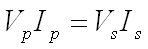
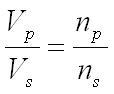
- 1
- 2
- There are two equations for transformers
- the national grid uses transformers to step-up the pd from power stations
- Electromagnetic induction
- If an electrical conductor cuts through magnetic field lines a potential difference is induced across the ends of the conductor
- Increase the size of the induced pd...
- Increase the speed of movement
- Increase the strength of the magnetic field
- Increasing the number of turns on the coil
- so many turns!!
- Reversing the direction of the movement or the magnetic field the direction of the pd is also reversed
- pd is potential difference by the way
- If a magnet is moved into a coil of wire a pd is induced across the ends of the coil, this process is called electromagnetic induction
- Electromagnets
- Magnets
- Ends called magnetic poles
- Region around the magnet in which pieces of iron will be attracted is called its magnetic field
- Iron filings placed near a magnet will produce a pattern of lines that loop from one pole to the other, these are lines of force or magnetic lines
- A plotting compass placed in the magnetic field will always point along the field line
- Like poles will repel
- Unlike poles will attract
- When a current flows through a wire a magnetic field is produced around the wire
- Made by wrapping an insulated wire around a piece of iron, iron core
- When a current flows through the wire it becomes strongly magnetised
- This temporary magnetism makes electromagnets very useful
- If current is off it loses its magnetism
- This temporary magnetism makes electromagnets very useful
- When a current flows through the wire it becomes strongly magnetised
- Made by wrapping an insulated wire around a piece of iron, iron core
- Magnets
- Transformers
Imágenes y archivos del mapa










Información
- Descripción
- A mind map on all of AQA GCSE Physics Unit 3 (not finished yet just need more pictures)
- Creado por
- UnknownSnowFlake 123
- Visitas
- 0
- Etiquetas
- Historial
-
- Creado por Gabi Germain · 19 abr 2015
- Copiado por UnknownSnowFlake 123 · 8 ene 2018
- Valoración