
Mapa mental
science revision yr 8
Contenido del mapa
science revision yr 8
using the periodic table to show where metals and non metals are
- All the different elements are arranged in a chart called the periodic table. A Russian scientist called Dmitri Mendeleev produced one of the first practical periodic tables in the 19th century. The modern periodic table is based closely on the ideas he used:
- Melting point Density Reactivity Lithium Decreases down the group Increases down the group Increases down the group Sodium Decreases down the group Increases down the group Increases down the group Potassium Decreases down the group Increases down the group Increases down the group Rubidium Decreases down the group Increases down the group Increases down the group
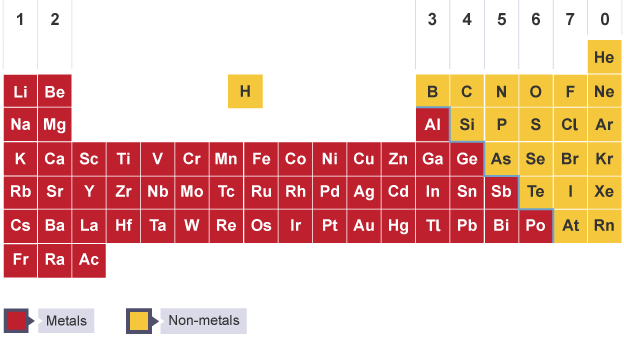
- The main groups are numbered from 1 to 7 going from left to right, and the last group on the right is group 0. The section in the middle of the table is called the Transition Metals. You may also see all the groups numbered (including the transition metals), this time from 1 to 18. If you know what one of the elements in a group is like, you can make predictions about the other elements in a group. For example, all the elements in group 1 are reactive metals, and all the elements in group 0 are unreactive non-metals.
- The zig-zag line in this diagram separates the metals, on the left, from non-metals, on the right. Hydrogen is a non-metal but it is often put in the middle. Notice that most elements are metals, rather than non-metals. Each element has its own chemical symbol, made from letters. Remember that you will only find elements in the periodic table and never compounds. So you won’t find substances like water or copper sulfate in the periodic table.
- All the different elements are arranged in a chart called the periodic table. A Russian scientist called Dmitri Mendeleev produced one of the first practical periodic tables in the 19th century. The modern periodic table is based closely on the ideas he used:
metals
- Iron, magnesium and gold are examples of metal elements. Metals have properties in common. They are: shiny, especially when they are freshly cut good conductors of heat and electricity malleable (they can be bent and shaped without breaking) Most metals also have other properties in common. They are: solid at room temperature, except mercury hard and strong they have a high density they are sonorous
- Metals react with oxygen to produce compounds called metal oxides. For example, magnesium reacts with oxygen to produce magnesium oxide. The reaction can be represented by this word equation: magnesium + oxygen → magnesium oxide Metal oxides are bases. They react with acids and neutralise them. Some metal oxides dissolve in water and, when they do, they produce alkaline solutions. You can find out more about acids and alkalis in this Chemistry study
- non metals
- Non-metals Oxygen, carbon, sulfur and chlorine are examples of non-metal elements. Non-metals have properties in common. They are: dull (not shiny) poor conductors of heat and electricity (they are insulators) weak and brittle (they easily break or shatter when solid) Most non-metals also have these properties: they have a low density (they feel light for their size) They are NOTsonorous (they do not make a ringing sound when hit) Eleven non-metals are gases at room temperature, including oxygen and chlorine. One non-metal, bromine, is a liquid at room temperature. The other non-metals are solids at room temperature, including carbon and sulfur.
- Reactions of non-metals Non-metals react with oxygen to produce non-metal oxides. For example, sulfur reacts with oxygen to produce sulfur dioxide. The reaction can be represented by this word equation: sulfur + oxygen → sulfur dioxide Non-metal oxides react with bases and neutralise them. Some non-metal oxides dissolve in water and, when they do, they produce acidic solutions.
- Diamond and graphite Carbon is a solid non-metal element. Pure carbon can exist in very different forms. The most common two are diamond and graphite. The table shows some differences between them. Diamond Graphite Transparent and colourless Opaque and black Hard Soft Diamond is the hardest natural substance on Earth, but it is also very brittle and will shatter if hit with a hammer.
- Metals v non-metals Most elements are metals, rather than non-metals. The table summarises some differences in their properties. Properties Metals Non-metals Appearance Shiny Dull State at room temperature Solid (except mercury, which is a liquid) About half are solids, about half are gases, and one (bromine) is a liquid Density High (they feel heavy for their size) Low (they feel light for their size) Strength Strong Weak Malleable or brittle Malleable (they bend without breaking) Brittle (they break or shatter when hammered) Conduction of heat Good Poor (they are insulators) Conduction of electricity Good Poor (they are insulators, apart from graphite) Magnetic material Only iron, cobalt and nickel None Sound when hit They make a ringing sound (they are sonorous) They make a dull sound Type of oxide Basic or alkaline Acidic Telling them apart Notice that metals and non-metals have opposite properties to each other. It is usually easy to tell metals and non-metals apart, but some t