
Mapa mental
4.4 - Training
Contenido del mapa
4.4 - Training
Key words
- training - a range of activities giving employees job-related skills and knowledge
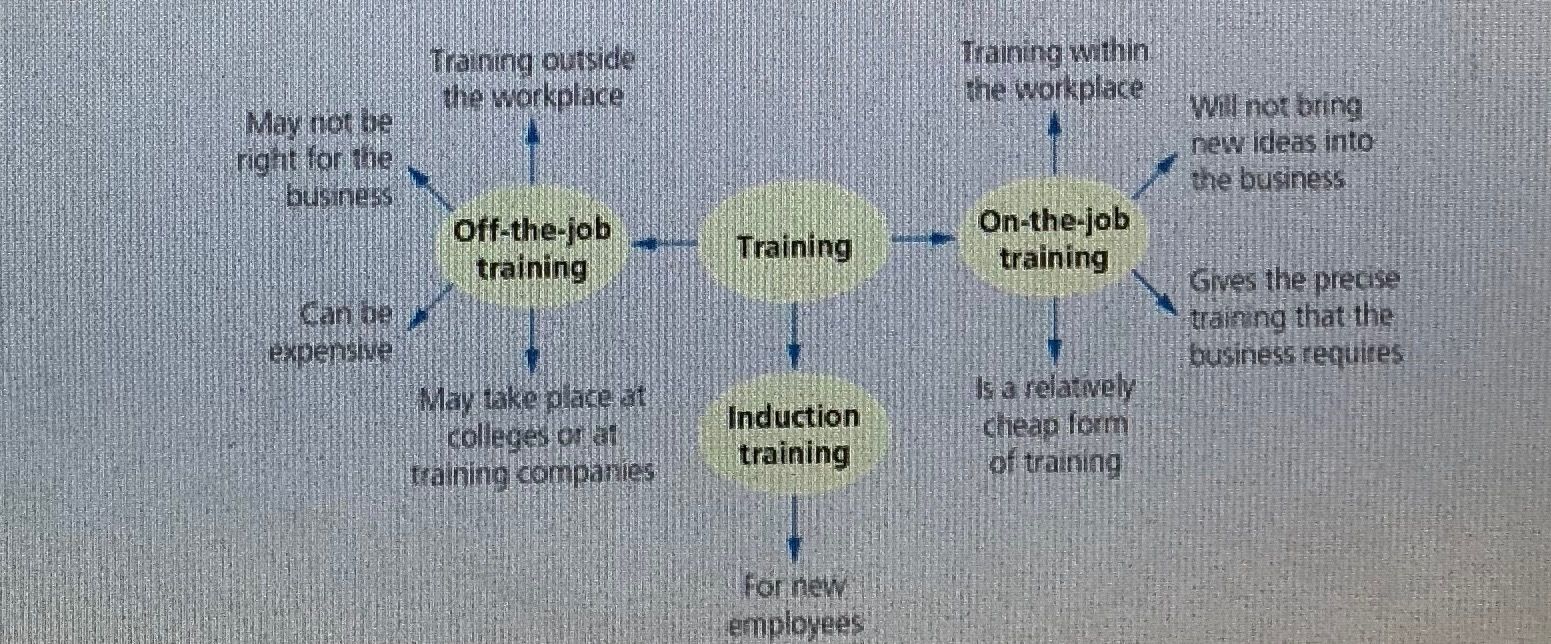
- on-the-job training - given in the workplace
- Induction training - the training given to an employee when they first start a job
- off-the-job training - provided outside the employee's place of work
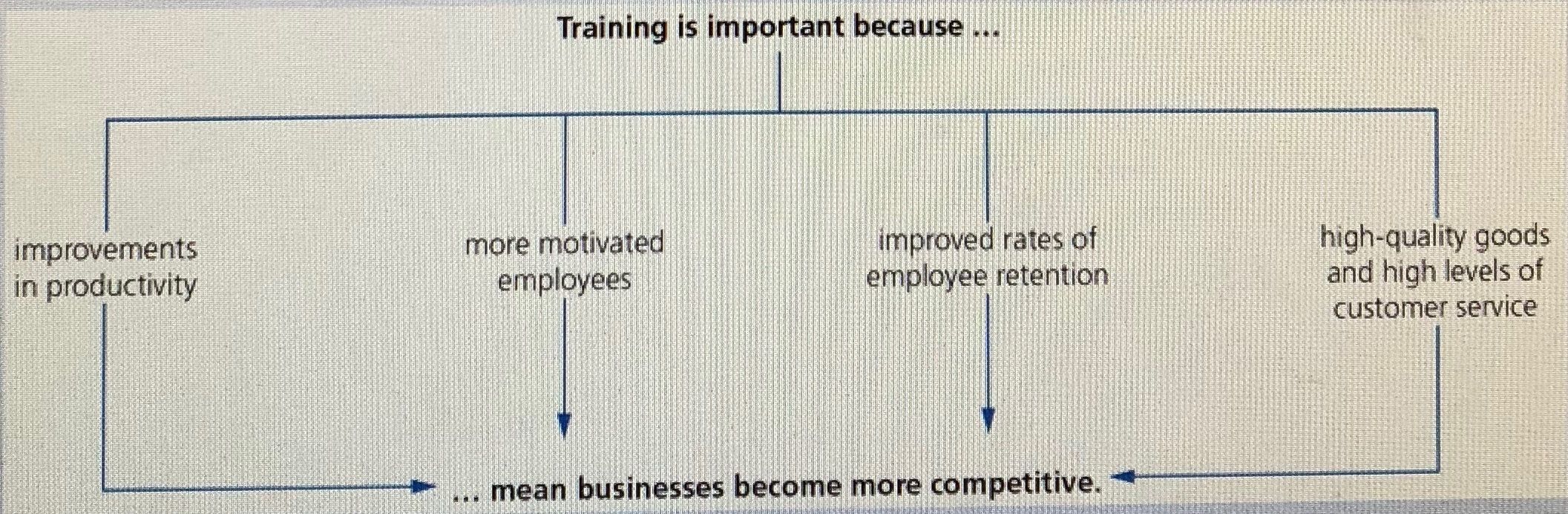
The importance of training
- it can give employees skills and knowledge which makes them better at their job and more productive e.g. e.g. learning how to use technology to complete a task
- employees can feel more valued and take part in job enrichment motivating them. they can feel more loyal to the business, increasing retention rates and reducing costs for employers
- training is essential for businesses to produce high quality goods and high levels of customer service
Induction training
- this is given to an employee when they first start the job, learning key information about the business e.g. how the IT system works and their role in the business
- the benefits are helping the employee to integrate with other staff and improving productivity by showing them how to carry out their job effectively
- 3 sections to induction training
On-the-job training
- Given in the workplace by employees who have experience in the work to be undertaken
- Work shadowing means an employee will observe an experienced worker during the day who may offer advice and guidance on how best to perform
- Formal training sessions can be given by specialist trainers from outside the business on using specialist machinery or changes in workplace procedures such as health and saftey laws
- Computer-based training can be used to both teach and test new employees on a range of issues e.g. using equipment to company procedures on booking time off
- Benefits
- relatively cheap as there are no travel costs
- can target exact needs to business and skills the employee needs to be productive
- computers can be used to make tailored training courses (e-learning), can be delivered any time and is cheap
- Drawbacks
- new ideas not likely to be brought, misses out on productivity gains
- using employees to train others means they can't do their work and productivity is affected meaning a cost
Off-the-job training
- provided by outside the employee's place of work and can include college/university courses or going on courses run by training companies
- Employers can pay for employees to gain qualifications e.g. legal or accountancy qualifications
- Benefits
- bringing new ideas to the business, employees feeling valued and motivated, this increases productivity
- Drawbacks
- may be expensive for employee time and cost of provision
- once skills are gained employee could get another job, employer gains no benefit
Factors to consider when choosing a type of training
- businesses financial position
- type of training depends on specific requirement of business that cannot be met by a college or training programme
- current employees may not have trading or skill to provide effective training
- different level of job
Imágenes y archivos del mapa
Información
- Descripción
- Year 10 (Section 4) Business Studies Mapa Mental sobre 4.4 - Training, creado por Rhianna Nicoll el 25/08/2018.
- Creado por
- Rhianna Nicoll
- Visitas
- 5
- Valoración