
Mapa mental
Mass Storage Structure
Contenido del mapa
Mass Storage Structure
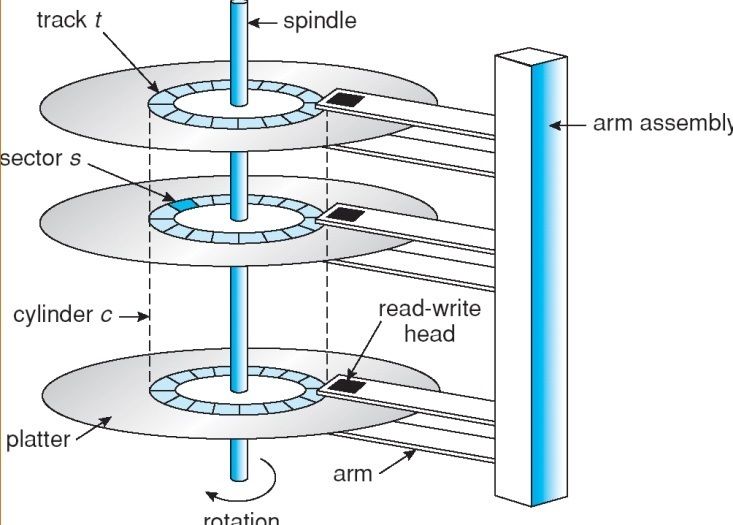
Disk's Physical Structure
- Transfer rate
- Rate of data flow from disk to computer
- Positioning Time
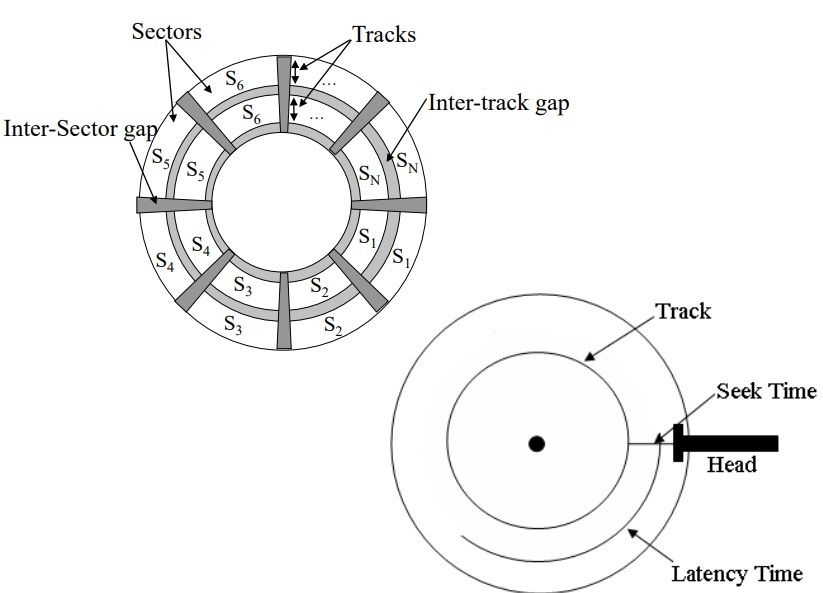
- Time to move disk arm to cylinder a.k.a seek time
- Av. Rotational Latency
- 1 / (2 x rotational speed)
- Head crash
- Disk head making contact with the disk surface
- Effective Access Time = seek time + rotational latency + transfer time
- Logical blocks
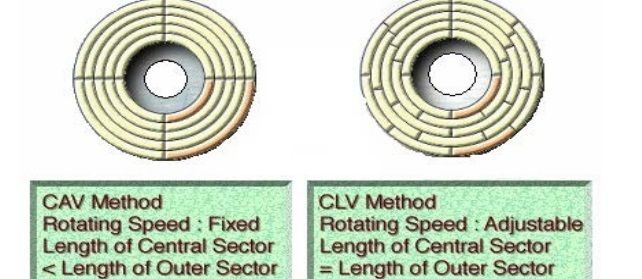
- 1-D array of blocks mapped onto disk sectors (tracks) sequentially
- Mapped from outermost cylinder inwards
- 1-D array of blocks mapped onto disk sectors (tracks) sequentially
- Disk bandwidth
- Total number of bytes transferred / total time between first request and completion
- Transfer rate
Disk Requests' Scheduling Algorithms
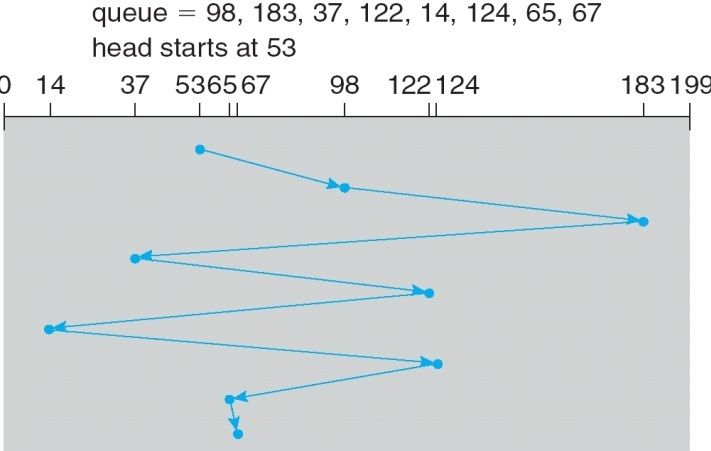
- Disk Scheduling
- Order pending disk requests with respect to head and rotational POSITION - is it close or far?
- Minimise seek and latency times
- Allow OS to switch algorithms
- Minimise seek and latency times
- Order pending disk requests with respect to head and rotational POSITION - is it close or far?
- Types
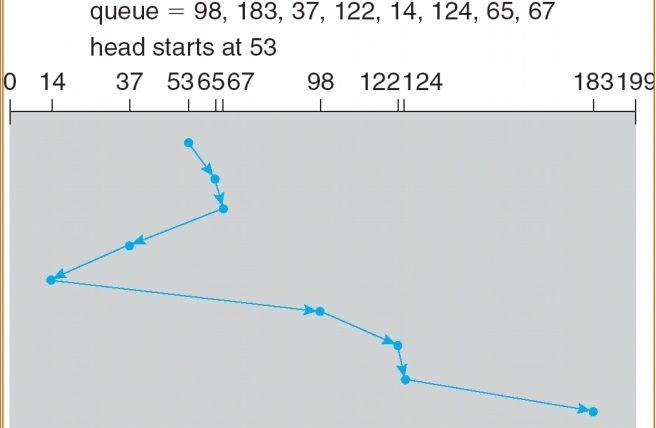
- First Come-First Serve
- Fair
- Poor performance for heavy loads
- Shortest Seek Time First
- Issue of starvation
- Discriminates inner and outermost tracks - Unfair
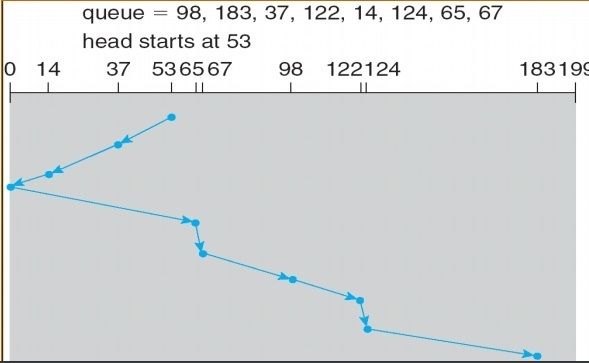
- SCAN
- Disk arm starts at one end, and moves to the other, servicing requests
- Long delays for requests at outer locations
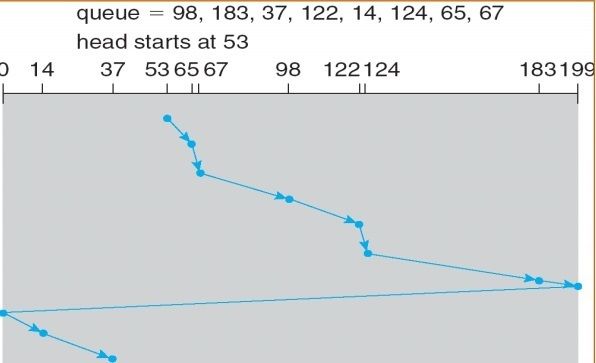
- C-Scan
- When end reached, skips back to beginning
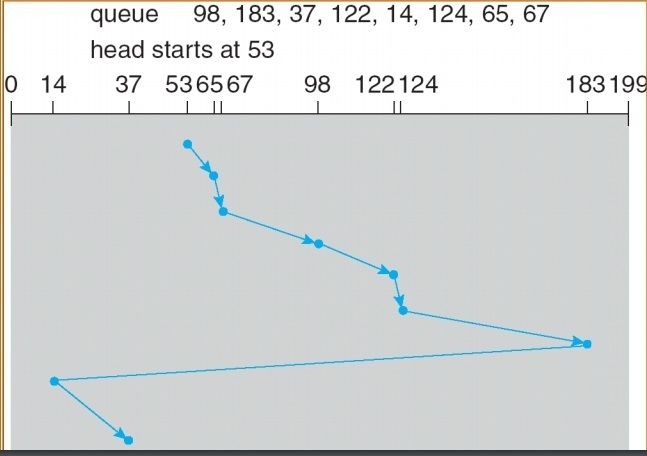
- C-Look
- Reaches last request then goes to start without going to end of disk
- This and SSTF good default algorithms
- Good for heavy loads
- Disk arm starts at one end, and moves to the other, servicing requests
- First Come-First Serve
- Disk Scheduling
Disk Management Issues
- Management
- Low-level formatting
- Physical formatting
- Dividing disk into sectors for disk controller
- Disk Sector Info
- Preamble
- e.g. sector number
- Data
- ECC - Error Correction Code
- Preamble
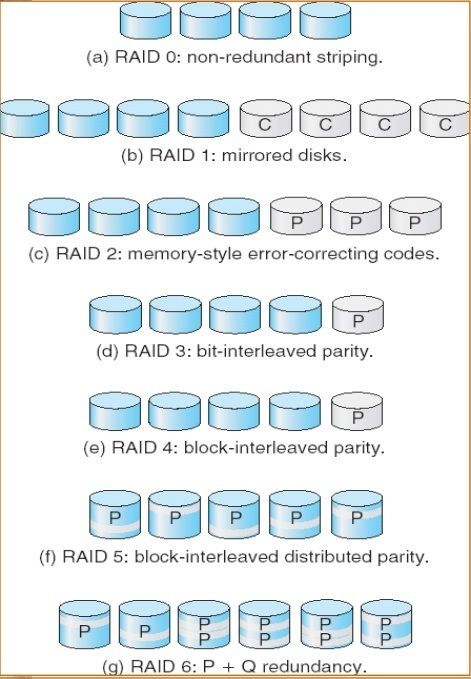
- Redundant Array of Inexpensive Disks (RAID)
- 1. Uses array of physical disk drives
- Appear as single virtual disk drive
- 2. Store data from arrays
- Allows parallel operation (disk striping)
- Spreading blocks across multiple storage devices
- Allows parallel operation (disk striping)
- 3. Redundant disk capacity used to respond to disk failure
- Reliability via redundancy
- Mirroring/Shadowing
- Keeps duplicate of each disk
- Parity Strip
- Stored in each disk with striped data
- Rebuilds data in event of data loss
- Fast + fault tolerant
- Used in RAID 2+
- RAID 5 - Incorporates into storage disks
- Stored in each disk with striped data
- 1. Uses array of physical disk drives
- Management
OS Services for Mass Storage
Imágenes y archivos del mapa

Información
- Descripción
- Computer Science Mapa Mental sobre Mass Storage Structure, creado por Alex Bernini el 08/05/2019.
- Creado por
- Alex Bernini · may 2019
- Actualizado
- 8 may 2019
- Visitas
- 0
- Valoración