
Mapa mental
HPLC
Contenido del mapa
HPLC
ADVANTAGES
- SENSITIVE
- CAN BE AUTOMATED
- QUANT ANALYSIS
- GOOD AT SEPARATING VOLATILE/THERMALLY LABILE COMPOUNDS
- WIDE RANGE OF SUBSTANCES: in/organic, metals, ions, proteins, aa,etc.
- SEPARATE ON SIZE, CHARGE, POLARITY, SOLUBILITY
- CHIRAL SEPARATIONS
- + WIDE RANGE OF DETECTORS
- RECOVER SAMPLES
DISADVANTAGES
- EXPENSIVE, IMPURITY FREE SOLVENT USED.
- MOVING PARTS & CONNECTIONS
- OPTIMAL PERFORMANCE = KEEP IT RUNNING REGULARLY
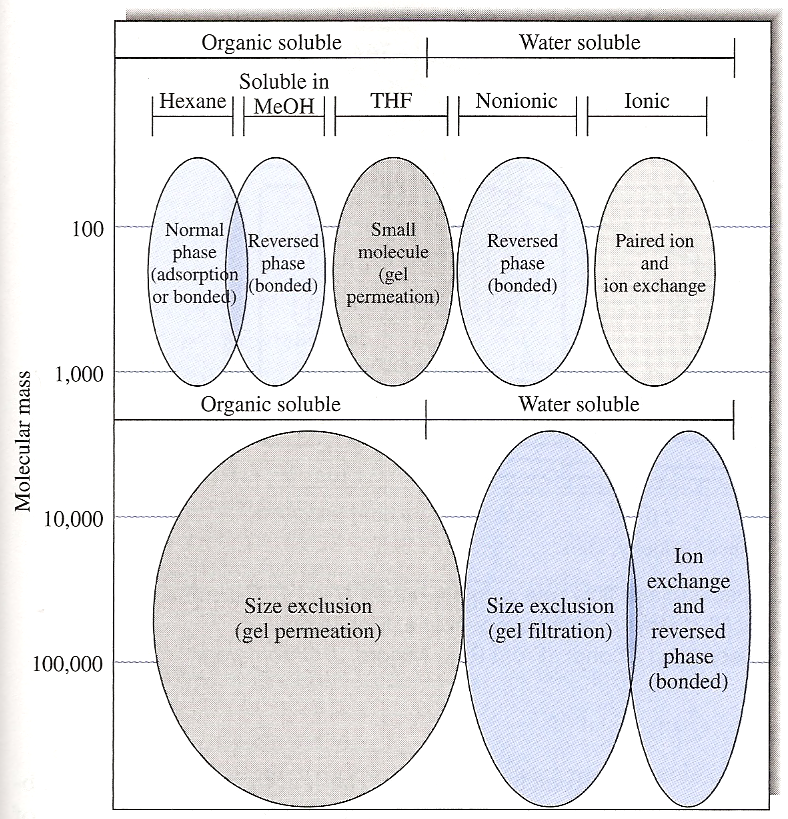
Selection of LC modes
HPLC HARDWARE
- Mixing controller
- Mix difft solvents in precise ratios
- reqd for: ISOCRATIC= constant solvent composition. GRADIENT= changing solvent composition
- mix diffnt solvents in precise ratios
- make sure that solvents are miscible
- Injector
- loop & valve configuration
- load & inject positions
- flat ended syringe - manual injection
- ensure the loop is entirely filled - inject sample in 1 plug (~ 3 rinses)
- Columns
- generally = stainless steel
- Analytical column: ID- 1-5mm, particle size- 3-5um, length- 35-250mm, plates/m-40000-70000
- typical: 4.6mm x 5um x 150m = 10000 plates/column
- Microbore or 'rocket'
- short (30-75mm), thin (<4.6mm ID), small particles (3um) = faster
- what's inside?
- normal p.: polar stat, n-polar solvent (Si stst p.), 1:9 EtOAc:hexane mob p.
- reverse p.: n-polar stat, polar solvent. (C18 stat p.), 15:85 MeOH:H2O mob p.
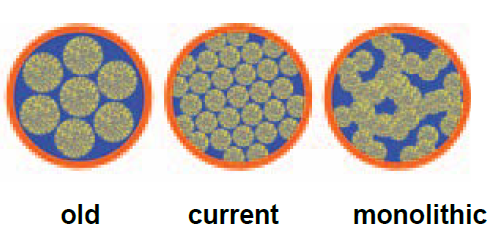
- Monolithic (single crystal)
- Polymer based, porous core, can control pore size
- can run under lower pressure condition
- better resolution, speed.
- useful for larger mols.
- Guard Column
- function
- remove impurities from reach analytical column
- Particle size is larger to minimize pressure drop
- function
- Mixing controller
GENERAL STRUCTURE
DETECTORS
- IDEAL REQMNTS
- adequate sensitivity
- stable & reproducible
- linear response over several orders of magnitude
- short response time, independent of flow rate
- similarity in response to all possible analytes
- non-destructive
- minimum internal volume
- compatible w liquid flow
- 3 basic types: optical, electrochemical, mass
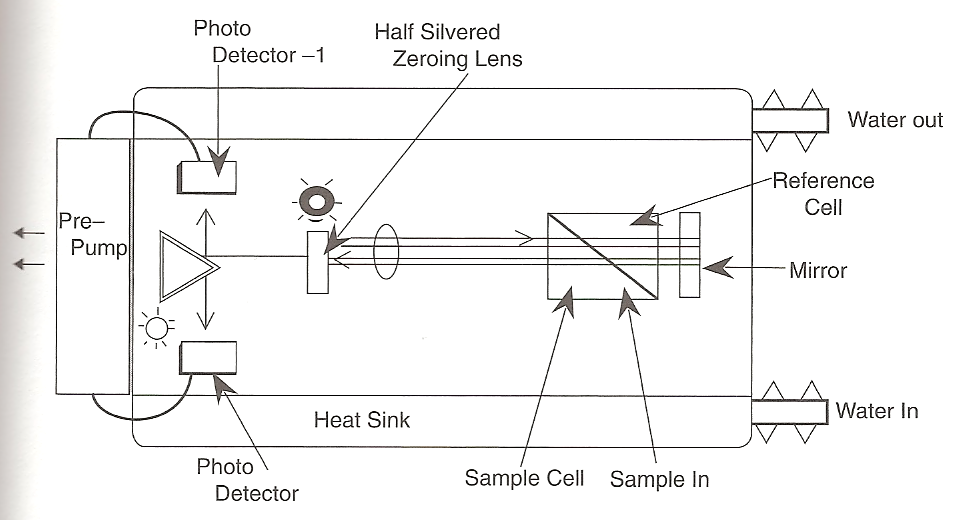
- 1) REFRACTIVE INDEX
- changes in DENSITY when analytes comesthrough cell
- sensitive to turbulence, temp, solvent changes
- used w isocratic systems only
- fragile flow cells
- 2) EVAPORATIVE LIGHT SCATTERING DETECTORS (ELSD)
- effluent nebulised into fine mist -- through laser & scattered radiation detected at right angle to laser
- volatile mob. phase.
- evaportn tube is heated, but temp kept low - labile cmpds not degraded
- 3) FLUORESCENCE
- sample excited by radiation from source (Hg, Xe, laser)
- resulting fluorescence detected at 90° to excitn beam
- can derivatise sample (add fluoro tag)
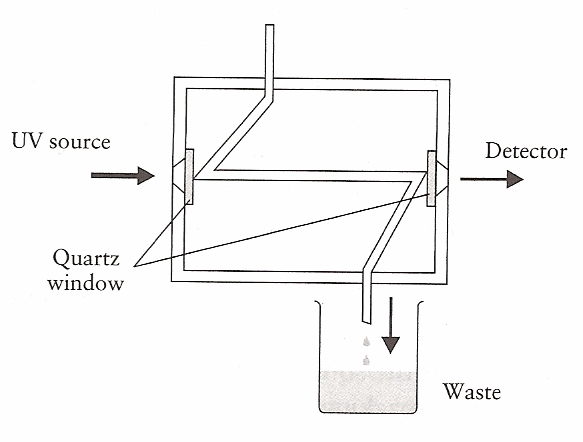
- 4) UV & UV-VISIBLE (190-900nm)
- filter variable, fixed wavelength, wavelength variable
- UV-VIS needs 2 lamps: a UV lamp - Hg, a visible lamp - tungsten
- 5) PHOTODIODE ARRAY (PDA)
- individual photosensitive elements : small silicon photodiodes (consist of a reversed-biased pn junction
- 6) ELECTROCHEMICAL
- 4 electrochemical techniques: amperometry, voltammetry, coulometry, conductometry
- Specific applications
- respond to sp that can be red/ox
- output is electron flow generated
- 3 electrodes : working, auxillary, reference
- 7) MASS SPEC
- common ionisation sources : electrospray ionisation (ESI), Atmospheric Pressure Chemical Ionisation (APCI)
- IDEAL REQMNTS
Imágenes y archivos del mapa




Información
- Descripción
- Chemistry Mapa Mental sobre HPLC, creado por nur zahidah el 14/12/2019.
- Creado por
- nur zahidah
- Visitas
- 1
- Etiquetas
- Historial
-
- Creado por chaz_id89 · 26 oct 2013
- Copiado por nur zahidah · 14 dic 2019
- Valoración