
Mapa mental
Resistance, current and voltage
Contenido del mapa
Resistance, current and voltage
The resistance of a component is a way of measuring how hard it is for electricity to flow through it. The unit for resistance is ohms
- The resistance of a whole circuit depends on the resistance of the different components in the circuit. The higher the total resistance the smaller the current
- The resistance of a circuit can be changed by putting different resistors into the circuit, or by using a variable resistor.
- The resistance of a variable resistor can be changed using a slider or knob
Circuit calculations
- You can calculate the resistance of a component by measuring the current and voltage, and then rearrange this formula
- Potential difference = current x resistance V = I x R
- V = voltage (or potential difference) (volts, V)
- I = Current (amps, A)
- R = resistance (ohms)
- NOTE: You don't need to remember this formula, as it will be given to you on the exam
- you do need to be able to use it, and to remember the correct units for the different quantities
- Potential difference = current x resistance V = I x R
- You can calculate the resistance of a component by measuring the current and voltage, and then rearrange this formula
Changing resistances
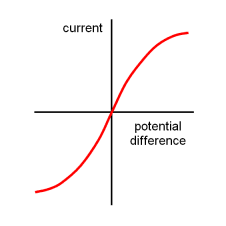
- 1. Filament lamps: Filament lamps get hotter as the voltage across them increases. This increases their resistance. The higher the temperature, the higher the resistance
- voltage UP, resistance UP
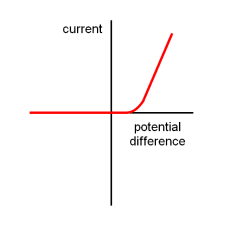
- 2. Diodes: When the current flows in one direction diodes behave like fixed resistors. The resistance does not change if the voltage changes. Diodes only conduct electricity in one direction. They do not allow current to flow in the other direction
- The diode does not conduct when the voltage is applied this way round
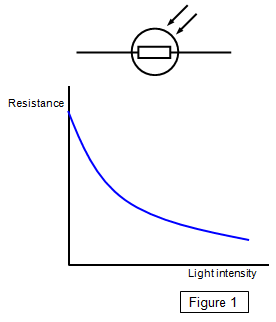
- 3. Light dependant resistors: The resistance of a light-dependant resistor (LDR) is large in the dark. The resistance gets less if light shines on it. The brighter the light, the lower the resistance
- brightness UP, resistance DOWN
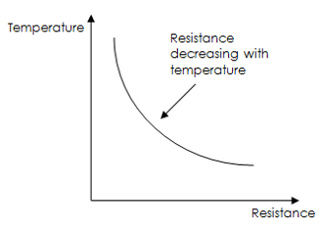
- 4. Thermistors: The resistance of a thermistor depends on its temperature. The higher the temperature, the lower the resistance
- 1. Filament lamps: Filament lamps get hotter as the voltage across them increases. This increases their resistance. The higher the temperature, the higher the resistance
Imágenes y archivos del mapa
Información
- Descripción
- The resistance current and voltage information from an edexcel textbook broken down into a mindmap
- Creado por
- 10ia3416
- Visitas
- 490
- Etiquetas
- Valoración