
Mapa mental
Educational Technology
Contenido del mapa
Educational Technology
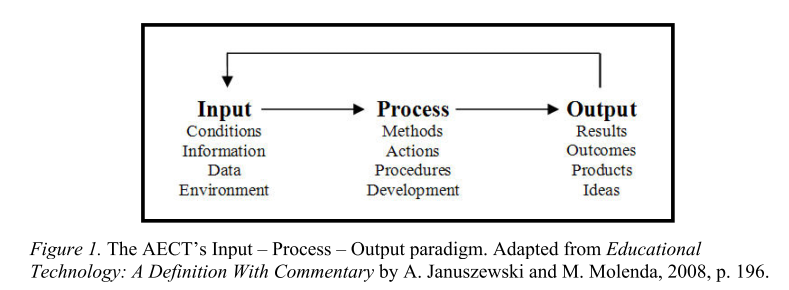
- In other words, educational technology is finding ways to improve learning and enhance performance (memory, output, implementation, active use) by using the appropriate technology resources. First, we must recognize that educational is broader than instructional technology as education encompasses a broader range of topics.
How do we learn?
- not just memorizing facts
- "information regurgitation"
- not really learning anything
- heavily reliant on teacher input
- not being able to think for yourself
- not making your own decisions
- heavily reliant on teacher input
- not really learning anything
- focus is on output
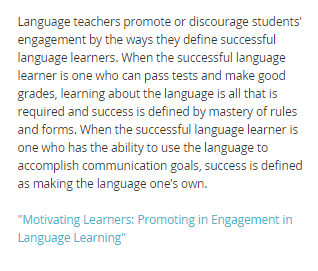
- There are different styles of learning such as retention, understanding, active use, surface/deep learning. Computer-based instruction units (integrated learning systems) operate this way. There has been emphasis on active use learning--being able to put principles into practice. Like learning a language. One must be able to actively use the language, being anti-social with your language does not help anyway. Teachers are usually talking about "productive, active-use, deep learning"--being able to draw understanding off what was learned and use it effectively in real world or simulated situations.
- Making connections
- patterns
- real world experiences
- real world application
- application
- active use
- finding meaning
- developing solutions
Effective Pedagogy
- learner-oriented rather than teacher oriented
- teachers become more like facilitators
- Learner guidance rather than controlling learners.
- taking ownership of one's learning
- teachers become more like facilitators
- evaluation of teaching methods
- flexibility
- looking for new tools, resources, etc.
- finding the most efficient ways to learn
- organization of materials
- creation of new materials
- consideration for student learning styles
- Learning theory
- connectivism
- learner-oriented rather than teacher oriented
Technology
- media
- smartphones, computers, tablets, etc.
- mobile technology and m-learning
- apps
- educational
- research
- games
- collaboration
- hyperaccess
- apps
- mobile technology and m-learning
- DVDs, television, video
- Power Point, slides, microfilm, etc.
- SRS: Anki, Memrise
- LMS: Blackboard, Moodle, etc.
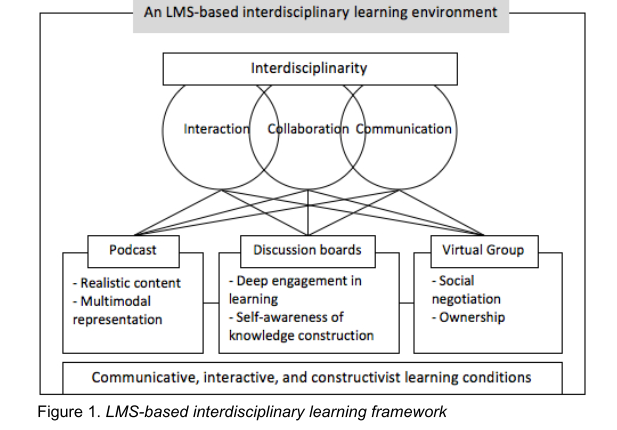
- LMSs are increasingly being used in education, and have widespread application in the university sector. LMSs are centralized, online platforms that commodify curriculum, and assessment delivery and reception. LMSs are useful technologies to support synchronous and asynchronous communication mechanisms, such as discussion boards and podcast technology (Mills, Park)
- ICT-based learning
- collaboration
- discussion groups: forums
- different perspectives
- group projects
- real world interaction
- "mimics interactions within society," which is most needed
- opinions
- conclusions
- virtual groups
- discussion groups: forums
- content creation
- collaborative content
- podcasts, videos
- independency
- responsible for own work
- extension of learning
- When ICT is viewed through the prism of interdisciplinary learning, not only does interdisciplinary pedagogy serve as a means of delivering learning content for collaborative, interdisciplinary teaching and learning, but it can also provide an extension to communication and interpersonal interaction for lifelong learning.
- Google Apps for Education
- greater freedom
- smartphones, computers, tablets, etc.
- creating and sharing media content
- Social Media
- Personal: Facebook, LinkedIn, Twitter
- blogging: Tumblr, BlogSpot, Wordpress
- instant feedback
- peers
- educators
- world
- making content real to individuals
- reflective and thoughtful responses
- sharing
- thoughts
- resources
- collaboration
- instant feedback
- videos: YouTube, Vine, Vimeo
- photos: Flickr, Instagram, Pinterest
- Art: 500PX, DA
- Apps
- Wikis
- Interaction among peers
- Forums: Reddit
- Language Connection: LINE, HelloTalk, iTalki
- Web 2.0 Learning
- Web 1.0 and Web 2.0 environments. Within the Web 1.0 environment, students are allowed to create media contents, such as turning hardcopy into digital format, composing an email, and editing a photo. However, the Web 1.0 does not provide opportunities for students to participate as a group to share and negotiate their perspectives, which can be accomplished within the Web 2.0 environment instead (Berger & McDougall, 2010). More importantly, a number of scholars have recently emphasized that the Web 2.0 plays an essential part in encouraging adolescents to (a) make their voice heard, (b) embody their ideology, attitude, values through different identities, (c) grasp various social norms, and (d) participate responsibly in critical exchange/co- construction of ideas (e.g. Thoman & Jolls, 2008; Gee, 2001; Jenkins, Purushotma, Clinton, Weigel, & Robison, 2006).
- Feedback: Lang-8, etc.
- Peer to Peer: Skype, Go-to-Meeting
- Social Media
- growing with technology
- the medium
- A more complex conception of ET includes immaterial tools, such as processes and ways of thinking, and it addresses the causal interdependence between intellectual growth and technological growth, whereby technology is not merely processes and tools, but is understood systemically. Lakhana, A. (2014). What is Educational Technology? An Inquiry into the Meaning, Use, and Reciprocity of Technology. Canadian Journal of Learning and Technology, 40(3), 1–41.
- 1:1 learning
- computer
- iPad
- media
Imágenes y archivos del mapa


Información
- Descripción
- What is Educational Technology? It is more than just simply implementing technology into the classroom. It is an interactive system that encompasses learning and teaching and connects them together. Educational technology is the medium by which information received is translated into real world application.
- Creado por
- Melissa Perry
- Visitas
- 311
- Etiquetas
- Valoración