
Mapa mental
ornaments used in baroque and classical
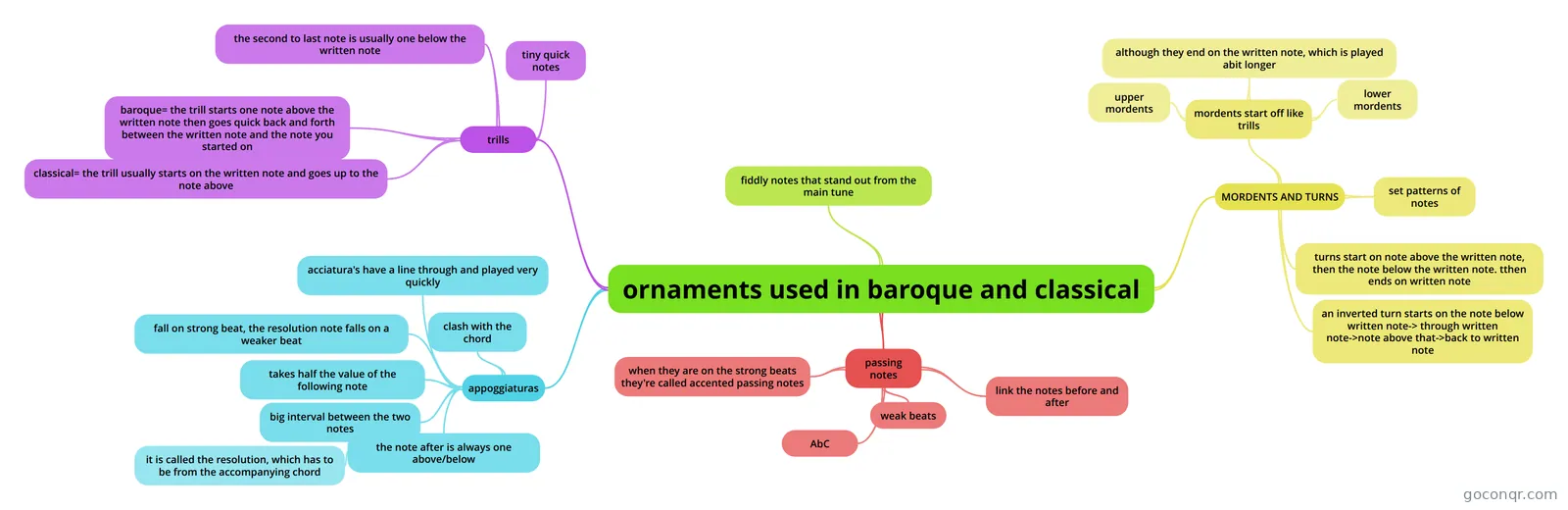
Mind map: ornaments in baroque and classical music
Contenido del mapa
ornaments used in baroque and classical
fiddly notes that stand out from the main tune
trills
- tiny quick notes
- baroque= the trill starts one note above the written note then goes quick back and forth between the written note and the note you started on
- classical= the trill usually starts on the written note and goes up to the note above
- the second to last note is usually one below the written note
appoggiaturas
- clash with the chord
- takes half the value of the following note
- big interval between the two notes
- the note after is always one above/below
- it is called the resolution, which has to be from the accompanying chord
- fall on strong beat, the resolution note falls on a weaker beat
- acciatura's have a line through and played very quickly
MORDENTS AND TURNS
- set patterns of notes
- mordents start off like trills
- although they end on the written note, which is played abit longer
- upper mordents
- lower mordents
- turns start on note above the written note, then the note below the written note. tthen ends on written note
- an inverted turn starts on the note below written note-> through written note->note above that->back to written note
passing notes
- link the notes before and after
- weak beats
- when they are on the strong beats they're called accented passing notes
- AbC
Información
- Descripción
- (baroque and classical) music Mapa Mental sobre ornaments used in baroque and classical, creado por kat1jj el 09/04/2013.
- Creado por
- kat1jj
- Visitas
- 218
- Etiquetas
- Valoración