
Mapa mental
Bonding
Contenido del mapa
Bonding
What is a chemical bond?
- This is a force that holds atoms together
- Involves outershell electrons
Ionic Bonding
- Strong net electrostatic forces of attraction
- Holds oppositely charged ions together
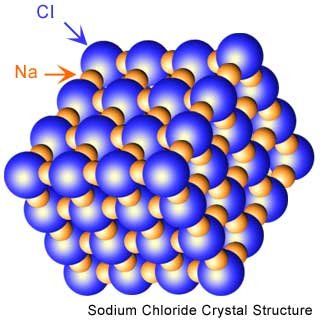
- Giant ionic lattice
- Maximises attractive force between oppositely charged ions
- Minimises repulsion between similarly charged ions
- Forces of lattice are exerted equally in all directions
- Holds ions tightly
- Form ionic crystals
- Types of lattice structure
- Use of electron density maps
- Evidence for existence of ions
- X-rays passed through ionic crystal
- Diffracted by electrons
- Shows arrangement of ions
- Diffracted by electrons
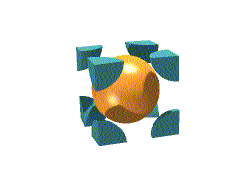
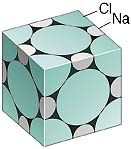
- Cubic structure
- Body-centred
- Face-centred
- Coordination number
- No of anions surrounding a single cation in a stable crystal structure
- Use of electron density maps
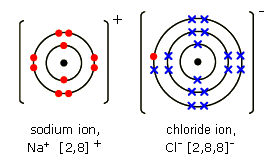
- Occurs between metal and non-metals
- Dot and cross diagrams used to show electron transfer
- Ionic radius
- Radius of an ion in an orbital
- Increases in size down group
- Greater no. of electrons
- Across a period
- Anions larger
- Extra layer of electrons
- No. protons increases
- Electrons held more tightly
- Ionic radius falls
- Electrons held more tightly
- Anions larger
- Isoelectronic ions
- Falls across series
- Cations smaller
- Remaining electrons more strongly attracted to positive nucleus
- Anions larger
- Additional negative charge : electrons bound less tightly
- Cations smaller
- Falls across series
- Physical Properties Evidence for ions
- High melting & boiling temperatures
- Quite hard
- Brittle
- Differ from metals
- No sea of electrons
- Force put ions in one layer near ions in other layer
- Resulting repulsive force would force 2 layers apart
- Substance shatters
- Resulting repulsive force would force 2 layers apart
- Conduct electricity when molten or aqueous solution
- Lattice attraction of ions is overcome
- Ions become mobile
- Lattice attraction of ions is overcome
- Electroysis
- Positive species
- Attracted to cathode
- Negative species
- Attracted to anode
- Positive species
- Strong net electrostatic forces of attraction
Covalent Bonding
Octet Rule
- Elements tend to react to form an outershell of 8 electrons
Isoelectronic
- Same electron configuration
Imágenes y archivos del mapa
Información
- Descripción
- Ionic and Covalent Bonding Unit 1
- Creado por
- jhhoward
- Visitas
- 61
- Etiquetas
- Valoración