
Mapa mental
Theories of Offending
Contenido del mapa
Theories of Offending
PHYSIOLOGICAL
- Atavistic Form
- Cesare Lombroso (1879) claimed that criminality is inherited through genetic transmission of throwback/ atavistic features
- strong prominent jaws, extra nipples, toes and fingers, high cheekbones, unusually shaped ears, upturned or twisted noses and exesively long arms
- sample included those with psychological disorders- did he confuse criminality with psychopathology
- Charles Goring - comparison of 3000 English criminals and 3000 non criminals and found no significant difference in physical features
- In Lombroso's later work he suggested that only 1/3 of offenders inherit their criminality and that for the others, environmental factors were to blame
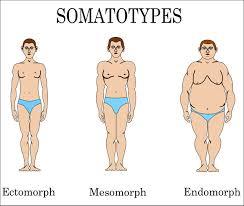
- Somatotype Theory
- William Sheldon (19949) suggested that body type and temperment can indicate criminality
- Ectomorph- thin, fragile, solitary, introverted and self- conscious
- Endomorph- fat, soft, relaxed, loving nature and enjoy the company of others
- Mesomorph - muscular, hard, energetic aggressive and adventurous
- stated that it was rare to be a pure somatotype and instead would display a combination of each personality traits according to their own somatotype
- a mesomorphs personality makes his more likely to engage in criminal behaviour
- thousands of pictures rates 1-7 rated mesomorphy, college students and delinquents were compared, delinquents scored higher (4.6 vs 3.8)
- Atavistic Form
BIOLOGICAL
- Chromosome
- XXY- Kleinfelters syndrome
- males with female characteristics
- XYY Syndrome
- maleswith exaggerated male characteristics
- The extra Y chromosome is suggested to lead to heightened testosterone , a powerful body build and propensity to violent crime
- Graham et al (2007) those with XYY chromosomes have normal testosterone levels, taller but not stronger and prone to developmental disorders
- XYY males are rare in the population and over represented in the offender population, however, their crimes are not violent ones as they get caught easier
- XXY- Kleinfelters syndrome
- Genetic Transmission
- Osborne and West (1982) father has a criminal conviction , 40% of sons do also. father has no conviction, 13% of sons do also.
- Twin Studies
- Johannes Lange (1929) MZ twins had a higher concordance rate than DZ twins for criminal behaviour
- Christiensen (1977) concordance rates of 35% for MZ twins and 13% for DZ twins
- Dalgaard and Kringlen (1976) concordance rates of 26% for MZ twins and 15% for DZ twins
- Adoption Studies
- Crowe (1972) 50% of adopted children whose biological mother has a criminal record had one themselves by age 18
- early childhood experiences in early life may lead to criminality for those that were adopted later in life
- Children tend to be placed in similar environments to their biological parents
- Chromosome
PSYCHODYNAMIC
- If the wants of the Id are ignored then aggressive tendencies may emerge
- superego
- SE is developed by fully resolving the Oedipal complex, an absent father leads to the SE becoming weak. if the father is overly strict, the SE becomes so strong it overpowers the id
- Freud claimed that the female superego is weaker than a males and that females are morally inferior as do not have a penis and do not develop a conscious the same way as males do
- Hoffman (1977) women have stronger moral orientation
Overcontrolled violent offender
- Megragee (1966) series of cases of violence carried out by people who were describes ad passive and harmless
- Sub groups of offenders that did not know how to express anger, so it is repressed
Affectionless Psychopathy
- An inability to form relationships and a disregard for the feelings of others
- Bowlby (1946) 44 juvenile thieves study- delinquency is related to early maternal deprivation
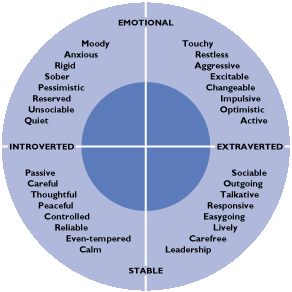
Eysenck's theory of the criminal personality
- Extroversion- the amount of stimulation from the environment that the person needs
- high E- their nervous systems need constant stimulation
- if there is not enough stimulation the person may engage in criminal behaviour to get it
- high E- their nervous systems need constant stimulation
- Neuroticism - how emotionally stable they are
- a measure of how strongly the persons body reacts to adverse stimuli
- high N - more unstable and susceptible to criminal behaviour
- a measure of how strongly the persons body reacts to adverse stimuli
- Extroversion- the amount of stimulation from the environment that the person needs
Imágenes y archivos del mapa
Información
- Descripción
- University Undergraduate (PSYB3) Psychology Mapa Mental sobre Theories of Offending, creado por cecollier el 18/04/2014.
- Creado por
- cecollier
- Visitas
- 153
- Etiquetas
- Valoración