
Mapa mental
Energy transformations
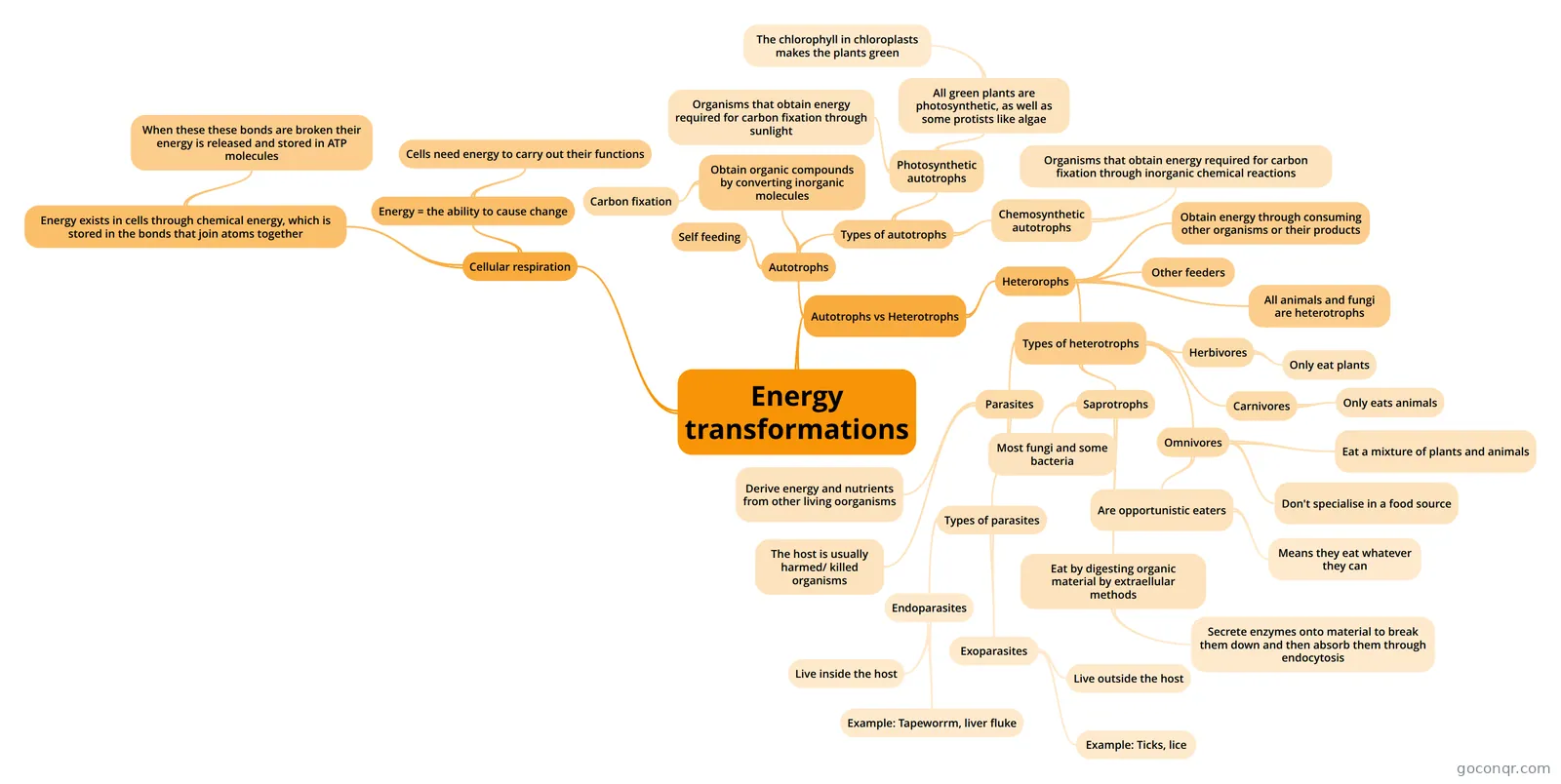
Mind map: Energy transformations
Contenido del mapa
Energy transformations
Autotrophs vs Heterotrophs
- Autotrophs
- Self feeding
- Obtain organic compounds by converting inorganic molecules
- Carbon fixation
- Types of autotrophs
- Photosynthetic autotrophs
- Organisms that obtain energy required for carbon fixation through sunlight
- All green plants are photosynthetic, as well as some protists like algae
- The chlorophyll in chloroplasts makes the plants green
- Chemosynthetic autotrophs
- Organisms that obtain energy required for carbon fixation through inorganic chemical reactions
- Photosynthetic autotrophs
- Heterorophs
- Other feeders
- Obtain energy through consuming other organisms or their products
- All animals and fungi are heterotrophs
- Types of heterotrophs
- Herbivores
- Only eat plants
- Carnivores
- Only eats animals
- Omnivores
- Eat a mixture of plants and animals
- Don't specialise in a food source
- Are opportunistic eaters
- Means they eat whatever they can
- Saprotrophs
- Most fungi and some bacteria
- Eat by digesting organic material by extraellular methods
- Secrete enzymes onto material to break them down and then absorb them through endocytosis
- Parasites
- Derive energy and nutrients from other living oorganisms
- The host is usually harmed/ killed organisms
- Types of parasites
- Endoparasites
- Live inside the host
- Example: Tapeworrm, liver fluke
- Exoparasites
- Live outside the host
- Example: Ticks, lice
- Endoparasites
- Herbivores
- Autotrophs
Cellular respiration
- Energy = the ability to cause change
- Cells need energy to carry out their functions
- Energy exists in cells through chemical energy, which is stored in the bonds that join atoms together
- When these these bonds are broken their energy is released and stored in ATP molecules
- Energy = the ability to cause change
Información
- Descripción
- Year 10 (HIGHSCHOOL) Biology Mapa Mental sobre Energy transformations, creado por Ashleigh Hollins el 07/03/2017.
- Creado por
- Ashleigh Hollins
- Visitas
- 53
- Etiquetas
- Valoración