
Mapa mental
Biology 3
Contenido del mapa
Biology 3
Cells
- Cytoplasm- where chemical reactions take place
- Mitrocondria-Respiration takes place inside mitrocondia,supplying energy for the cell.
- Robsomes- are in the cytoplasm and are the siteof protein synthesis
- Cytoplasm- where chemical reactions take place
DNA
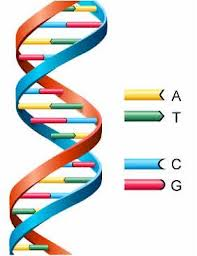
- DNA is in the nucleus in cells which is in the blood. It is then in a section of chromosome and then the section of DNA is in that.
- The Four bases are G-C and A-T
- Watson and Crick was first to work out DNA and prove it. They used data from other scientists to rebuild a model of DNA .
- Its important that other scientists can repeat their work and get similar results.
Proteins
- are made in the cytoplasm
- A group of 3 bases represents one amino acid in a protein chain. Each protein has a differ shape amd function. The code needed to produce a protein is carried from DNA in the nucleus to the ribosomes in the cytoplasm by a molecule called mRNA.
- Dna controls cell function by controlling the production of proteins, some of which are enzymes
- Proteins are made up of long chains of amino acids. Their functions include - structural e.g collagen
Enzymes
- They are proteins which act as biological catalysts
- Enzymes can be affected by the changes temperature or PH level
- The lock and key theory. Each enzyme has an active site that only a specific reactant can fit into.
- When enzyme molecules are exposed to high temp- 1,The bonds holding the shape of the protein break. 2,The shape of the enzymes active site is denatured. 3,The loc and key mechanism no longer works.
Mutations
- Gene mutations are changes to genes
- Mutations change the base sequence of DNA. This alters the shape and function of the protein or prevents the production of the protein that the gene normally codes for.
- Most mutations are harmful, although occasionally a beneficial mutation occurs. Mutations may lead to a production of different proteins
- Only some of the full set of genes are used in any one cell; some genes are switched off. The genes that are switched on determine the function of the cell.
Aerobic Respiration
- C6H1206+602=6C02+6H20
- Is the release of energy from glucose in the presence of oxygen.
- It takes place inside cells. Muscles demand more energy so respiration must go faster to release more energy.
- Respiration is an enzyme controlled reaction and so its rate is influenced by PH or temp. Respiration results in the production of ATP, which is used as the energy source for many processes in cells.
Anaerobic Respiration
- Occurs when your muscles are working so hard that your lungs and circulatory system can't deliver enough oxygen to break down all the available glucose through aerobic respiration.
- Lactic acid is produced during anaerobic respiration. It is relatively toxic to the cells, and when it builds up in the muscles,it can cause pain and a sensation of fatigue in the muscles
- After exercise deep breathing and the heart rate stays high.
- In effect the body is taking in the o2 that available during exertion. This is why the process is sometimes refereed to as oxygen debt.
Cells and Gametes
- in mammals most cells are diploid which means they contain two sets of matching chromosomes.
- some sells can be haploid which means they contain one set of chromosomes
- Gametes are sex cells.They are specialised haploid cells. At fertillisation,gamtes combine to form a diploid zygote
- The sperm contains many mitochondria to supply the energy needed for swimming.
The circulatory system
- Platelets-clump togetehr when a blood vessel becomes damaged in order to produce a clot. Plasma-transports foods like glucose and water around the body. White blood cells- protect the body against disease. Red blood cells-transport oxgen from the lungs to the tissues.
- Right side of body is deoxygenated. Left side is oxygenated
- Arteries have a thick wall made of elastic muscle fibres
- Veins have a lumen which is bigger than the thickness of the walls. They also have valves
- Capillaries have thin permeable walls to allow the exchange of subtances between cells and the blood
Growth
- Plant cells contain chroloplasts, a cellulose cell wall and a vacuole which provides support.
- Bacterical cell has cell wall,flagellum and DNA.
- Plant cell division is restricted to areas called meristems at the roots and tips.
- Stem cells are undifferentiated animal cells which can then specialise into dfferent types of cells, ogans or tissues. Can be obtained from embryonic tissue.
Genes
- Selevtive breeding is when animals with favcorable characteristics are selected to breed to produce a better offspring.
- Genetic engineering is when genes are artificially transferred from one living organism to another
- Gene therapy is changing a persons genes in an attempt to cure genetic disorders.
Cloning
- Asexual reproduction produces identical crops. Ie spider plants
- Taking cuttings is cloning the plant.
- Cloning of animals produces identical copies of fit. Like dolly the sheep.
- Animal organ donors to genitically engineer an animal so its organs wouldn't be rejected.
Imágenes y archivos del mapa
Información
- Descripción
- B3 mindmap
- Creado por
- Bethany Victoria
- Visitas
- 12
- Historial
-
- Creado por Bethany Victoria · 16 may 2014
- Copiado por Bethany Victoria · 16 may 2014
- Valoración