
Mapa mental
SNC2D0-L
Contenido del mapa
SNC2D0-L
Chemistry
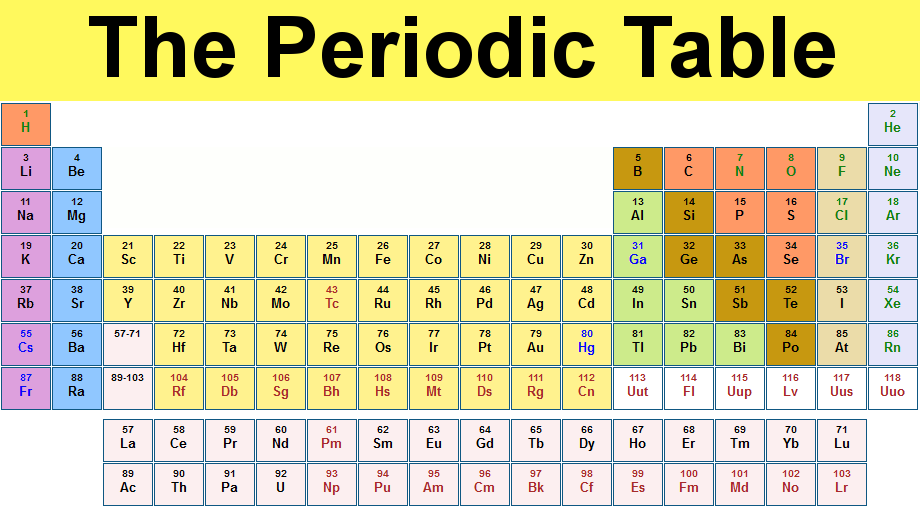
- Periodic table of elements
- Atomic #
- appears on the periodic table
- tells you # of protons and electrons an atom of an element has
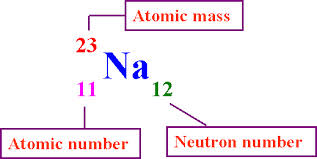
- Atomic Mass
- Average mass of an atom
- mass # equal to # of protons and neutrons
- Atomic Notation
- Atomic #
- Properties and Changes
- Physical Property
- describes the physical appearance and composition of a substance
- Colour, texture, density, smell, solubility, taste,etc
- Chemical Property
- describes ability of a substance to change into a new substance
- Physical Change
- change that does not produce a new substance
- can be reversed
- Chemical Change
- Cannot be reversed
- produces a new substance
- Physical Property
- Compounds
- Ionic
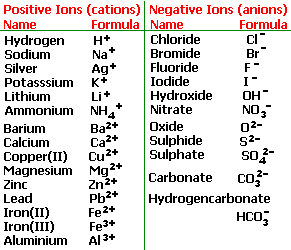
- formed from 1 or more positively charged ions and 1 or more negatively charged ions
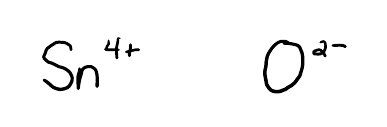
- Ion symbols
- Write the symbol of the element and show the ion charge as a superscript
- Ion names
- when an element can form 1 type of ion, such as calcium, the ion has the same name as the element
- Molecular
- are composed of two or more different non-metals
- also known as covalent compound
- bonding in molecules
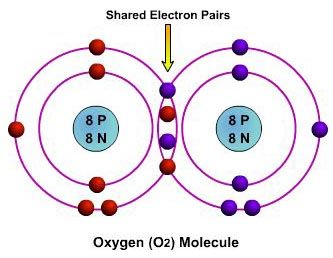
- in covalent molecules, there is no transfer of electrons, both share the electrons (Covalent Bonding)
- bonding in molecules
- Diatomic Molecule
- consists of only 2 atoms of either the same or different elements (Dioxide)
- Ionic
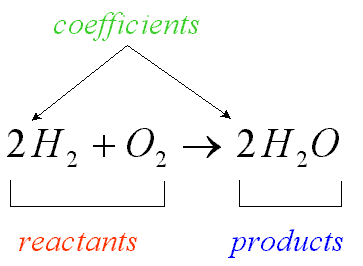
- Balanced Chemical Equation
- HOFBRINCl
- balance compound first, then elements last
- Balance hydrogen and oxygen last
- treat polyatomic ions as a single unit
- it is okay to use fractions as coefficients
- describes the law of conservation of mass-which requires the same # of atoms to appear on both sides of the equation
- Acids and Bases
- Acids
- substances that produce H+ ions in aqueous solution
- aqueous means dissolved in water
- properties
- conduct electric current because of the ions
- taste sour & turn litmus paper red
- reacted with Fe or Zn, produce H2 gas
- react with carbonates
- some are safe to eat like lemons
- pH Scale
- pH (0-6)
- Bases
- substance that dissociates in water to produce OH-
- properties
- slippery
- taste bitter
- turn red litmus blue
- conduct electricity when dissolved in water
- pH scale
- pH (8-14)
- or neutral (pH 7)
- Acids
- Periodic table of elements
Physics
- Light
- Waves
- disturbance that transfers energy without transferring matter
- Properties
- crest
- highest point in a wave
- trough
- lowest point of a wave
- rest position
- when the wave is fully flat
- crest
- Lambda (symbol for wave length)
- # of cycles/sec= frequency= Hz
- frequency is inversely related
- as lambda increases, frequency decreases and as lambda decreases, frequency increases
- Electromagnetic Spectrum
- range of electromagnetic waves arranged in order of wavelength or frequency
- visible light
- electromagnetic waves the human eye can see
- visible spectrum
- continuous sequence of colours that make up white light (ROYGBIV); only energy that humans can see
- Radio waves
- largest wavelength, lowest frequency, used by television signals, MRI imaging
- Microwaves
- Higher frequency than radio waves, used by microwaves
- Ultraviolet light
- carry more energy than visible light, therefore shorter wavelength
- Electromagnetic Radiation
- a wave that has both electric and magnetic part, travels at speed of light
- Speed of Light
- 3*10^8
- Ray model of light
- represented as straight lines known as rays which show the direction that light travels
- light ray
- a line on a diagram representing the direction and path that light is travelling
- geometric optics the use of light rays to determine how light behaves when it strikes an object
- Waves
- Reflection
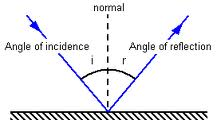
- Laws of reflection
- the incident ray, reflected ray and the normal always lie on the same plane
- angle of reflection, is equal to the angle of incidence
- Mirrors
- Concave
- a mirror whose reflecting surface curves inward
- Convex
- a mirror whose reflecting surface curves outwards
- Concave
- Laws of reflection
- Total Internal Refraction
- critical angle
- angle of incidence that produces an angle of refraction of 90 degrees
- a phenomenon where the incident light is entirely reflected back from the boundary (no reflection occurs)
- optical fibres
- a glass core surrounded by a glass covering with a lower index of refraction
- critical angle
- Light
Biology
- Cells
- Cell cycle
- Interphase
- First Growth Phase
- Synthesis phase
- Second Growth Phase
- Mitosis
- Prophase
- Metaphase
- Anaphase
- Telophase
- Cytokinesis
- Cell cycle
- Tissues
- Plant tissues
- Dermal Tissue
- Epidermal Tissue
- thin layer of cells covering all non-woody surfaces of a plant
- Periderm Tissue
- in woody plants, layer of tissue that produces bark on stems and roots
- Stomate
- tiny openings on the underside of the leaf that allow water vapour, carbon dioxide, and oxygen to enter and exit leafs
- Epidermal Tissue
- Ground tissue
- make nutrients through photosynthesis, in the roots they store carbohydrates, in stems they provide storage and support
- Vascular tissue
- transports water, minerals and other substances around the plant. 2 types of vascular tissue; Xylem and Phloem
- Dermal Tissue
- Plant tissues
- Systems
- Integumentary System
- When the body is hot, the skin will turn red because blood vessels dilate so that excess heats can be released into the environment
- Digestive system
- a tube that extends from the mouth to the anus
- mouth
- esophagus
- Stomach
- Liver
- Gull bladder
- Small intestine
- Large intestine
- Anus
- Circulatory System
- Heart
- blood
- Blood vessels
- Nervous system
- stimulates an increase in heart rate
- brain communicates with body through nervous system
- Skeletal system
- exercise causes your bones to become stronger
- body needs calcium to make and repair healthy bones and vitamin D
- Muscular system
- muscles need more oxygen when working out
- Integumentary System
- Cells
Climate Change
- Climate is characteristic weather pattern within a region averaged over a long period of time (30 years)
- 4 factors affect climate change
- Latitude
- Elavation
- Air masses that flow over a region
- Nearness to a large body of water
- Biosphere
- thin layer of earth and has conditions to support life
- made up of all living things and the physical environment that supports them
- thin layer of earth and has conditions to support life
- Atmosphere
- layer of gases surrounding the Earth. 300 km above
- Lithosphere
- Part of the climate system made up of rock, soil and minerals in Earth's crust
- Hydrosphere
- part of the climate system that includes all water on and around earth
- Greenhouse Gases
- Carbon dioxide
- Water Vapour
- Methane gas
- Nitrous Oxide
- Natural Greenhouse Effect
- Radiation from sun
- atmosphere absorbs some energy
- rest of energy goes to the surface
- Thermal energy is reflected back into space
- Net Radiation Budget
- Difference between the amount of incoming and out going radiation
- 30% is reflected into space
- 30% is absorbed by atmosphere
- 40% warms earth
- Earth's Albedo
- fraction of light that is reflected by the surface of Earth back into space (30% overall)
- melting ice would decrease albedo and increase global warming
- Energy Transfer in Atmosphere
- wind
- movement of air from high pressure area to low pressure- the sinking and falling of air masses on Earth causes the wind
- Coriolis Effect
- the deflection of any object from a straight line path by the rotation of the Earth
- wind
- Global Wind Patterns
- Convection Currents
- circular currents in air and other fluids caused by the rising of warm fluid as cold fluid sinks
- Trade Winds
- air heats up at the equator and rises and flows to the poles: cold air drops down and travels to the equator to become heated
- Westerly Winds
- Hot air from equator cools, sinks, and is pushed westward by Coriolis effect
- Easterly Wind
- At poles, sinking cold air is pushed westward
- Jet streams
- high Altitude winds travel long distances at high speeds- carry warm moist air producing precipitation or dry air causing dry weather
- Convection Currents
- Thermohaline Circulation
- a 3D pattern of ocean circulation driven by heat, wind and salinity that is an important part of the ocean atmosphere climate system
- Proxy Record
- Stores of information in tree rings, ice cores, and fossils that can be measured to give clues to what the climate was in the past
- Ice cores
- particles in ice; dust, ashes, salts, pollen
- snowflakes, hail, glaciers, and pack ice
- Air bubbles
- Measure CO2 levels
- Isotopes
- Anthropogenic Greenhouse Effect
- the increased capacity of the atmosphere to absorb thermal energy due to higher concentrations of greenhouse gases produced by humans leading to an increase in the Earth's temperature
- Global Warming
- the observed increase in Earth's average annual temperature
- Mitigation
- Making something milder or less severe
Imágenes y archivos del mapa
Información
- Descripción
- Mapa Mental sobre SNC2D0-L, creado por parteekklar el 11/06/2014.
- Creado por
- parteekklar
- Visitas
- 27
- Valoración