
Apuntes
Soft Tissue (Sherpath Notes)
Contenido del apunte (4)
Página 1
Soft Tissue Injuries
Soft tissue injuries, including sprains, strains, dislocations, and subluxations, usually result from trauma.
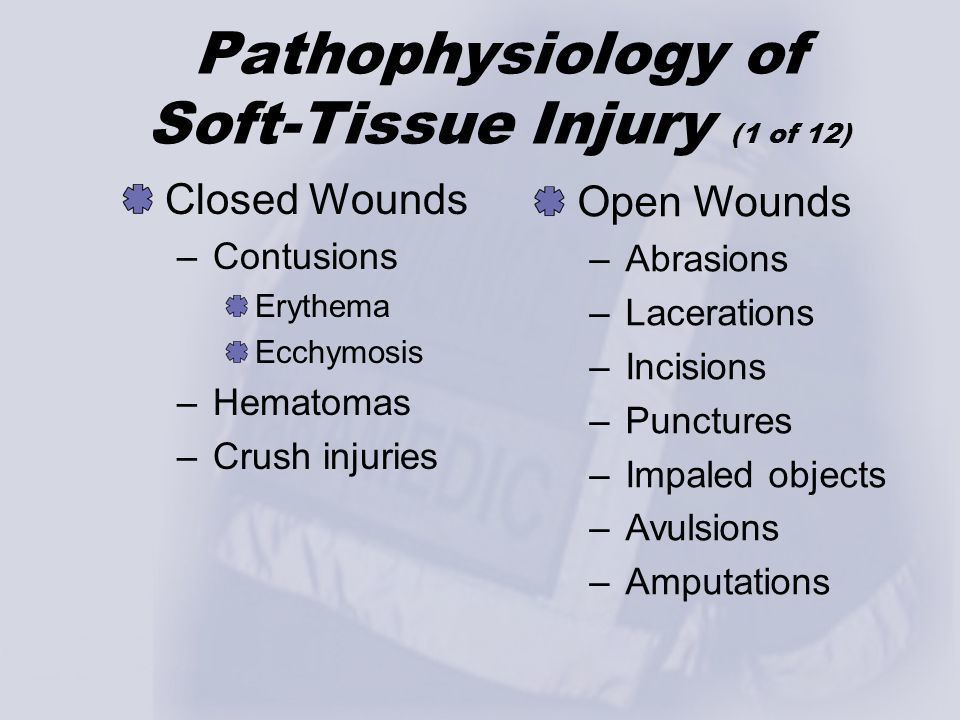
TYPES: They can be OPEN OR CLOSED
Crush Injuries are common ways to cause compartment syndrome - This type of injury most often happens when part of the body is squeezed between two heavy objects.
Ischemia (inadequate blood supply to an organ or part of the body) can occur within 4 to 8 hours after the onset of compartment syndrome. Any one of the six Ps characterizes compartment syndrome.
There are two basic causes of compartment syndrome:
Decreased compartment size resulting from restrictive dressings, splints, casts, excessive traction, or premature closure of fascia
Increased compartment contents related to bleeding, inflammation, edema, or intravenous infiltration
Dark urine is a sign of myoglobinemia from compartment syndrome resulting from release of myoglobin from damaged muscle cells. The nurse should increase fluid intake to promote kidney flushing and prevent acute kidney injury.
Elevate the extremity to lower venous pressure and slow arterial perfusion.
Do not elevate the extremity above the heart level if compartment syndrome is suspected.
Do not apply cold compresses because of the risk for vasoconstriction and increased risk for compartment syndrome.
1.) Pain - Out of proportion to the injury, not managed by opioid analgesics, and on passive stretch of muscle traveling through the compartment
2.) Pressure - Increasing pressure in the compartment
3.) Paresthesia - Numbness and tingling
4.) Paralysis - Loss of function
5.) Pallor - Coolness and loss of normal color of the extremity due to decreased oxygen to tissues.
6.) Pulselessness - Diminished or absent peripheral pulses
Nursing Care: If excessive edema is present or anticipated after a fraction or surgery (open reduction internal fixation), a splint or half-cast is often used to help reduce the risk for compartment syndrome. The nurse must perform circulation, motion, and sensation (CMS) checks every 2 hours minimally to assess blood flow to the affected extremity. Typically, a standard cast is applied days to weeks later after edema has resolved.
SPRAINS & STRAINS are the most common soft tissue injuries.
Both are classified as 1st, 2nd or 3rd degree.
SPRAINS
1st Degree: Minimal swelling & Tenderness
2nd Degree: Additional swelling
3rd Degree: Complete tearing of the ligament with moderate-to-severe swelling; extremely painful with gap in the muscle
STRAINS
First-degree: mild or slightly pulled muscle
Second degree: moderate or moderately torn muscle
Third-degree: severely torn or ruptured muscle
Página 2
Clinical Manifestations
Pain
Edema
Decreased Mobility & Function
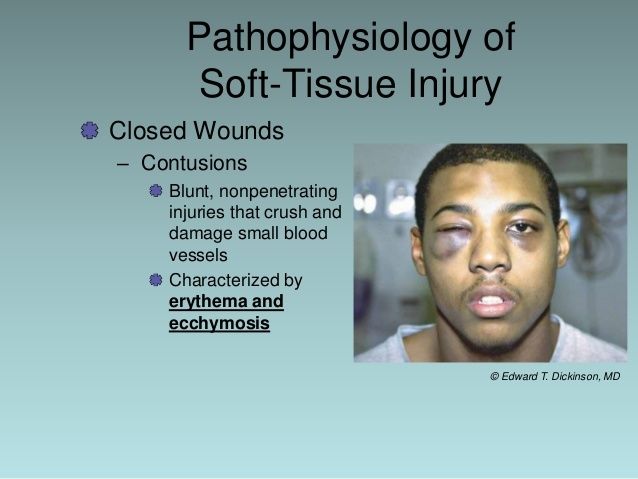
Contusion (A Bruise)
Health care providers will order a STAT X-Ray as a priority to rule out a fracture and identify the cause of a patient's pain.
Página 3
Soft Tissue Types
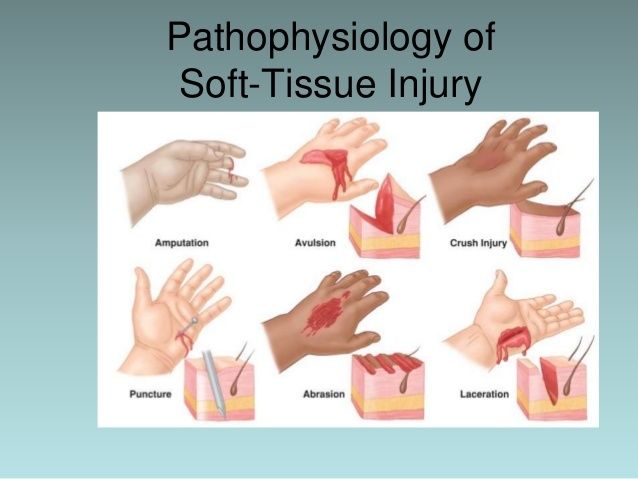
Avulsion is a serious soft-tissue injury. It happens when a portion of the skin, and sometimes other soft tissue, is partially or completely torn away.
Amputation - Can partial or complete severance.
Crush (Closed Type) - Occurs when a great amount of force is applied to the body over time.
Puncture - Impaled object creates a small opening site, risk for infection is high.
Abrasion - Top layers of skin are scraped off. Raw, tender area left behind.
Laceration - Penetrates into the dermis, has jagged edges compared to an incision with clean edges.
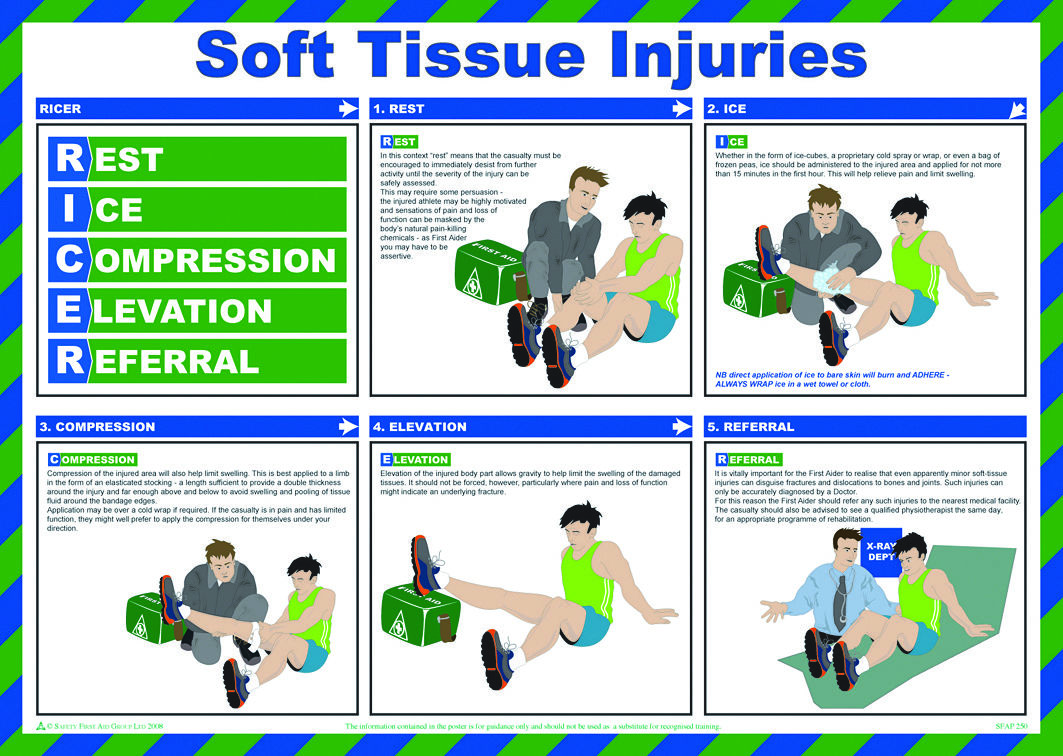
Elevate extremity
Conduct a baseline neuromuscular assessment.
Apply compression bandage, except in dislocation
Apply ice packs
Immobilize affected extremity in the position found
Anticipate X-rays of injured extremity
Give analgesic drugs as prescribed
Administer tetanus and diphtheria prophylaxis if necessary
Administer antibiotic prophylaxis for large tissue defects or mangled extremity injury
Página 4
Nursing Interventions. Implement R.I.C.E.
Información
- Descripción
- Nursing Apunte sobre Soft Tissue (Sherpath Notes), creado por Kalyn S el 06/03/2018.
- Creado por
- Kalyn S
- Visitas
- 13
- Etiquetas
- Valoración