
Apuntes
Atomic Bonding and Structure
Contenido del apunte (1)
Página 1
Atoms
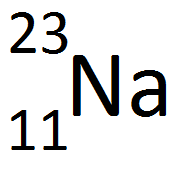
Mass Number
-Total number of Protons and Neutrons
Atomic Number
-Number of Protons
Number of Protons=Number of Electrons
Compounds
Chemically bonded
Through a chemical reaction
Hard to Separate
More than one element
Isotopes
Different atomic forms of the sane element
Have the same number of protons
But a different number of neutrons
They have the same atomic number
But a different mass number
Ionic Bonding
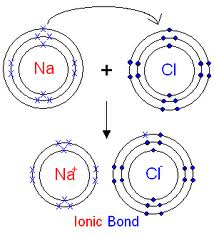
Atoms loose or gain electrons
All atoms want to be stable (full outer shell)
Non metal and a metal
Become positive if they lose an electron
Become native if they gain one
Are now attracted
Structure
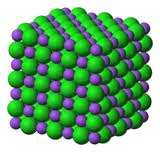
Ionic compounds always have giant ionic lattices
Regular lattice arrangement
Held together by strong electrostatic forces
between oppositely charged electrons
Properties
High melting/boiling points - because of strong forces between- need lots of energy to break
conduct electricity when melted- electrons are free to move
Dissolve in water easily-can carry an electric current
Ions
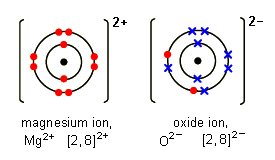
If an atom is an ion if it has...
lost or gained electrons
has the structure of a noble gas
the charge is the same as the group number (only for positive)
Any positive ions that combine with negative ions form a ionic compound
Formula
Ionic compounds are made up of the positively charged and the negatively charged parts
The overall charge will always be 0
charges must always balance to 0
Covalent Bonds
Atoms sharing electrons
Only share outer electrons only
Want to have a full shell-be stable
A covalent bond is a pair of Shared electrons
Share electrons to create a full outer shell
Structure
Simple Molecular Substances
OR
Giant covalent Structure
Simple Molecular Substances
Small molecules
Strong bonds
weak forces of attraction between intermolecular forces
means low melting/boiling point
most are liquids or solids
Don't conduct electricity- no ions, no electrical charge
Giant Covalent Structures
Similar to giant ionic structures (lattices)
No charged electrons
Bonded with strong covalent bonds
High boiling/melting points
Examples of Giant Covalent Structures
Diamond
Each carbon has 4 covalent bonds
Very ridged structure
Makes it extremely hard
Graphite
Each carbon forms three covalent bonds
Layers that can slide over each other
makes it soft and slippery
Layers are lose
Because of weak intermolecular forces
conducts electricity an heat
because ach carbon has a delocalised electron
Silicon Dioxide (Silica)
What sand is made of
Each grain of sand is one giant structure
Of silicon and oxygen
Metallic Structures
Metals have a giant structure
Metallic bonds have 'free electrons'
Delocalised electrons come from the outer shell
Free to move
Reason why they are good conductors of heat and electricity
Electrons hold atoms together in regular structure
This is because of electrostatic attraction between positive metal ions and negative electrons
Layers slide over each other
They can be bent and shaped
Alloys
Harder than pure metal
Different elements have different sized atoms
When metals are mixed the structure is distorted
The layers can no longer slide over each other as easily
Atoms, Compunds and Isotopes
Ionic Bonding
Ions
Covalent Bonding
Metallic Structures
Información
- Descripción
- Ionic Bonding, Covalent Bonding and Metallic structures (page 39-46)
- Creado por
- juliasutton
- Visitas
- 1.516
- Etiquetas
- Valoración