
Apuntes
Trends in the periodic table- Atomic radius
Contenido del apunte (1)
Página 1
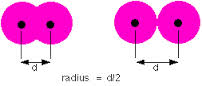
The atomic radius can be defined as half the distance between the nuclei of 2 atoms of the same element that are joined together by a single covalent bond. eg the distance between 2 nuclei of hydrogen is 0.074 nm so the radius of an atom of hydrogen is 0.037 nm. The formula can be seen as Bond length/2= Atomic radius
In general the atomic radius increases when you go down a group on the periodic table. This is due to the number of shells increasing when you go down a group. With more electrons being present the larger the elements, the amount of energy levels increases proportionally as the smaller energy levels are full. The electrons are therefore further away from the nucleus and are therefore less closely held, in conjunction with the screening effect of the energy levels, increases the atomic radius
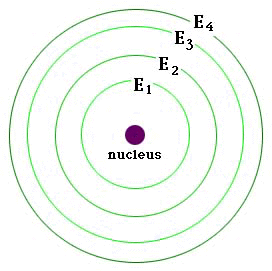
The atomic radius decrease as you move across a period in the periodic table. This is due to their being no increase in the screening effect, and no increase in the number of energy levels. However there is an increase in nuclear charge which tends to draw the shells closer to the nucleus. This trends hold true in most cases in the periodic table
New Page
Información
- Descripción
- Atomic radius in terms of atomic radius
- Creado por
- mia.rigby · ene 2014
- Actualizado
- 26 oct 2016
- Visitas
- 157
- Etiquetas
- Historial
-
- Creado por eoin.examtime · 22 ene 2014
- Copiado por eoin.examtime · 22 ene 2014
- Copiado por mia.rigby · 22 ene 2014
- Valoración