
Apuntes
Chemistry Experiments
Contenido del apunte (4)
Página 1
Diffusion
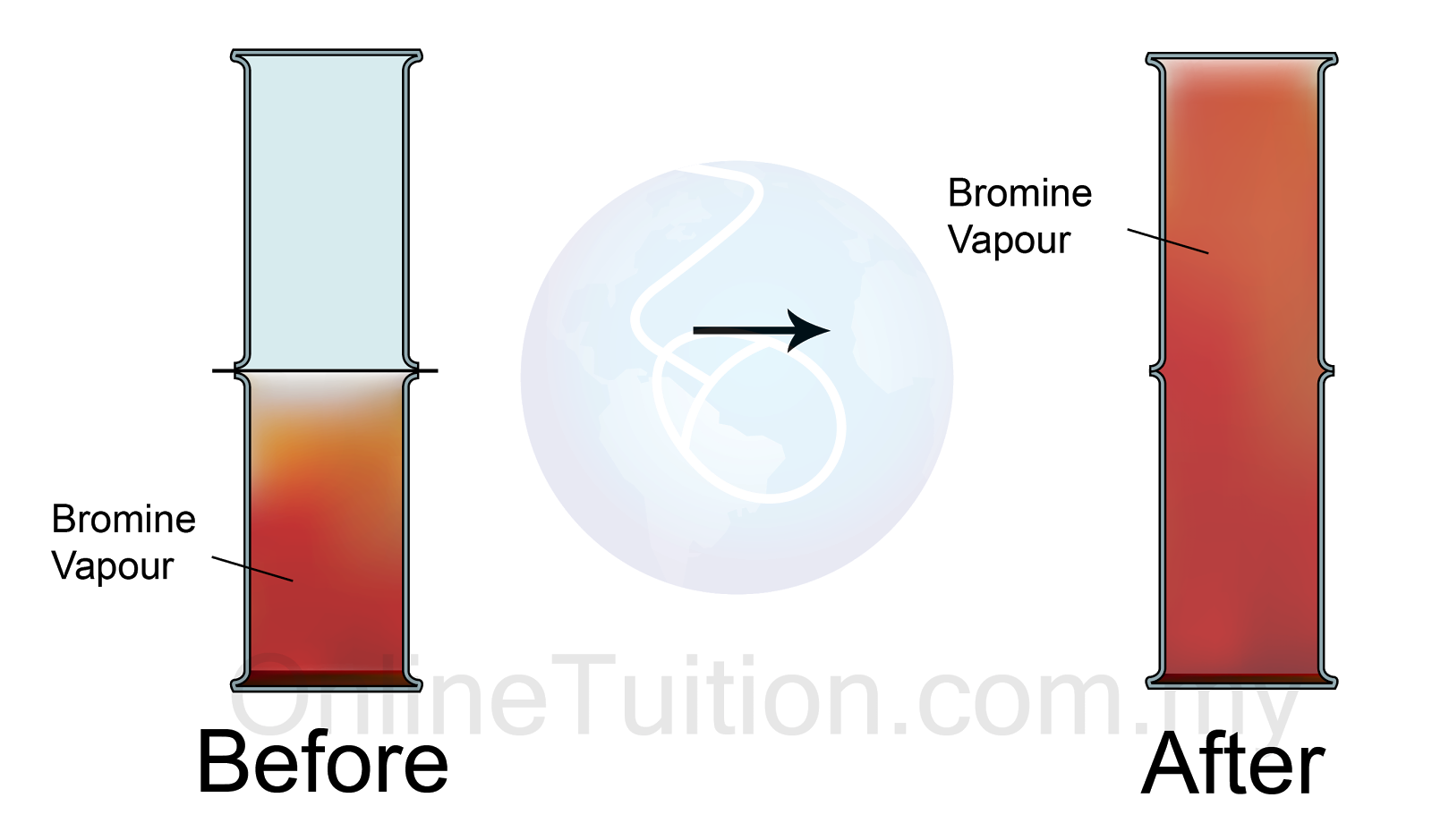
Particles in the gas are free due to its process called diffusion. You can see how diffusion works in the apparatus below. Gas is a state freely because it has a low density. In the apparatus below, you can see there is a lid between the two test tubes. Inside the test tube above is just normal air. The test tube below has bromine inside.
What will happen if you remove the lid?
The process of diffusion starts and a few minutes later, both test tubes will be full with bromine. It doesn't mean that air disappeared, you just can't see it, due to bromine's strong colour.
As you scroll or swipe down, there is another diffusion experiment of showing that difference in speed between particles of gases. ↓↓↓
Diffusion 2
That was the basic experiment, however, this is another experiment you need to know in the IGCSE (Edexcel)
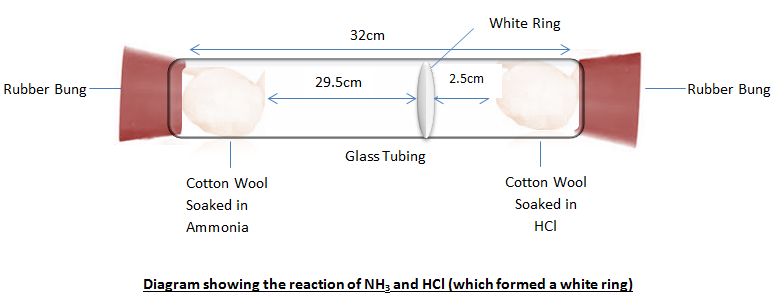
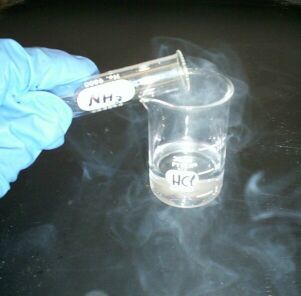
In this experiment, I am going to test another diffusion experiment using ammonia (gas) and hydrochloric acid (gas). Both gas will form a white ring as both meet each other. Ammonium chloride will be formed.
These two solutions are going to be soaked in cotton wool and be separate at the very end in a test tube.
We will see how both solutions will diffuse.
To do this experiment, you will need a fume cupboard due to its use of ammonia (gas (toxic).
The test tubes will be needed to be in a standard position so that both solutions can move in equal.
Results: The ammonia moved quicker than the hydrochloric acid because it it has a longer distance from the wool than the hydrochloric acid. Another reason will be because that ammonia has a smaller mass number than hydrochloric acid which means it is lighter.
Word equation: Ammonia + Hydrochloric Acid → Ammonium Chloride
Equation: NH3 (g) + HCl (g) → NH4Cl (s)
Página 2
Sperating Techniques
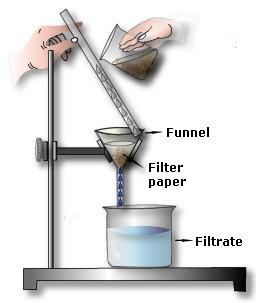
Filtration
A separation of dissolved solid mixed in liquid.
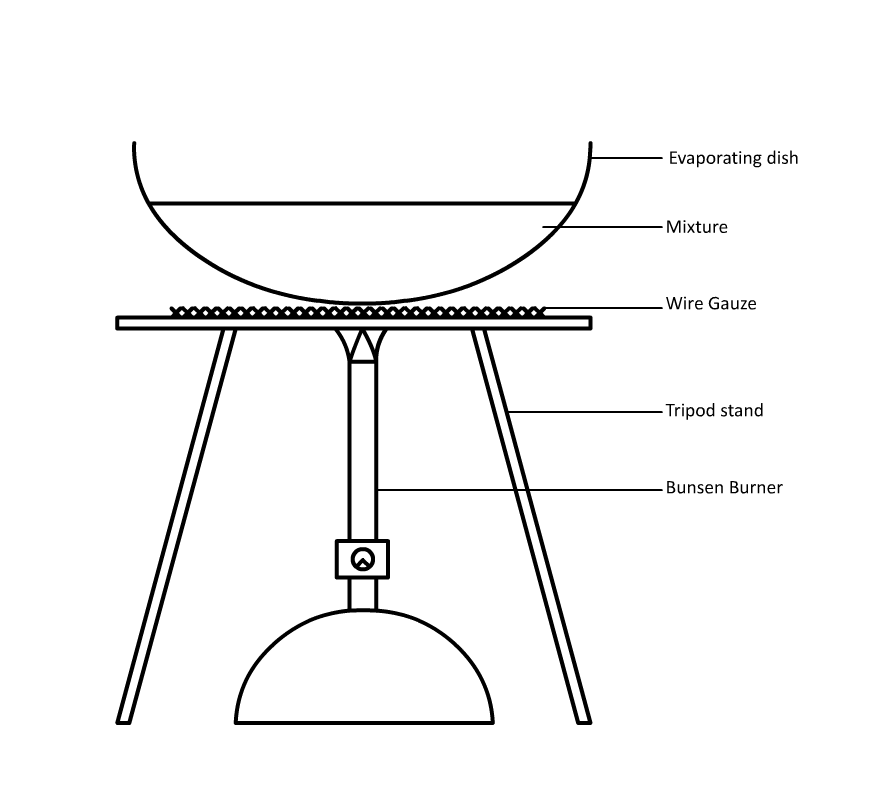
Boiling
Finds out if there is other condensed solid in the liquid.
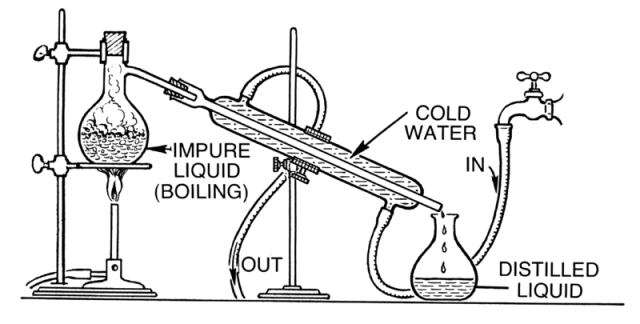
Distillation
Separation of liquid and solid.
Página 3
Chemical Reactions
Salts
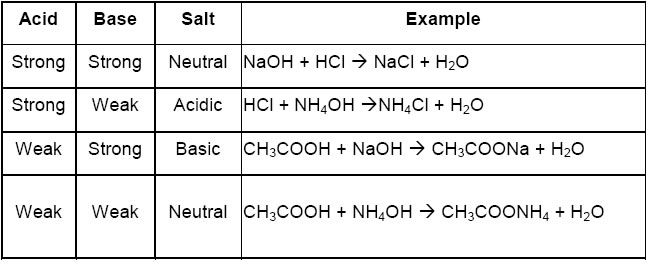
A salt is any compound formed by the neutralisation of an acid by a base.
Sulfuric acid → Sulfates
Hydrochloric acid → Chlorides
Nitric acid → Nitrates
Metals
Acid + metal → salt + hydrogen
Example:
Mg(s) + H2SO4(aq) → MgSO4(aq) + H2(g)
Oxides and hydroxides
Acid + metal hydroxide/oxide → salt + water
Example:
Metal Oxides: CuO(s) + H2SO4(aq) → CuSO4(aq) + H2O(l)
Metal Hydroxides: NaOH(aq) + HCl(aq) → NaCl(aq) + H2O(l)
Carbonates
Acid carbonate → salt + water + carbon dioxide
Example:
CuCO3(s) + H2SO4(aq) → CuSO4(aq) + CO2(g) + H2O(l)
Página 4
How do we test for these gases?
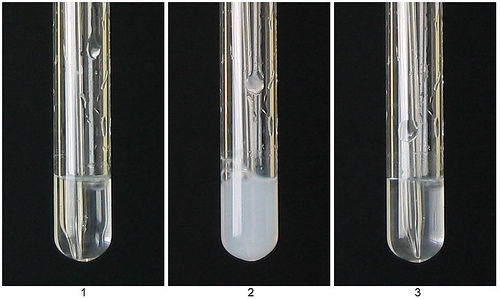
Carbon dioxide - bubble it into water
If it has given off... the lime water turns colour into red.
If it has NOT given off... the lime water won't change colour or a different colour change.
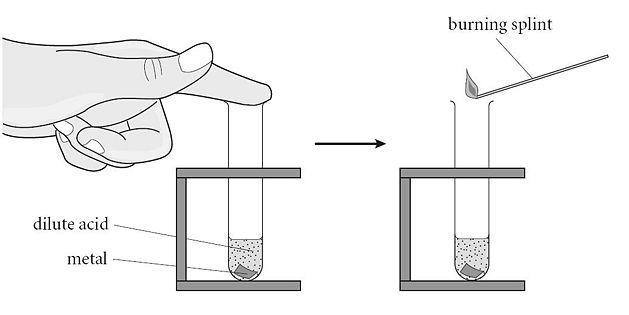
Hydrogen - put a little splint into a test tube with magnesium
If it has given off... there will be a squeaky pop sound.
If it has NOT given off... nothing will happen eventually...
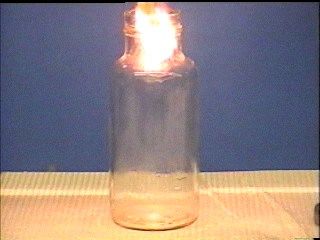
Oxygen - test with a glowing splint
If it has given off... the glowing splint will relight.
If it has NOT given off... the splint will go off quick.
Ammonia - add hydrochloric acid, then you mix the chemicals
If it has given off... the gas will be white, then ammonium chloride will be produced
If it has NOT given off... the gas won't be white
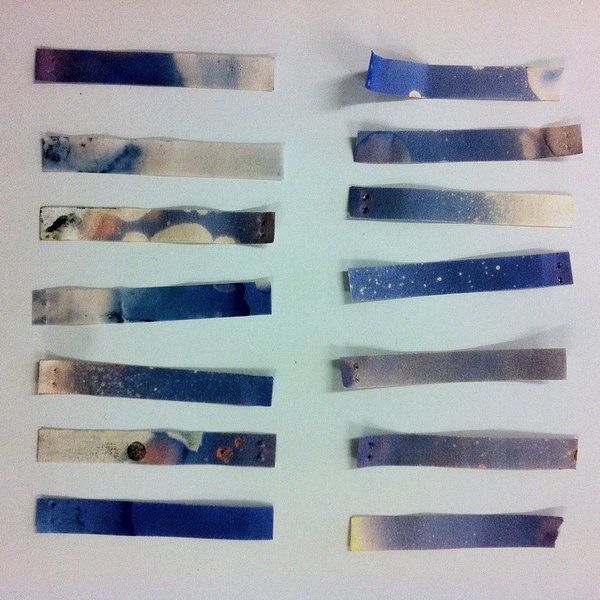
Chlorine - add to damp of blue litmus paper
If it has given off... the paper will bleach
If it has NOT given off... the paper won't bleach
Información
- Descripción
- All the experiments you will need to know for IGCSE Edexcel.
- Creado por
- Alex Steele · may 2016
- Actualizado
- 26 may 2016
- Visitas
- 355
- Etiquetas
- Valoración