
Apuntes
AI SECOND QUESTIONS
Contenido del apunte (2)
Página 1
2015
2 (i) Give a description and example of a Simple Agent with no internal states and how it works using only the surface appearance of the language. [4 marks]
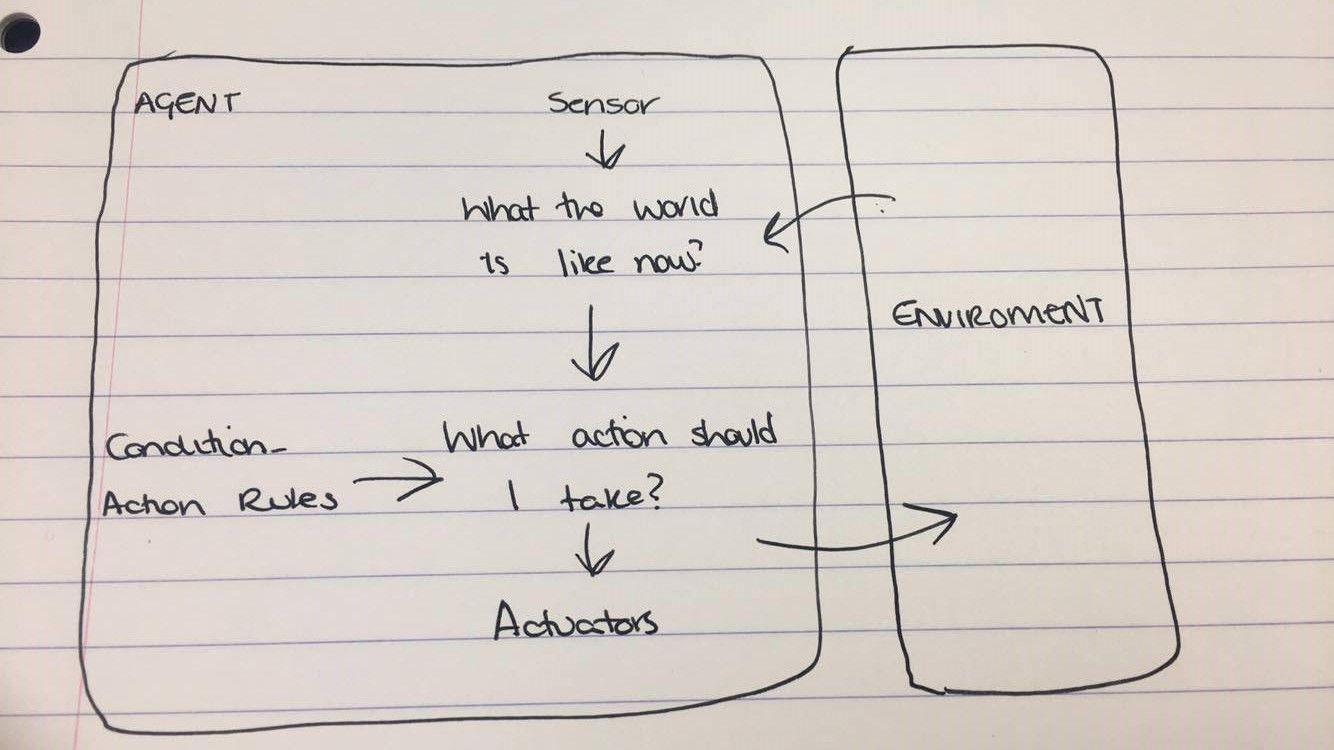
In a simple agent it has no internal state. The environment sends information to the sensor. The agent then determines what the world is like now, and then what action to take. This is then sent to the actuator, and back to the environment. An example could be a thermometer. The enviroment has decreased in temperature, and the sensor has picked up on that. The agent then determines the temperature has decreased, and determines what actions to do next. This needs the condition action rules which may state if the temperature decreases, move the liquid down. Therefore, agent tells the actuators to move the liquid down. It does this, which is displayed back in the environment.
Here is a illustration of a simple agent:
(ii) What is SOAR and how does it learn?
Soar stands for State, Operator And Result. Soar is a candidate unified theory of cognition or architecture for intelligent behavior. It has a goal, a state, an operator, a problem space, problem solving and impasses.
The problem solving process consists of the initial state, then the application of operators, then means reasoning and eventually reaches the goal state.
Between impasses, there is universal sub goaling which solves the impasses but doesn't know what to do next. However. chunking chaches the results of its sub goals of productions.
An example of SOAR could be an AI adventure story game.
In order to learn, SOAR will need a learning agent. Here is an illustration of a learning agent:
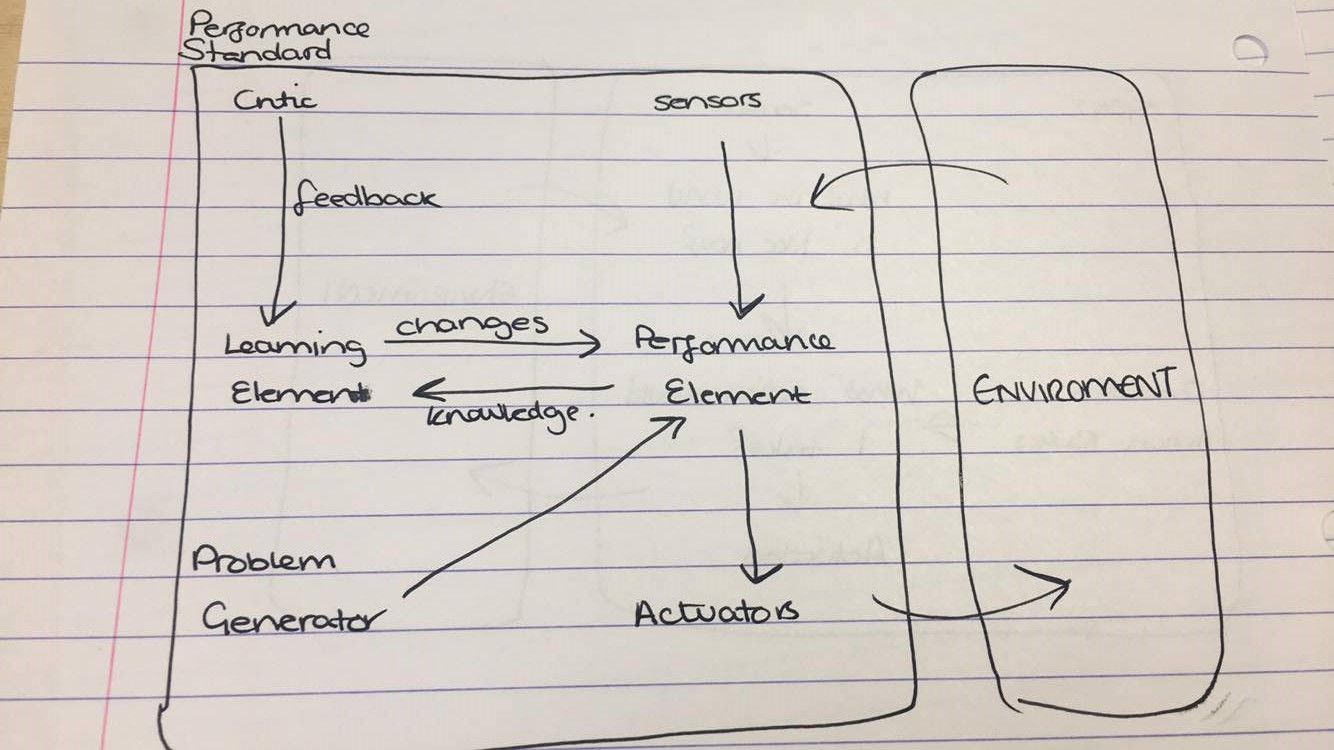
The critic tells the agent how well it is doing by providing feedback to the learning elements. The learning element is where the improvements are made, and can make changes to the performance element. The performance element decides what to do. This sends knowledge to the learning element. The problem generator create problems for the agent so that agent can be put into different situations and continue to learn.
(iii) In the context of AI planning, what planning technique do we typically use to solve the “Monkey and Bananas” problem? Explain how the technique works in general and then apply to solve “Monkey and Bananas” problem. [10 marks]
I would use STRIPS planning. The first step in STRIPS planning is to describe the world by providing objects, actions, preconditions and effects. To model the world, the system needs to know that their are two rooms connected by a closed door. In room 2 their are banana's hanging from the ceiling and chair. The system also needs to know knowledge that doesn't change. In this case the box is push able, and the door can open. It also needs to know knowledge that reflects the current state which is monkey is in the middle of room 1, monkey is on the ground and monkey cannot reach the banana's.
When modelling the world, the system also needs to know the typical actions. Some of the typical actions may be 'Pushing the chair' where the preconditions are the monkey has to be next to the chair. When using this result, you would add to the list that the chair is beneath the bananas, and remove the from the list the chair is in the corner of the room.
Another typical action may be 'opening the door' where the precondition would be the monkey has to be in front of the door. The changes made from using this operators would be add to the list the door is open and remove from the list the door is closed.
Another typical action may be 'walking through the door' where the precondition would be the door has to be open. The changes made from using this operator would be add to the list monkey is in room two and remove from the list monkey is in room one.
The second step is to provide a problem set. A problem consists of initial state and goal. For example the monkey is in room 1 but needs to be in room 2. Monkey cannot reach the bananas, monkey needs to stand on chair.
The final step is STRIPS searches all possible goals, executing various actions, until it reaches the goals. It first tries to solve the goal using the current world model. If it fails, employs means ends analysts, it then finds the difference between the current world view and the goal and looks to see how operators could be used to bridge that gap/
Página 2
2014
Give a description and example of the following 4 types of agent. Illustrate
your answers with a diagram.
(a) Simple Reflex Agent
[5 marks]
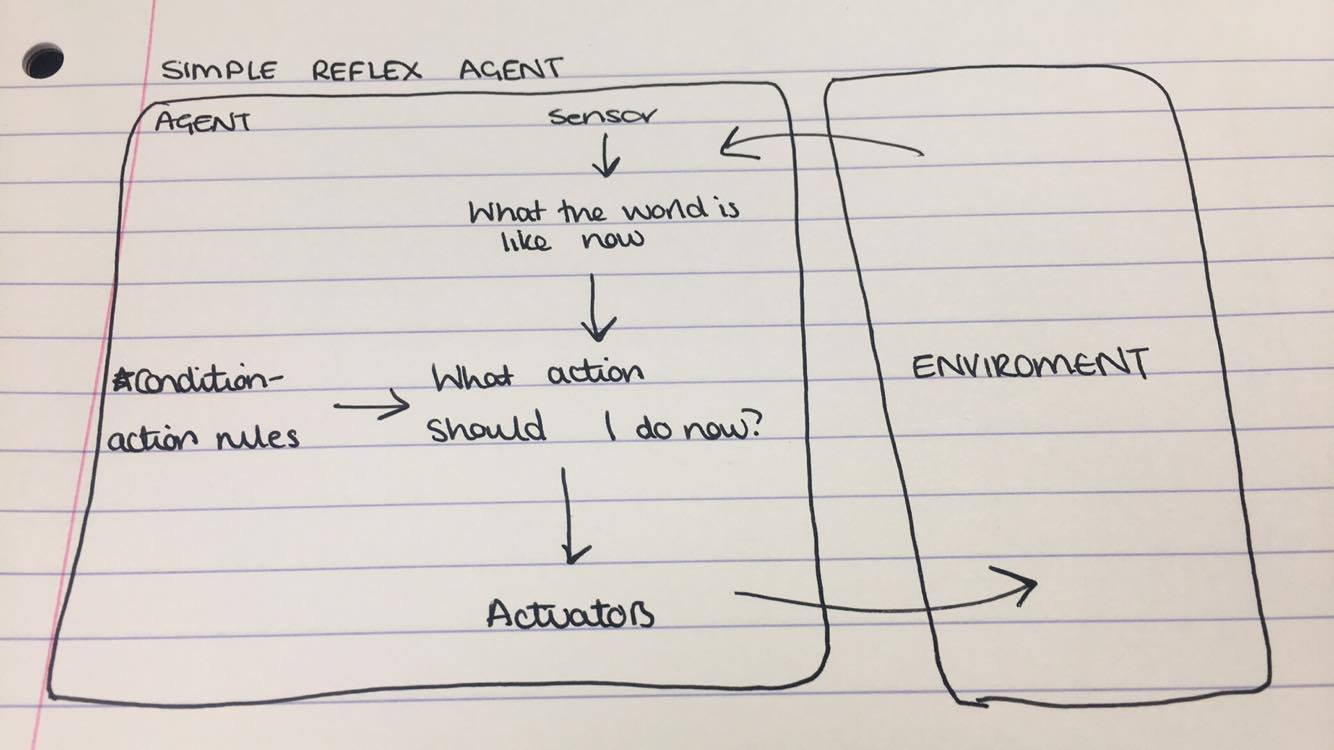
The simple reflex agent has no internal states. An example of this could be a thermostat, where the thermostat only changes depending on what the world is like. Another example could be if the Mars Rover was a simple reflex agent. If it was to pick up a rock, two hours later if it came across the same kind of rock it would still pick it up. This is because it only cares about the world how it is now. The following is an diagram to show this:
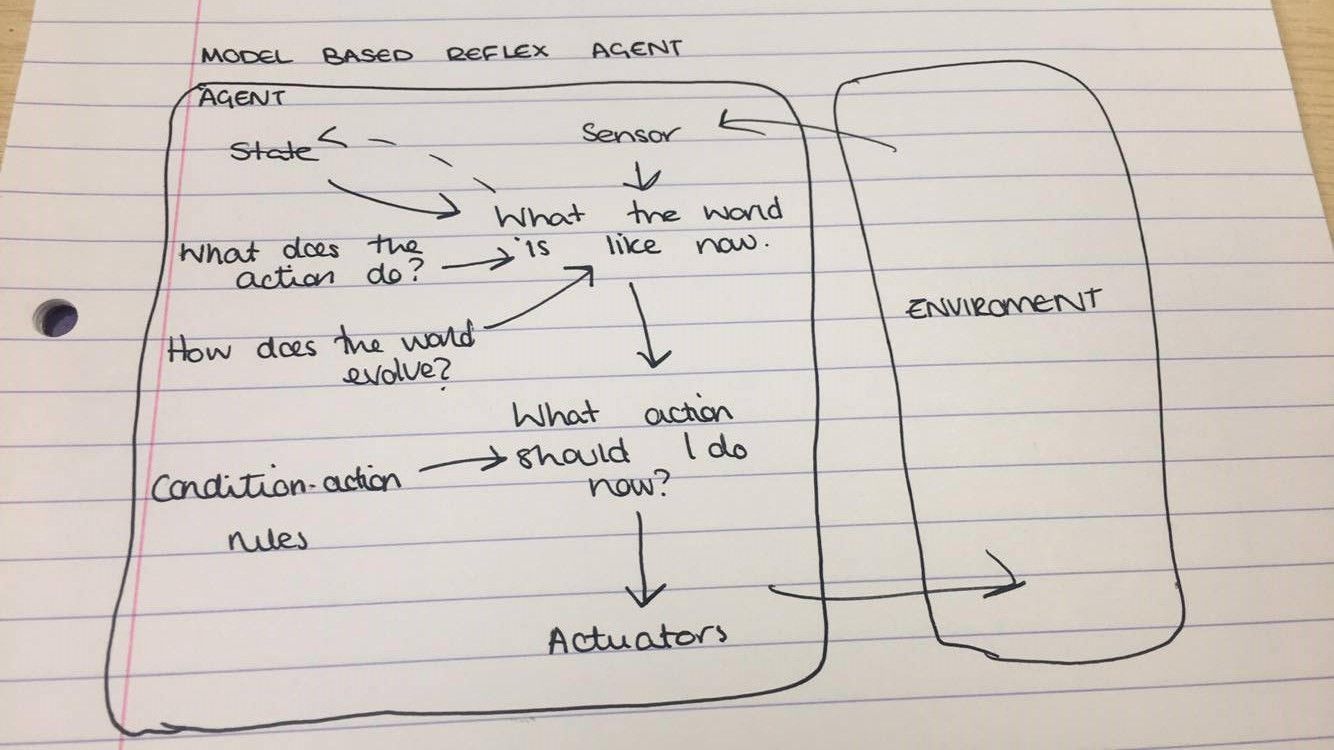
The Model Based Reflex Agent is similar to the simple reflex agent however it has an internal state. An example of a model based reflex agent is the Mars Rover again. This time, when the rover locates the second rock it will not pick it up because it know it has already picked up one of the same type, and leaves room for more.
The goal based agent uses goals instead of condition action rules to determine what action it should do now. An example of this could be a shopping list. For example if the agent is choosing between getting a bottle of milk or a bottle of water, and one of its goals is to get a bottle of milk, it will get the milk.
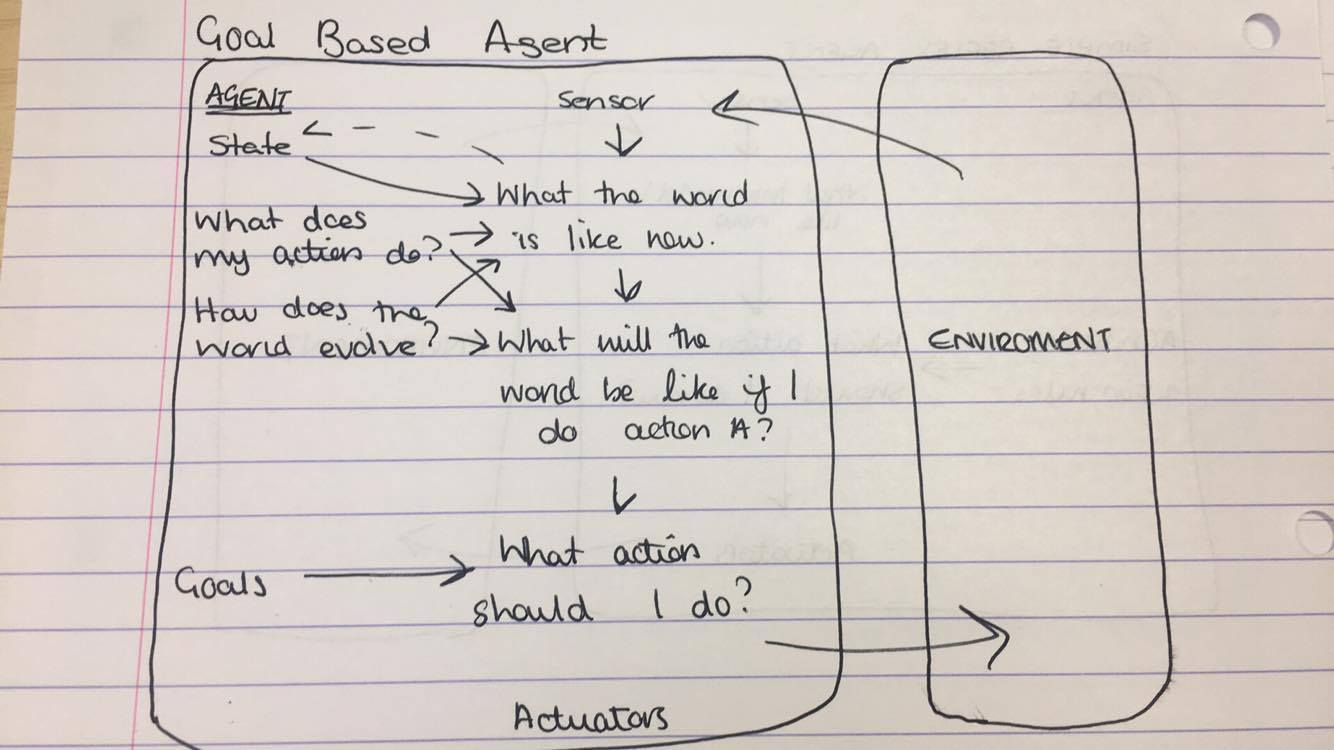
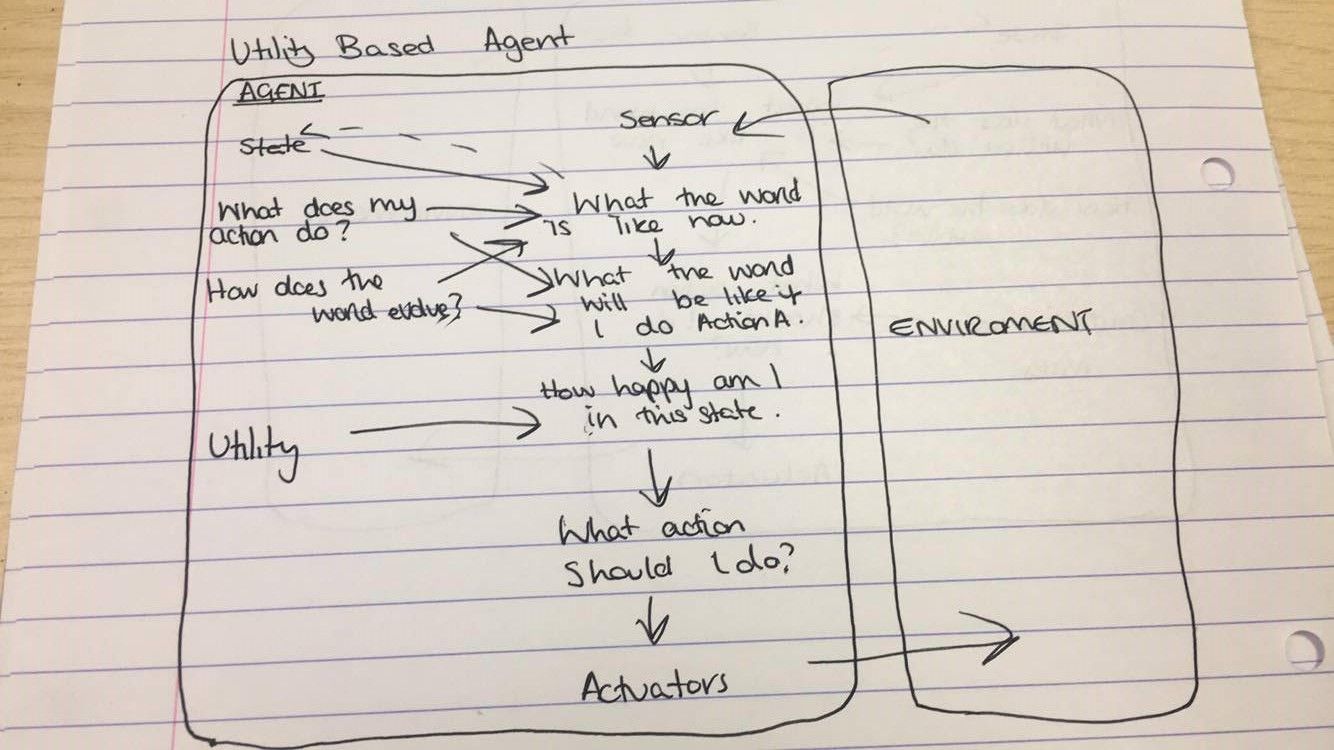
Lastly, the utility based agent determines what the world is like now, what the world will be like if it does this action and then how happy it will be in this state. This agent does the most efficient action. For example, say the Mars Rover wanted to get somewhere, they're may be various routes. The agent would find the most efficient route for the rover. The following is a diagram of this:
Información
- Descripción
- Artificial Intelligence Apunte sobre AI SECOND QUESTIONS, creado por lucy copp el 17/05/2017.
- Creado por
- lucy copp · may 2017
- Actualizado
- 17 may 2017
- Visitas
- 0
- Valoración