
Test
LANGUAGE TEACHING MATERIALS AND DEVELOPMENT FOR LEARNING AND TEACHING
Este test tiene tipos de pregunta que se abren en el reproductor de siempre.
Preguntas del test (11)
1Materials could be...

- AInformative, instructional, experiential, electing, exploratory.
- BInformative, humanized, adaptative, determining, exploratory.
- CInstructional, experiential, universal, electing, authentic.
2 Much of the early literature on materials development attempted to help teachers and materials developers to develop criteria for evaluating and selecting materials. Tomlison & [blank_start]Mashaura[blank_end] proposed some questions for [blank_start]evaluating criteria[blank_end].
It turns around [blank_start]retrospective[blank_end] evaluation, [blank_start]determining criteria[blank_end], and context
- AHolliday
- BGray
- CMashaura
- Dlanguage teaching
- Emethodology
- Fevaluating criteria
- Gretrospective
- Hintrospective
- Icritical
- Jlanguage teaching
- Kdetermining criteria
- Lteaching materials
3According to Saraceni 2003, the materials which are provided to the students should be:
Learner-centered, flexible, open-ended and universal.- AVerdadero
- BFalso
4Tomlinson published a book, in one of the chapters (Language acquisition and language-learning materials), he proposed the following principles:
• The [blank_start]language experience[blank_end] needs to be contextualized and comprehensible.
• The learner needs to be [blank_start]motivated[blank_end], relaxed, [blank_start]positive[blank_end], and engaged.
• The [blank_start]language and discourse[blank_end] features available for potential acquisition need to be salient, meaningful and frequently encountered.
• The learner needs to achieve deep and [blank_start]multi-dimensional processing[blank_end] of the language.
- Alanguage experience
- Bteaching and learning
- Cmaterials design
- Dmotivated
- Edesigned
- Fprocessed
- Gconducted
- Heffective
- Ipositive
- Jcommunicative competence
- Klanguage and discourse
- Lcoursebook materials
- Mevaluating adaptations
- Ndynamic processes
- Omulti-dimensional processing
5Britain and North America are the sources of much innovation in ELT methodology?
- AVerdadero
- BFalso
6[blank_start]Behaviorism[blank_end] in one form of another has been firmly cemented into language teaching materials, with its persistence right up to the present day, as the continuing use of drills, substitution tables and such like, demonstrates.

- ABehaviorism
7The period from the late 1960s to the late 1970s is characterized by:
- AProviding massive funds for the development of language programs.
- BThe emergence of numerous ‘fringe,’ humanistic methodologies.
- CDevelopments in English language teaching (ELT).
8Recognition that learners have their own unique ways of approaching in language study, own strategies and styles of strategies are characteristics that summarize better the age of:
- AThe 1970s to the mid-1980s.
- BThe late 1960s to the late 1970s.
- CThe 1950s/60s and the cold war.
9Which are characteristics that better describe the impact that McDonaldization has had in the design of language teaching materials?

- AStronger sense of communication.
- BMaterials are presented in a routine “by chunks”.
- CUnusual perspectives.
- D2-page spread.and 50 min. lessons.
- ESelf-Directed Learning Approach.
- FPersonalized Learning.
- GTeachers and students should go together and follow the activities sequence.
- HThe material provides a guide on how teachers and students must interact.
10 Neoliberalism has its origins in the work of classical economists as [blank_start]Adam Smith[blank_end]. It stimulates [blank_start]economic growth[blank_end] and increasing divisions between [blank_start]rich and poor[blank_end]. The market is the arbiter for all. The key to the successful function of the market is [blank_start]ATOMISATION[blank_end] (a subdivision of [blank_start]goods and services[blank_end], such as “added value” can be determined through monetization).
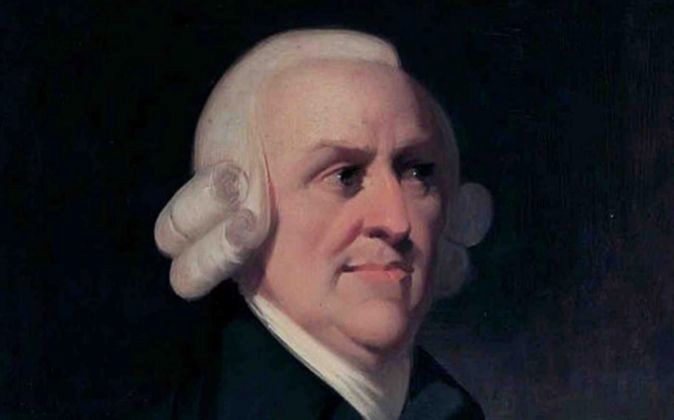
- AGeorge Floyd
- BAdam Smith
- CCameron Philipson
- DPersuation
- EMarketing
- FAtomisation
- Geconomic growth
- Hpolitic growth
- Isocioeconomic growth
- Jsocial conditions and politic
- Kgoods and services
- Lsociety and socioeconomic strata
- Mrich and poor
- Nblack and white
- Onatives and foreign
11Which are the characteristics that are related to the impact that Neoliberalism has had on the design of language teaching materials?

- ARespect for humanistic approaches and methodologies implemented in society.
- BThe school or university provide to the parents (customers) “premium products” which are recognized and offer advantages over other taking into account aspects like jobs, contracts, networks.
- CIt articulates eleven principles that guide their actions.
- DThe number of institutions that endorse language level certifications has been reducing over the years for different aspects and centralized and specialized institutions.
- ESchools and universities use devices as classification charts to show the level of value of their providers.
- FAtomised materials will attempt to impose a uniformity on what happens in classrooms.
Información
- Descripción
- This quiz is related to the two last texts proposed for the class, to bear in mind, the readings are the following: "State-of-the-Art Article, Materials development for language learning and teaching" by Brian Tomlinson; and "Language Teaching Materials and the (Very) Big Picture", Andrew Littlejohn.
- Autor
- Laura Daniela Rojas
- Idioma
- English
- Visitas
- 13
- Valoración
- Aún sin valoraciones Valora este test
Más sobre Design and Development of Teaching Materials