
Teaching Materials and Resources
792 resources created by 549 users
This Teaching Materials and Resources page on GoConqr gathers community-made quizzes, mind maps, flashcards, flowcharts and notes on materials development for language learning and teaching, from the big-picture history of language teaching materials to selection, adaptation and design. It's built for university students and professional candidates practising the key readings, and for teachers after ready-made material. There are over 700 resources here, including more than 90 quizzes and over 500 mind maps. Open a quiz to test yourself, then browse the maps.
Top Teaching Materials and Resources resources
-
10 questionsMaterials development for language learning and teaching - Tomlinson Do ‘Materials development’ refer to all the processes made use of by practitioners who produce and/or use m...
-
10 questionsQUIZ. Materials development for language learning and teaching What of the next topics ARE NOTreviewed or reported on the article?
-
10 questionsMaterials Development for Language Tearning and Teaching Quiz What type of materials are possible to create through materials development?
-
10 questionsMaterials development for language learning and teaching What does material development mean?
-
11 questionsLANGUAGE TEACHING MATERIALS AND DEVELOPMENT FOR LEARNING AND TEACHING Materials could be...
-
5 cardsLanguage Teaching Materials and the (Very) Big Picture
-
10 questionsMaterials development, research and language-learning. What does "material development" refer to?
-
10 questionsQuestionnaire about materials development According to Tomlinson, materials can be:
Quizzes
See all 99 quizzes-
10 questionsMaterials development for language learning and teaching - Tomlinson Do ‘Materials development’ refer to all the processes made use of by practitioners who produce and/or use m...
-
10 questionsQUIZ. Materials development for language learning and teaching What of the next topics ARE NOTreviewed or reported on the article?
-
10 questionsMaterials Development for Language Tearning and Teaching Quiz What type of materials are possible to create through materials development?
-
10 questionsMaterials development for language learning and teaching What does material development mean?
-
11 questionsLANGUAGE TEACHING MATERIALS AND DEVELOPMENT FOR LEARNING AND TEACHING Materials could be...
-
10 questionsMaterials development, research and language-learning. What does "material development" refer to?
-
10 questionsQuestionnaire about materials development According to Tomlinson, materials can be:
-
10 questionsState of art materials development article test According to Tomilson and Masuhara (2007) what is the develop criteria for evaluating and selecting materia...
Mind maps
See all 588 mind maps-
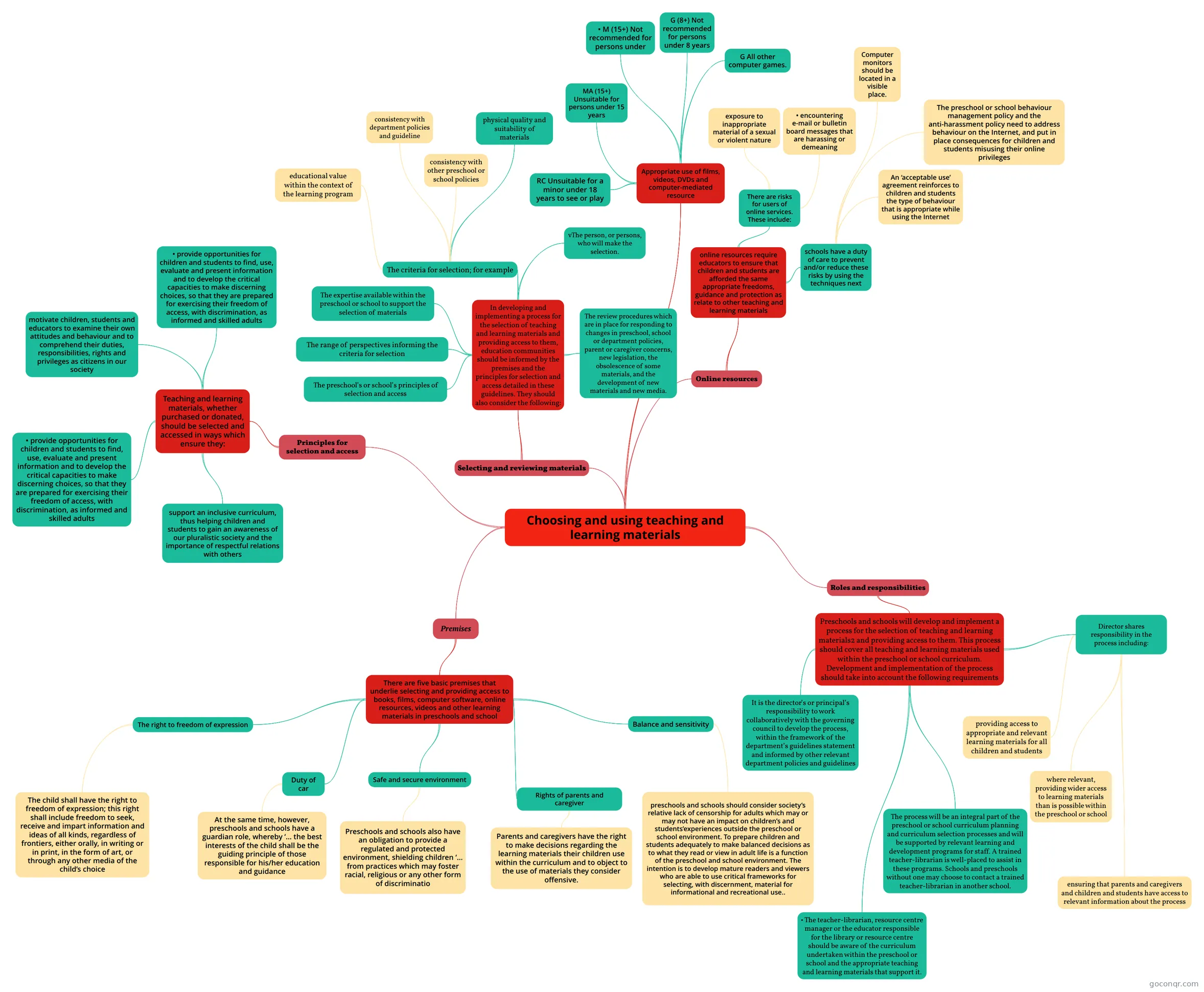 Choosing and using teaching and learning materials Mapa conceptual en el que se recoge lo mas importante del documento
-
STATE OF ART MATERIALS
-
STATE OF ART MATERIALS
-
Materials Development for Language Learning Activities
-
The Key to Fostering Effective Teaching and Learning Settings By: Itzel Caballero Banderas
-
Chapter 5: Literature MATERIALS DESIGN FACE TO FACE
-
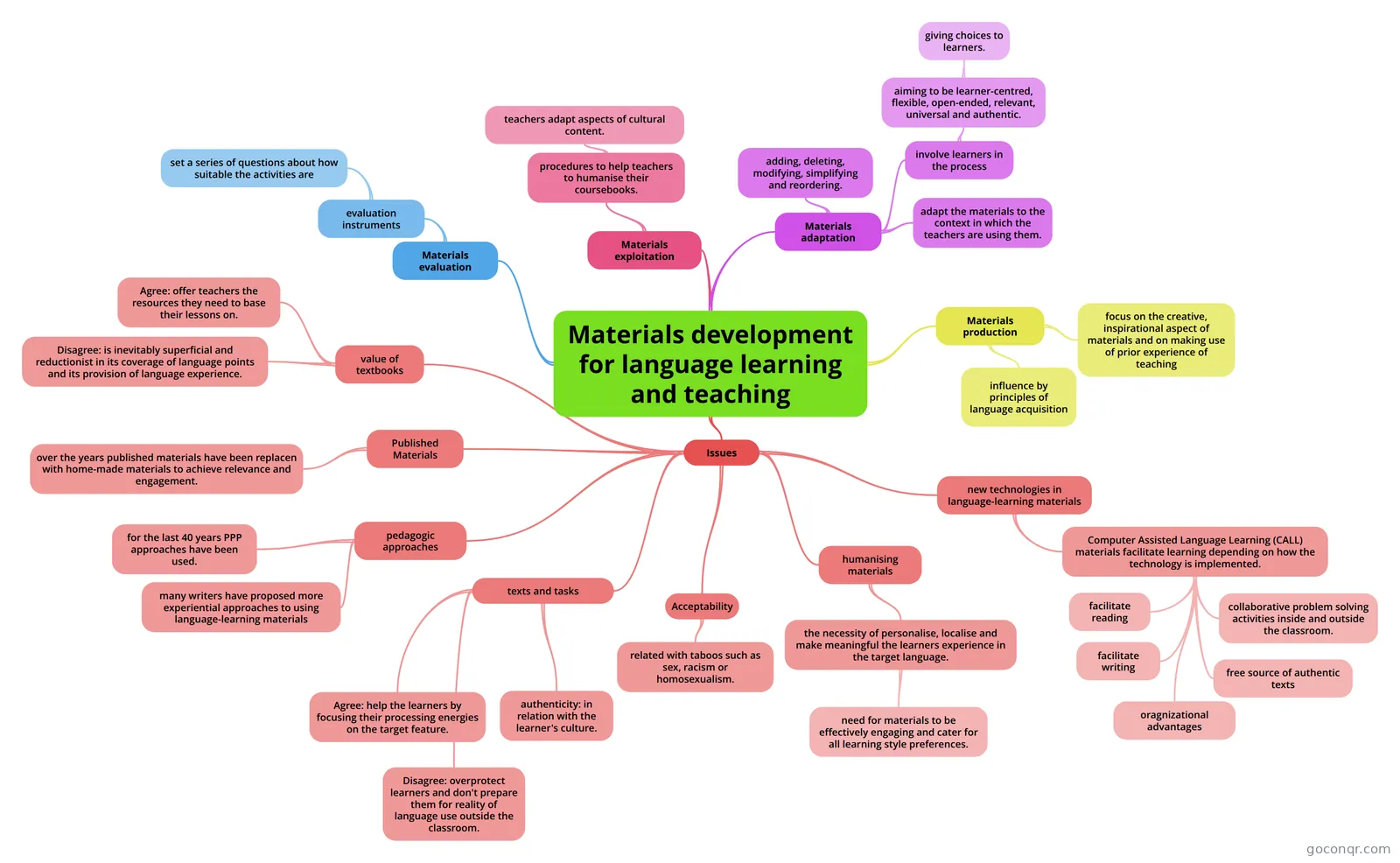 Materials development for language learning and teaching
-
Language Teaching Materials the history of materials development
Flashcards
See all 79 flashcards-
5 cardsLanguage Teaching Materials and the (Very) Big Picture
-
26 cardsMaterials Design-Materials Development for language learning and teaching State of the Art Materials Design for Language Learning and Teaching
-
17 cardsMaterial development for language learning and teaching MATERIAL DEVELOPMENT FOR LANGUAGE LEARNING AND TEACHING: INTRODUCTION
-
11 cardsState fo the Art What is "materials development"?
-
11 cardsState-of-the-Art: Materials development State-of-the-Art: Materials development Brian Tomlinson
-
10 cardsReadings "Materials development for language learning and teaching" & "Language Teaching Materials and the (Very) Big Picture" The historic background of materials design.
-
10 cardsFLASHCARDS Language Teaching Materials Language teaching materials
-
11 cards"State of materials development" and "language teaching materials and the (Very) big picture". In these flashcards, you will find a short summary from both Tomlinson and Littlejohn articles.
More Education and pedagogy (incl. teaching methods, curriculum, educational psychology) topics
About Teaching Materials and Resources
GoConqr OriginalWhat this unit covers
The resources here centre on two readings: Brian Tomlinson's state-of-the-art article on materials development for language learning and teaching, and Andrew Littlejohn's chapter on language teaching materials and the big picture. Many titles shorten the second one to "LTM and the very big picture". You will also find shorter items on textbooks, course books, authentic materials and the selection and adaptation of materials.
Where to start
Begin with a mind map to see the shape of the topic. The map "Materials development for language learning and teaching" appears in many versions, so open a few and compare how different students organised the same ideas. The flashcard deck "Language Teaching Materials and the (Very) Big Picture" is a quick way to learn the definition of materials development. That definition covers evaluation, adaptation, design, production, use and research.
Using quizzes and maps together
Quizzes on this page ask about the article's abstract, the types of materials teachers can create, and the idea that materials can be informative, instructional, experiential or exploratory. Try the quiz "Materials development for language learning and teaching - Tomlinson" after reading a map. Then return to the map for any question you missed.
- Read or skim a map to get the structure.
- Take a quiz and note your gaps.
- Use flashcards to fix definitions and key terms.
- Check the flowcharts, such as the one on the role of textbooks, for a visual summary.
Where it sits
This unit belongs to the Curriculum and Planning strand of Education and pedagogy. It suits anyone preparing for the TKT, which some listed resources mention, or studying how materials shape classroom practice.
Make it your own
Once you have worked through a few items, build your own flashcards or a map in your own words. It is a good way to see what you remember.
Frequently asked questions
Which quiz should I try first?
Try the quiz on Tomlinson's article that asks whether materials development covers evaluation, adaptation, design, production and use. It checks the core definition. If you want something broader afterwards, the quiz on materials as cultural products of human history moves on to the big-picture reading.
What do the mind maps cover?
Most maps summarise the two main readings. One set follows Tomlinson's state-of-the-art article, and another follows Littlejohn's big picture chapter, including ELT materials from the 1950s to the 1980s and newer demands from the mid 1980s. Others cover course books, textbooks and selecting and adapting materials.
Are the resources free to use?
Yes. Every resource listed here is free to open, study and take, with no account needed. They were made by GoConqr users, not by GoConqr itself, so it is worth comparing a few versions of the same topic.
Who are these resources for?
They are mainly for university students and professional candidates studying materials development, and for teachers who want ready-made revision material. Some items mention the TKT, so they may also help if you are preparing for that exam.
Can I save my quiz scores?
A free account saves your quiz scores. It also lets you make your own quizzes, mind maps, flashcards and notes, which is useful if you want to rework a reading in your own words.
What if I cannot find what I need?
Try searching for alternative titles, because the same reading appears under names like state of the art, LTM or very big picture. If a topic is still missing, you can create your own map or deck and build the resource you need.