
Test
Memory Quiz- Psychology (AS)
Este test tiene tipos de pregunta que se abren en el reproductor de siempre.
Preguntas del test (63)
1Which researcher investigated coding in LTM and STM and when?
- AMiller, 1956
- BBaddeley, 1966
- CBahrick, 1975
2Name one disadvantage of Baddeley's coding study.
- ACulture bias
- BToo old to generalise nowadays
- CArtificial stimuli
3What is the correct capacity, coding, and duration of STM?
- A3-6 items, semantic, 10 seconds
- B5-9 items, acoustic, 30 seconds
- C5-9 items, semantic, 18 seconds
4What is the correct capacity, coding and duration of LTM?
- AVery small, acoustic, 45 minutes
- BUnlimited, acoustic, 7 years
- CUnlimited, semantic, permanent
5Which researcher investigated capacity in STM and when?
- ABahrick, 1975
- BBaddeley, 1966
- CJacobs, 1887
6Name one disadvantage of Jacobs' capacity study.
- ACan't be generalised.
- BConfounding variables due to era.
- CCultural bias- he only tested the memory of women
7Which researcher developed Jacobs' capacity results and when?
- AMiller, 1956
- BBaddeley, 1966
- CBahrick, 1975
8Name one disadvantage of Miller's capacity study.
- ALacks internal validity
- BCan't be generalised
- CContradictory evidence.
9Which researcher investigated the duration of LTM and when?
- ABahrick, 1975
- BBaddeley, 1966
- CMiller, 1956
10Name one advantage of Bahrick's duration study.
- AIt had a small sample, so the research was focused and detailed.
- BLacks participant variables.
- CHas high external validity.
11Which researcher investigated the duration of STM and when?
- ABahrick, 1975
- BMiller, 1956
- CPeterson and Peterson, 1959
12Name one disadvantage of Peterson and Peterson's duration study.
- ASuffered gender bias- only studied men
- BMeaningless stimuli.
- CCan't be generalised to different cultures.
13Label the Multi-Store Memory Model
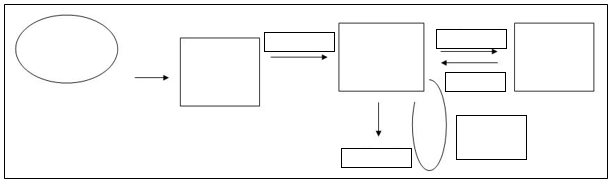
- AEnvironmental Impact
- BSensory Register
- CAttention
- DSTM
- ERecall
- FRehearsal
- GRetrieval
- HRehearsal loop
- ILTM
14Name two sensory stores in the sensory register.
- AIconic
- BSemantic
- CEtic
- DEchoic
- EAcoustic
15Name one advantage of the multi-store model of memory.
- AClearly shows how STM and LTM are unitary stores
- BResearch used to investigate the MSM included meaningful stimuli, hence increasing the validity
- CSupporting research evidence
16Name three disadvantages of the multi-store model of memory.
- ALacks internal validity
- BSuggests STM and LTM are unitary stores
- CDoesn't account for elaborative rehearsal
- DDifficult to generalise to other cultures
- EResearch used artificial materials
17There are 4 types of long term memory
- AVerdadero
- BFalso
18Episodic memory refers to our ability to [blank_start]recall events[blank_end]. They are [blank_start]time stamped[blank_end] and include [blank_start]people, objects and places[blank_end]. As well as this, they require [blank_start]conscious effort[blank_end] to recall.
- Arecall events
- Btime stamped
- Cpeople, objects and places
- Dconscious effort
19Name an example of episodic memory
- ATom can remember last week when he played football with his dad at the park.
- BMary can remember how to ride her bike.
- CAlex can remember the taste of an orange.
20Name an example of semantic memory.
- AMary can remember going her friends house 3 weeks ago.
- BTom can remember how to play football.
- CAlex can remember the meaning of the word 'memory'.
21Procedural memory refers to [blank_start]actions and skills[blank_end]. These memories aren't [blank_start]time stamped[blank_end], and require no [blank_start]conscious effort[blank_end].
- Aactions and skills
- Btime stamped
- Cconscious effort to recall
22Endel [blank_start]Tulving[blank_end] ([blank_start]1985[blank_end]) realised the multi-store model was too simplistic and that LTM wasn't a [blank_start]unitary store[blank_end]. He believed there were [blank_start]3[blank_end] separate LTM stores: episodic, semantic and procedural.
- ATulving
- B1985
- Cunitary store
- D3
- EMiller
- FBaddeley
- GPeterson and Peterson
- H1931
- I1966
- J1975
- Kmemory store
- Lvisual store
- Mmental store
- N4
- O2
- Pno
23Name three advantages of Tulving's three LTM stores.
- AGeneralises well to other cultures.
- BClinical evidence- Clive Wearing.
- CNeuro-imaging evidence- brain scans.
- DHigh internal validity to study.
- EReal life application.
24Name two disadvantages of Tulving's three LTM stores.
- ACan't be easily generalised to other cultures.
- BLack of control in case studies.
- CMay be two types, not three.
- DLacked internal validity.
25[blank_start]Central executive[blank_end]- coordinates activities of subsystems and allocates resources./. [blank_start]Visual-spatial[blank_end]- memory store for visual and spatial information./. [blank_start]Phonological loop[blank_end]- memory store for auditory information./. [blank_start]Episodic buffer[blank_end]- store which integrates all information into a single memory with time sequencing.
- ACentral executive
- BVisuo-spatial
- CPhonological loop
- DEpisodic buffer
26Define phonological store.
- AMemory store for scent information.
- BStore for the words you hear.
- CStore which allows rehearsal of words.
27Define articulatory loop.
- AStore for the words you hear.
- BStore for olfactory information.
- CStore which allows 2 second maintenance rehearsal of words.
28Name four advantages of the working memory model.
- AClinical evidence
- BDual task performance support.
- CClarity in all aspects.
- DWord length effect evidence.
- EResearch into drug users evidence
- FBrain scan evidence.
29Name a disadvantage of the working memory model.
- ALack of research for phonological loop.
- BLacks internal validity.
- CDifficult to generalise to other cultures.
- DLacks clarity over central executive.
30Define interference
- AWhen two pieces of information conflict, resulting in forgetting/distorting of one or both
- BWhen there are insufficient cues to trigger a memory
- CWhen someone talks to you when you're trying to remember something
31Retroactive interference: [blank_start]newer[blank_end] memory interferes with [blank_start]older[blank_end] memory e.g. teacher can't remember [blank_start]previous[blank_end] class' names
Proactive interference: [blank_start]older[blank_end] memory interferes with [blank_start]newer[blank_end] memory e.g. teacher can't remember [blank_start]current[blank_end] class' names- Anewer
- Bolder
- Colder
- Dnewer
- Eprevious
- Fcurrent
- Golder
- Hnewer
- Inewer
- Jolder
- Kcurrent
- Lprevious
32Which researcher investigated how similarity affects retroactive interference and when?
- AMcGeoch and McDonald, 1931
- BBaddeley, 1966
- CPeterson and Peterson, 1959
33The word type which produced the worst recall in McGeoch and McDonald's retroactive study was [blank_start]synonyms[blank_end].
- Asynonyms
- Bantonyms
- Cnonsense syllables
- D3-digit numbers
- Eno new list
- Funrelated words
34Name two advantages of the interference explanation for forgetting
- ALab studies have good validity
- BMeaningful stimuli
- CReal-life study support
- DHigh internal validity
35Name two disadvantages of the interference explanation for forgetting
- AResearcher bias
- BDemand characteristics
- CArtificial stimuli
- DUnrealistic time between learning
36Retrieval Failure: an explanation for forgetting that suggests that [blank_start]insufficient cues[blank_end] cause information to be forgotten. These cues can be [blank_start]state[blank_end] dependent (internal, e.g. drunk, tired) or [blank_start]context[blank_end] dependent (external, e.g. location)
- Ainsufficient cues
- Bsufficient cues
- Cdisruptive memories
- Dlack of intelligence
- Estate
- Fcontext
- Gfood
- Henvionment
- Ilocation
- Jcontext
- Kstate
- Lenvironment
- Mdrug
37[blank_start]Tulving[blank_end] ([blank_start]1983[blank_end]) suggested the [blank_start]Encoding[blank_end] Specificity Principle (ESP). This indicates that cues must be [blank_start]present on encoding[blank_end] and [blank_start]retrieval[blank_end] in order for them to be sufficient. Some cues are linked to material in a [blank_start]memorable[blank_end] way e.g.' STM' helps us recall information about short term memory. Other cues are not so obvious: either context (external) or state (internal) dependent.
- ATulving
- BBaddeley
- CMiller
- DPeterson and Peterson
- E1983
- F1931
- G1966
- H1956
- I1985
- JEncoding
- KCoding
- LEtching
- MEasy
- Npresent on encoding
- Osimple
- Psmall capacity
- Qenvironmental
- Rretrieval
- Srecall
- Trehearsal
- Uremembering
- Vmemorable
- Wfunny
- Xunique
- Yinteresting
38[blank_start]Baddeley[blank_end] ([blank_start]1975[blank_end]) conducted a study deep sea divers based on [blank_start]context[blank_end] dependent forgetting. They learned words either in/out of the sea and then recalled them either in/out of the sea. When the environmental contexts matched (e.g. sea - sea, land - land) the recall was [blank_start]better[blank_end].
- ABaddeley
- BTulving
- CMcGeoch
- DPeterson and Peterson
- E1975
- F1985
- G1983
- H1931
- Icontext
- Jstate
- Kbetter
- Lworse
- Mthe same
39[blank_start]Carter and Cassaday[blank_end] ([blank_start]1998[blank_end]) conducted a study based on [blank_start]state[blank_end] dependent forgetting. They either gave the participants [blank_start]anti-histamines[blank_end] or didn't, asked them to learn and recall word lists. They recalled them either on the drug or not. They found that when there was a [blank_start]mismatch[blank_end] of internal states, recall was [blank_start]worse[blank_end].
- ACarter and Cassaday
- BMcGeoch and McDonald
- CBaddeley
- DBahrick
- E1998
- F1985
- G1983
- H1975
- Istate
- Jcontext
- Kanti-histamines
- Lalcohol
- Mcigarettes to smoke
- Nfood
- Omismatch
- Pmatch
- Qsimilarity
- Rworse
- Sbetter
40Name two advantages of the retrieval failure explanation for forgetting
- AReal life application
- BSupporting evidence
- CTakes culture differences into account
- DMeaningful stimuli
41Name three disadvantages of the retrieval failure explanation for forgetting
- AContext effects not strong
- BState effects not strong
- CLack of research evidence
- DCan't test ESP
- EOnly affects certain type of memory (Recall vs. recognition)
42Which researcher investigated leading questions and when?
- ABaddeley, 1966
- BMiller, 1956
- CCarter and Cassaday , 1998
- DLoftus and Palmer, 1974
43Which verb in the leading question study by Loftus and Palmer, 1974, led to the highest calculated mean average?
- AContacted
- BSmashed
- CBumped
- DHit
44The [blank_start]response bias[blank_end] explanation suggests that the wording of a question has [blank_start]no effect[blank_end] on the participants' memories, but it changes the way they decide to answer. Words such as '[blank_start]smashed[blank_end]' encouraged them to answer a [blank_start]higher[blank_end] estimated speed.
- Aresponse bias
- Bresearcher bias
- Cparticipant bias
- Dmemory bias
- Eno effect
- Fa big effect
- Gsome effect
- Hsmashed
- Icontacted
- Jbumped
- Khit
- Lhigher
- Mlower
45[blank_start]Loftus and Palmer[blank_end] ([blank_start]1974[blank_end]) conducted a second experiment to prove that memory [blank_start]was[blank_end] changed by [blank_start]wording[blank_end]. They found that participants who heard '[blank_start]smashed[blank_end]' were [blank_start]more[blank_end] likely to report broken glass even though there wasn't any.
- ALoftus and Palmer
- BMiller
- CBaddeley
- DCarter and Cassaday
- E1974
- F1931
- G1966
- H1998
- Iwas
- Jwasn't
- Kwording
- Llocation
- Mstate
- Nsmashed
- Ocontacted
- Pbumped
- Qhit
- Rmore
- Sless
46If [blank_start]witnesses[blank_end] discuss a crime with each other, their eyewitness testimonies may become [blank_start]contaminated[blank_end]. This is because they [blank_start]combine[blank_end] information from others with their own memories.
- Awitnesses
- Bcriminals
- Cpolice officers
- Dcontaminated
- Emore accurate
- Flies
- Gcombine
- Hignore
- Ichange
47Which researcher investigated post-event discussion and when?
- ACarter and Cassaday, 1998
- BLoftus and Palmer, 1974
- CTulving, 1983
- DGabbert, 2003
48[blank_start]Gabbert[blank_end] put participants in pairs, and they watched a video of [blank_start]the same[blank_end] crime from [blank_start]different[blank_end] perspectives. They had a post-event discussion, and were then asked to recall the event. Gabbert found that [blank_start]71[blank_end]% of participants recalled information that they couldn't have seen from their perspective, suggesting post-event discussion [blank_start]directly affects[blank_end] eyewitness testimony.
- AGabbert
- BTulving
- CBaddeley
- DLoftus and Palmer
- Ethe same
- Fa different
- Gdifferent
- Hthe same
- I71
- J66
- K31
- L84
- Mdirectly affects
- Ndoesn't affect
- Opositively affects
49Name an advantage of research into leading questions and post-event discussions.
- AReal life applications
- BRealistic tasks- better generalisability
- CHigh external validity
50Name three disadvantages of research into leading questions and post-event discussions.
- AArtificial tasks
- BIndividual differences e.g. age
- CLab studies- demand characteristics
- DCan't generalise to collectivist cultures
- ELack of clarity
- FNo real life application
51Which researcher investigated how anxiety affects recall in a negative way, and when?
- AJohnson and Scott, 1976
- BCarter and Cassaday, 1998
- CLoftus and Palmer, 1974
- DBaddeley, 1996
52Which answer describes Johnson and Scott's study on anxiety?
- AParticipants believed they were doing a lab study. While waiting in the waiting room, an argument was heard, and a man either came out of the room with a pen and grease on his hands, or a paper knife with blood on it.
- BA study on a real life shooting, in which they interviewed people 5 months after the incident to see if anxiety had affected their memory in any way compared to their original police interviews, as well as seeing if they suffered any emotional stress since the incident.
53Which researcher investigated how anxiety affects recall in a positive way, and when?
- AYuille and Cutshall, 1986
- BJohnson and Scott, 1976
- CCarter and Cassaday, 1998
- DLoftus and Palmer, 1974
54Which answer describes Yuille and Cutshall's study on anxiety?
- AA study on a real life shooting, in which they interviewed people 5 months after the incident to see if anxiety had affected their memory in any way compared to their original police interviews, as well as seeing if they suffered any emotional stress since the incident.
- BParticipants believed they were doing a lab study. While waiting in the waiting room, an argument was heard, and a man either came out of the room with a pen and grease on his hands, or a paper knife with blood on it.
55Which two researchers explained the contradictory evidence provided by Johnson and Scott, and Yuille and Cutshall, and when?
- ADeffenbacher, 1983
- BYerkes and Dodson, 1908
- CBaddeley, 1966
- DTulving, 1983
- ECarter and Cassaday, 1998
- FLoftus and Palmer, 1974
56The [blank_start]Yerkes-Dodson[blank_end] law suggested that the relationship between [blank_start]emotional arousal[blank_end] and [blank_start]performance[blank_end] looks like an inverted [blank_start]U[blank_end]. This means that too [blank_start]little[blank_end] anxiety leads to too [blank_start]little[blank_end] recall, and too [blank_start]much[blank_end] anxiety leads to too [blank_start]little[blank_end] recall. Therefore, there is an [blank_start]optimal[blank_end] level of anxiety to ensure accurate recall.
- AYerkes-Dodson
- BJohnson-Scott
- CDeffenbacher
- DPeterson-Peterson
- EBaddeley
- Femotional arousal
- Gphysical arousal
- Hphysiological arousal
- Icognitive arousal
- Jperformance
- Kproduction
- Lhappiness
- Mterror
- Nanxiety
- OU
- PM
- QN
- RV
- Slittle
- Tmuch
- Ulittle
- Vmuch
- Wmuch
- Xlittle
- Ylittle
- Zmuch
- AAoptimal
- ABworst
- ACnormal
57Name five disadvantages of the anxiety-recall studies.
1. [blank_start]Weapon[blank_end] focus could be [blank_start]irrelevant[blank_end]- may be based on [blank_start]unusualness[blank_end] of object/situation, not anxiety
2. Field studies can lack [blank_start]control[blank_end]- Yuille and Cutshall's (1986) study had post-event discussions, which is an [blank_start]extraneous[blank_end] variable
3. [blank_start]Ethical[blank_end] issues- deception (thought they were doing lab study), [blank_start]psychological[blank_end] harm (inducing anxiety)
4. Inverted U too [blank_start]simplistic[blank_end]- anxiety has more elements (emotional, cognitive etc.) other than [blank_start]physical[blank_end]
5. [blank_start]Demand[blank_end] characteristics- lab studies- AWeapon
- Birrelevant
- Cunusualness
- Dcontrol
- Eextraneous
- FEthical
- Gpsychological
- Hsimplistic
- Iphysical
- JDemand
58Which researcher investigated the cognitive interview and when?
- AMiller, 1956
- BJohnson and Scott, 1986
- CCarter and Cassaday, 1998
- DFisher and Geiselmann, 1992
59What are the 4 steps of a cognitive interview?
1. [blank_start]Report everything[blank_end]- include every detail, no matter how seemingly significant they are. They may actually be important, or trigger other memories
2. [blank_start]Reinstate the context[blank_end]- the witness should return to the scene in their mind, and remember their feelings and the environment (e.g. weather)
3. [blank_start]Reverse the order[blank_end]- change the chronology of event, preventing lying or basing answers on expectations
4. [blank_start]Change perspective[blank_end]- ask the witness to imagine themselves as a different witness/criminal, and then what they would've seen. This prevents basing answers on expectations.- AReport everything
- BReinstate the context
- CReverse the order
- DChange perspective
- EReinstate the context
- FReport everything
- GReverse the order
- HChnage perspective
- IReverse the order
- JReport everything
- KReinstate the context
- LChange perspective
- MChange perspective
- NReport everything
- OReinstate the context
- PReverse the order
60Name five aspects to enhance the cognitive interview created by Fisher (1987)
- AKeeping eye contact when necessary
- BAsking witness to speak slowly
- CReducing anxiety
- DMinimise distractions
- ETake place in a room without windows
- FOpen-ended questions
- GClosed questions to ensure participants don't lie as much
- HAsking witness to drink coffee before to ensure high brain activity
61Name three disadvantages of the cognitive interview
- ANot all information is relevant
- BExpensive and time-consuming
- CDoesn't improve accuracy of testimonies
- DIncreases inaccurate information
- EToo vague, needs to be more direct
62Name an advantage of the cognitive interview
- AResearch support for effectiveness
- BRigid design across police force
- CVery accurate
63Semantic memory involves our [blank_start]knowledge of the world[blank_end]. Unlike episodic memory, these memories are not [blank_start]time stamped[blank_end], although they do require [blank_start]conscious effort[blank_end] to recall.
- Aknowledge of the world
- Btime stamped
- Cconscious effort
Información
- Descripción
- AQA Psychology Memory quiz for AS. Covers all topics in the AQA Psychology textbook, including researchers, evaluations and theories. Made for my own benefit, so not all questions will help you out, but feel free to use.
- Autor
- Grace Fawcitt
- Idioma
- English
- Visitas
- 6.809
- Etiquetas
- Valoración
- 4,7 de 5 · 3 valoraciones Valora este test