
Test
AQA (9-1) Topic 5
Este test tiene tipos de pregunta que se abren en el reproductor de siempre.
Preguntas del test (8)
1Oxygen and hydrogen will not react until a lighted splint is used. This is because [blank_start]energy[blank_end] must be supplied to the reaction to start it.
- Aenergy
2Two solutions are added together. The temperature goes down. What type of reaction is this?
- Aexothermic
- Bendothermic
3The temperature of 50 ml acid, in a 100 ml beaker was 18 Celsius. 2 g of calcium carbonate was added, and when it finished reacting the temperature was now 42 Celsius. The temperature change was [blank_start]24[blank_end] Celsius.
- A24
4Using the given bond energies, calculate the overall energy change of this reaction. (remember that bond breaking is a positive energy process [requires energy], and bond making is a negative energy process [releases energy]).
Overall energy change is [blank_start]-183[blank_end] kJ/mol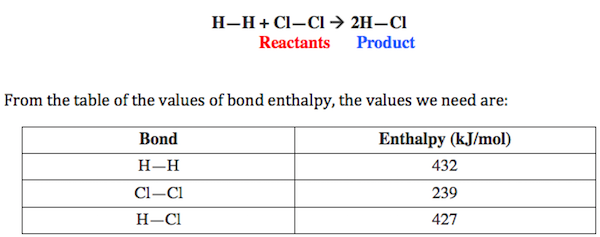
- A-183
5Bonding breaking is an [blank_start]endothermic[blank_end] process, whilst bond making is an [blank_start]exothermic[blank_end] process. In an exothermic reaction, the energy release from forming bonds is [blank_start]greater[blank_end] than the energy used to break them.
- Aendothermic
- Bexothermic
- Cgreater
- Dsmaller
6Which shows the correct reaction profile for an endothermic reaction?
- A
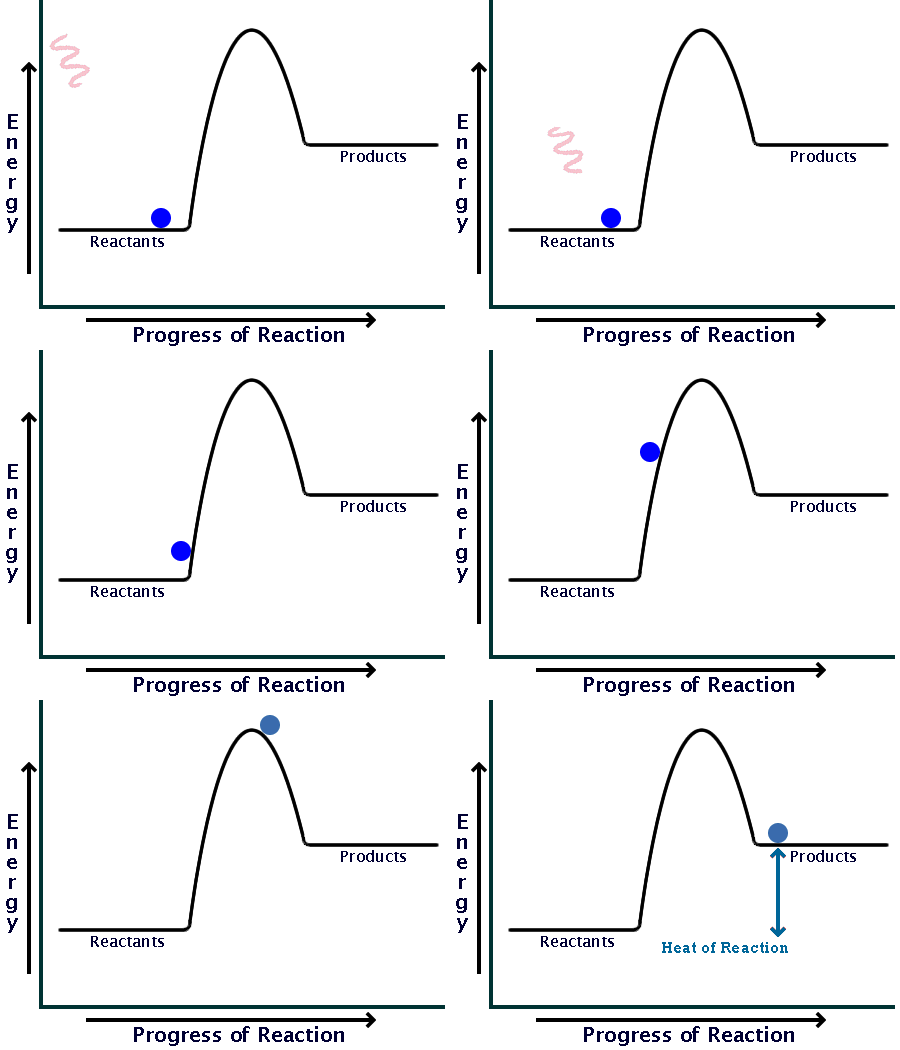
- B
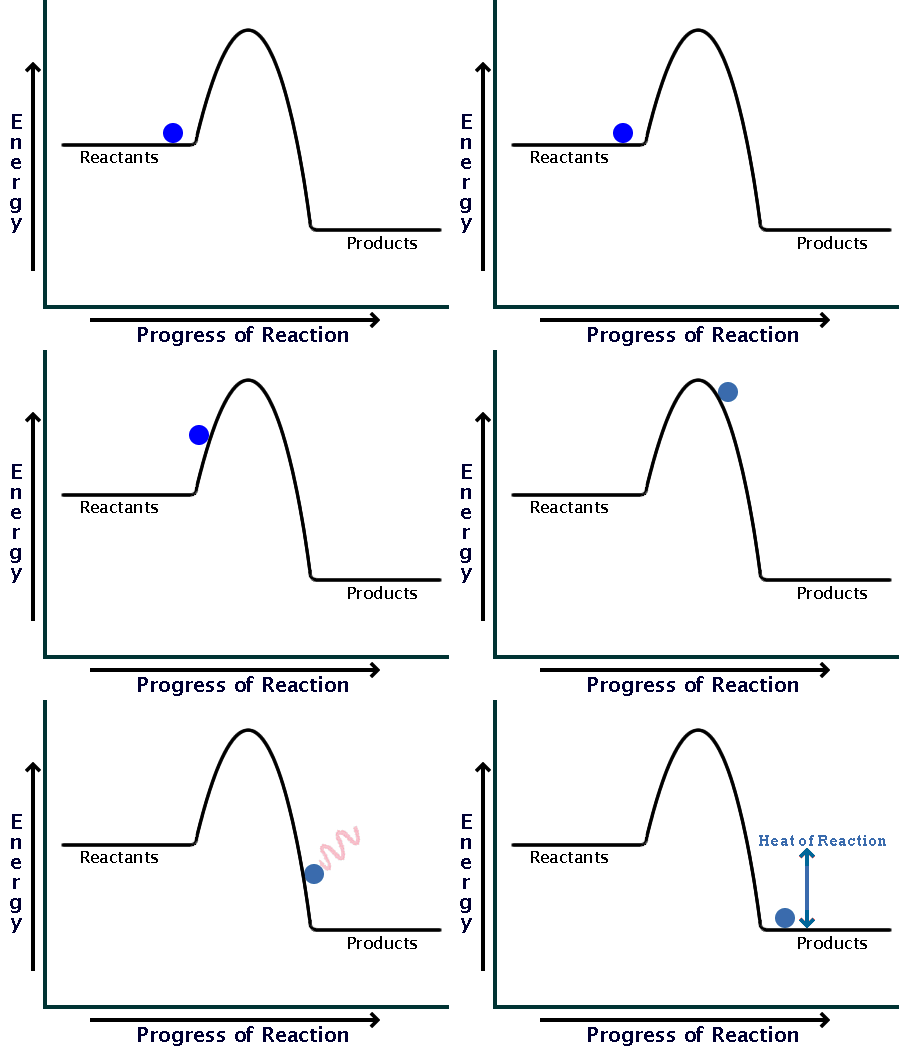
- A
7Which of the following is not an example of an endothermic reaction?
- Aelectrolysis
- Bcombustion
- Cphotosynthesis
- Dthermal decomposition
8If the energy change of a reaction has a positive (+) value, then the energy change is [blank_start]endothermic[blank_end]; if is has a negative (-) value, then the change is [blank_start]exothermic[blank_end]
- Aendothermic
- Bexothermic
Información
- Descripción
- GCSE (AQA) Chemistry Test sobre AQA (9-1) Topic 5, creado por https:// revisechemistry.uk el 12/02/2018.
- Idioma
- English
- Visitas
- 1.518
- Etiquetas
- Valoración
- Aún sin valoraciones Valora este test