
Test
MD5 - 6 Chemical Degradation by Oxidation and Hydrolysis
Este test tiene tipos de pregunta que se abren en el reproductor de siempre.
Preguntas del test (9)
1Select the two most common chemical degradation methods.
- AOxidation
- BHydrolysis
- CPhotolysis
- DIsomerisation
- EPolymerisation
2A negative slope in a pH-rate profile indicates specific [blank_start]base[blank_end] catalysis, while a positive slope indicates specific [blank_start]acid[blank_end] catalysis. A water reaction can contriute to a flat part ([blank_start]pH independent part[blank_end]) in the intermediate range of the curve, where specific catalysis still continues but is [blank_start]less prominent[blank_end] than the water reaction.
- Aacid
- Bbase
- CpH independent part
- Dless prominent
- Emore prominent
- FpH dependent part
3Label the rule of thumb factors with temperature change.
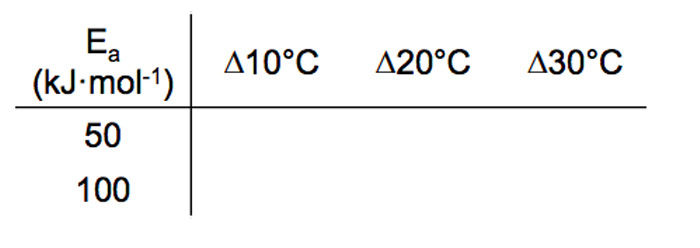
- Ax2
- Bx4
- Cx8
- Dx4 (2)
- Ex16
- Fx64
4A drug with an ionised and unionised form will have six degradation rate constants, k, because each form can undergo acid catalysis, base catalysis, and a reaction with water.
- AVerdadero
- BFalso
5Generally ionisation gives rise to more [blank_start]complex[blank_end] pH-rate profiles (not simply V-shaped curve), but [blank_start]not all reactions[blank_end] are necessarily [blank_start]significant[blank_end]. We can determine the pH-rate profile [blank_start]experimentally[blank_end] by keeping a constant temperature and changing the pH to measure rate constants.
- Acomplex
- Bnot all reactions
- Csignificant
- Dexperimentally
6B-lactams are hydrolysable groups.
- AVerdadero
- BFalso
7Amides are ionisable groups.
- AVerdadero
- BFalso
8If procaine has a hydrolysable group and two ionisable groups, and so can be unionised, mono-protonated or di-protonated, how many potential hydrolysis reactions does it have?
- A9
- B6
- C12
9Generally, general acid/base catalysis will lead to [blank_start]slope deviation[blank_end] (different from +/- 1) eg. buffer catalysis. Other factors, such as [blank_start]ionic strength[blank_end], may also
lead to apparent deviations in the pH-rate profile.
Electrolytes are often added to formulations to control [blank_start]tonicity[blank_end], and they [blank_start]increase[blank_end] the ionic strength of the formulation.- Aslope deviation
- Bionic strength
- Ctonicity
- Dincrease
Información
- Descripción
- (Medicines) PHCY211 Test sobre MD5 - 6 Chemical Degradation by Oxidation and Hydrolysis, creado por Mer Scott el 12/05/2018.
- Autor
- Mer Scott
- Idioma
- English
- Visitas
- 11
- Etiquetas
- Valoración
- Aún sin valoraciones Valora este test